 Go Back

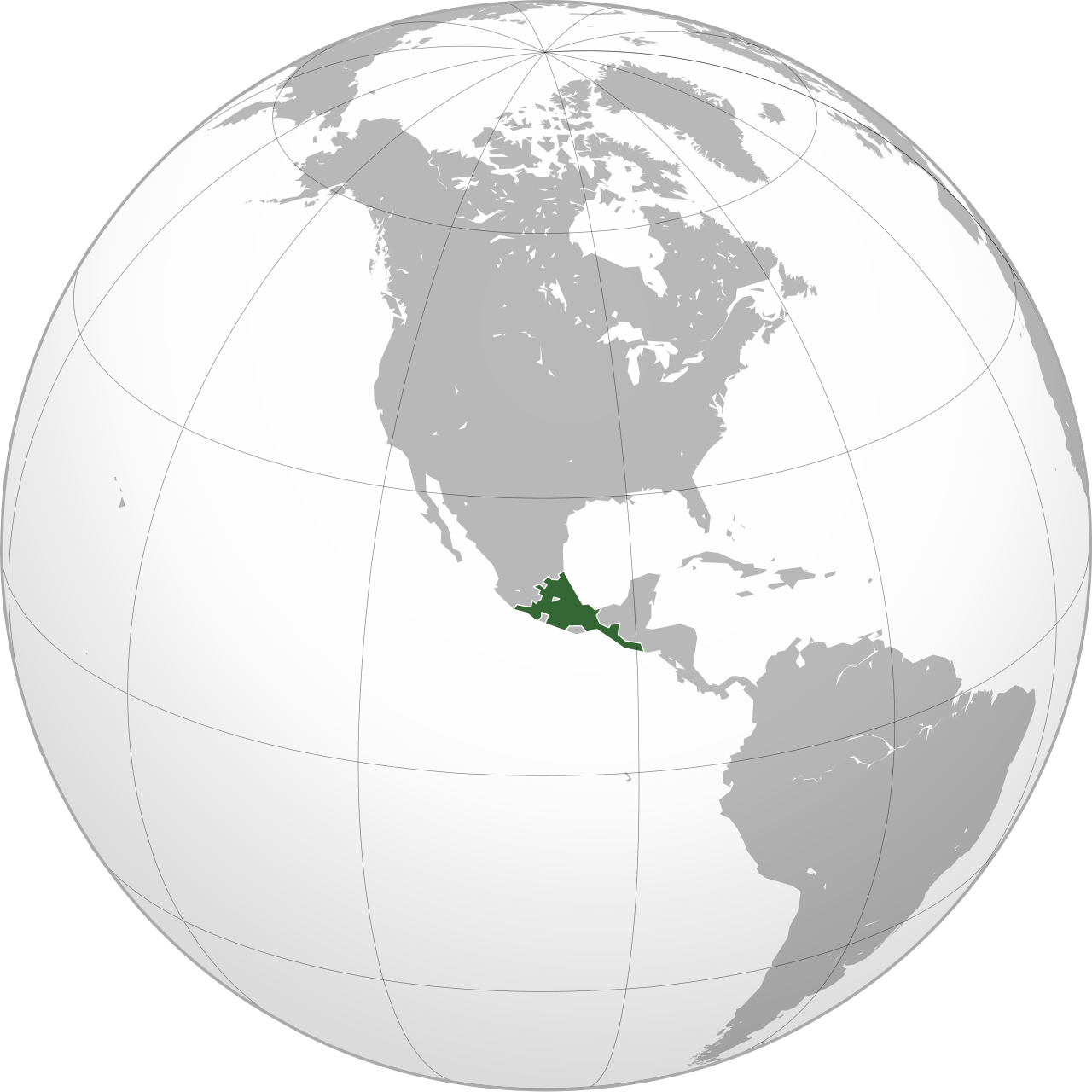
The last and greatest of Mexico's indigenous empires was born in 1428, when three Nahua city-states - Mexico-Tenochtitlan, Tetzcoco, and Tlacopan - formed the Triple Alliance from the victorious factions of the Tepanec War against the city of Azcapotzalco. The Mexica of Tenochtitlan were latecomers: the last of the Nahua migrants to reach central Mexico around 1250, they found all the good land taken and served as mercenaries for Culhuacan, the old refuge of the Toltecs, before founding their island city in Lake Texcoco. Within three generations that city was dominant over its allies and master of most of central Mexico, with outlying provinces reaching the Guatemalan border. Its people called their alliance Excan Tlahtoloyan - we know it as the Aztec Empire.
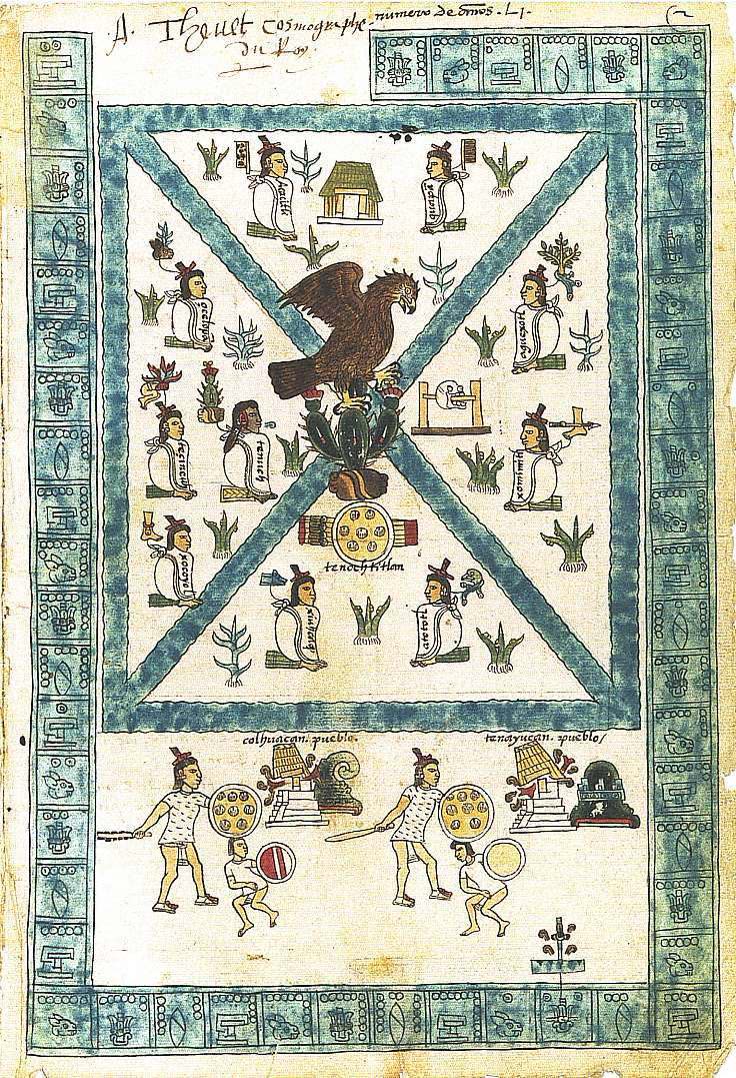
The Triple Alliance ruled indirectly. Conquered cities kept their own rulers so long as they paid semi-annual tribute and supplied warriors for the alliance's campaigns; in return they received protection, stability, and access to an integrated economic network that moved cacao, feathers, jade, obsidian and cotton across Mesoamerica. The spoils of each new conquest were shared among the three great cities, with Tenochtitlan taking the lion's share. It was a hegemonic empire, not a territorial one - no colonies, no garrisons to speak of, only the ever-renewed demand for tribute and captives. That made it cheap to run and quick to grow, but it was an empire built on resentment, and the resentment would prove fatal.
At its height Tenochtitlan, on the western shore of Lake Texcoco where Mexico City now stands, held at least 200,000 inhabitants - the largest city in the pre-Columbian Americas, fed by causeways and canoe-borne markets that dazzled the first Europeans to see it. The empire's order reached into every neighborhood: Moctezuma issued laws separating nobles from commoners, and every district had a religiously supervised school - the telpochcalli for commoners, where boys learned war, and the prestigious calmecac for the nobility and future priests. A merchant class, the pochteca, spied and traded as far as the Maya lowlands, while tribute lists recorded in painted books tracked what every subject town owed.
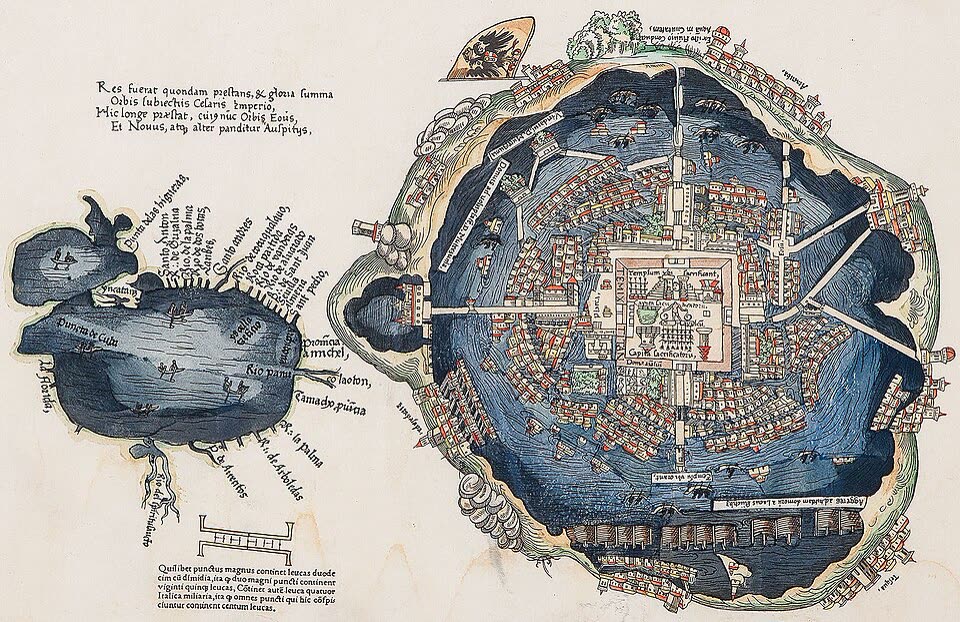
When Hernan Cortes landed in 1519, he found thousands of native allies - above all the Tlaxcalans, the empire's stubborn unconquered enemies - eager to march against Tenochtitlan. First relations with the emperor Motecuhzoma II were friendly and gifts were exchanged, but the truce curdled: with Cortes away at Veracruz, Spanish soldiers were killed in the city, and on his return the Spaniards were driven out on 30 June 1520, the Noche Triste. Ten months later Cortes came back with an army of indigenous allies and laid siege. On 13 August 1521 Tenochtitlan fell, its last ruler Cuauhtemoc captured and made a legend of resistance. The Triple Alliance had ruled the Valley of Mexico for 93 years; its fall opened all of Mesoamerica to Spain.
The Spaniards built their own capital directly on the ruins, and Mexico City still follows the old island's street plan. The empire's words - chocolate, tomato, coyote, avocado - went round the world, its tribute system became the skeleton of Spanish colonial taxation, and the memory of the Triple Alliance, half admiring and half mournful, sits at the root of Mexico's national story: the eagle on the cactus of the Codex Mendoza is on the country's flag today.
 Britannica: Aztec Empire
 World History Encyclopedia: Aztec Civilization: The Last Mesoamerican Empire
 Humanities LibreTexts: 12.8: The Aztec People
 Smarthistory: Aztecs (Mexica), an introduction