 Go Back
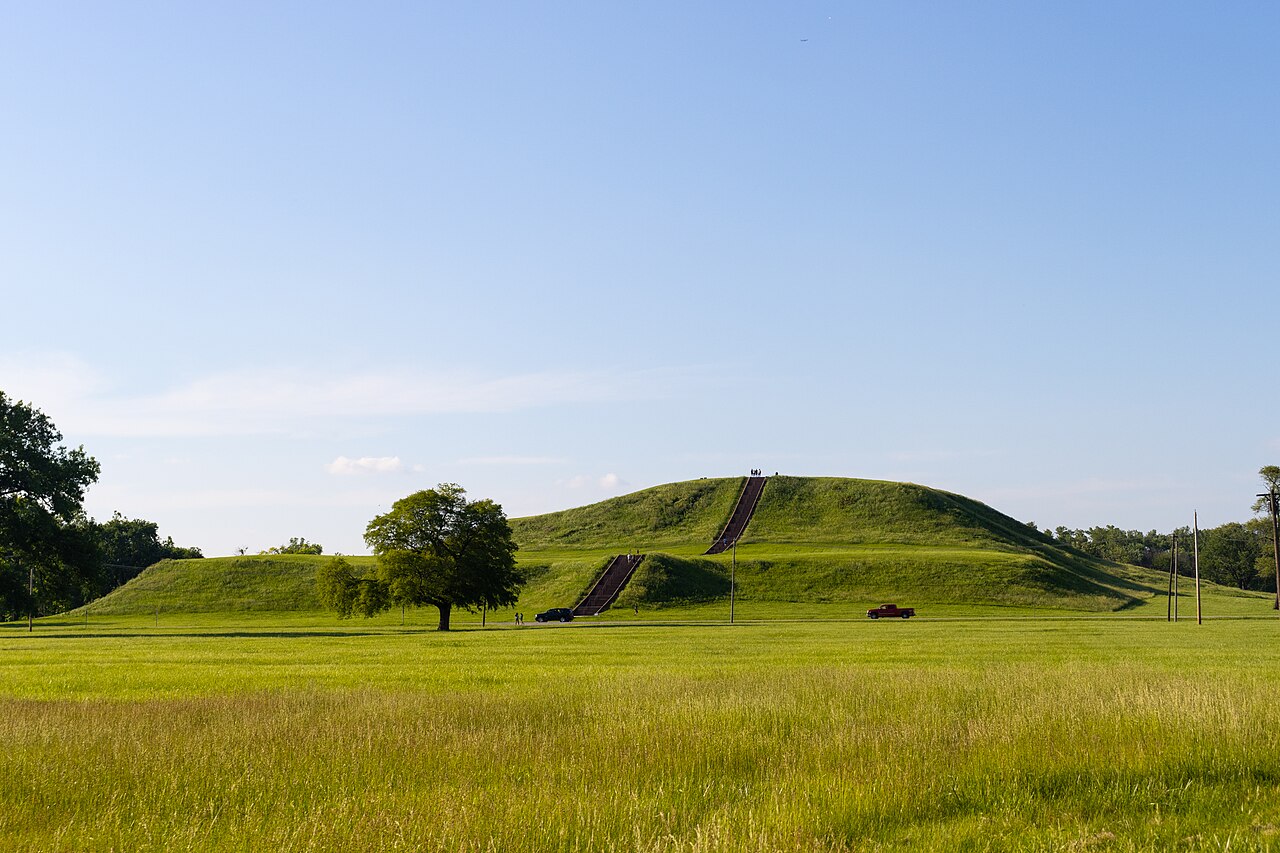
The Mississippian Culture (Cahokia). The Mississippian culture was an advanced Native American mound-building civilization that flourished across the Midwestern, Eastern, and Southeastern United States from roughly 800 to 1600 CE. Centered at the massive urban complex of Cahokia near modern-day St. Louis, Missouri, this culture was characterized by large-scale maize agriculture, complex chiefdoms, and monumental earthen platform mounds. This civilization matters because Cahokia grew into the largest pre-Columbian urban center north of Mexico, housing up to twenty thousand residents at its peak.
Cahokia featured over one hundred earthen mounds, most notably Monks Mound, a colossal structure larger at its base than the Great Pyramid of Giza. The city served as a major regional trading and spiritual center, exchanging shells, copper, and fine pottery across a vast network known as the Southeastern Ceremonial Complex. By 1350 CE, Cahokia was largely abandoned due to environmental degradation, severe flooding, and resource depletion, though offshoot Mississippian chiefdoms persisted until European contact.