 Go Back

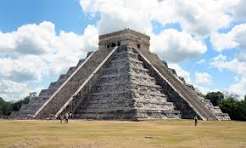
The Mixtec Civilization. The Mixtecs - the ñuudzahui, 'people of the rain god' - were the great civilization of the mountains and coasts of today's Oaxaca, Puebla, and Guerrero, and one of the oldest continuous cultures of Mexico: their civilization lasted from around 1500 BCE until the Spanish conquest in 1523. Their homeland, La Mixteca, was divided into three worlds: the dry highlands of the Mixteca Alta, where the region's first urbanized sites emerged; the hot Mixteca Baja; and the humid tropical Costa. Pre-Columbian Mixtec kingdoms numbered around 1.5 million people, competing and allying with each other and with their Zapotec neighbors of the Central Valleys.
The Mixtecs' golden age came in the Postclassic, when the culture hero Eight Deer Jaguar Claw, from Tilantongo in the Alta, conquered kingdom after kingdom on his way down to the coast - previously the land of the Chatino people - and founded the capital of Tututepec in the Lower Rio Verde valley. Even the Baja had its own hieroglyphic script, called nuine. The Mixteca Alta has seen the most archaeological study, with evidence of settlement going back to the Archaic and Early Formative periods - some of the deepest roots of urban life in Mexico. Conquered by the Spanish and their indigenous allies in the 16th century, the Mixtec people never disappeared: about 800,000 Mixtecs live in Mexico today, with large communities in the United States as well, and their many languages remain a major branch of the Oto-Manguean family. Descended from peoples who first settled the mountains, valleys, and Pacific coast of the Mixteca in the second millennium BCE, they are one of the great surviving indigenous nations of Mesoamerica.
 Britannica: Mixtec
 Humanities LibreTexts: 9.3: Mixtec (800 CE - 1500 CE)
 Smarthistory: Mixtec civilization
Humanities LibreTexts: 12.1: The Mixtec