 Go Back

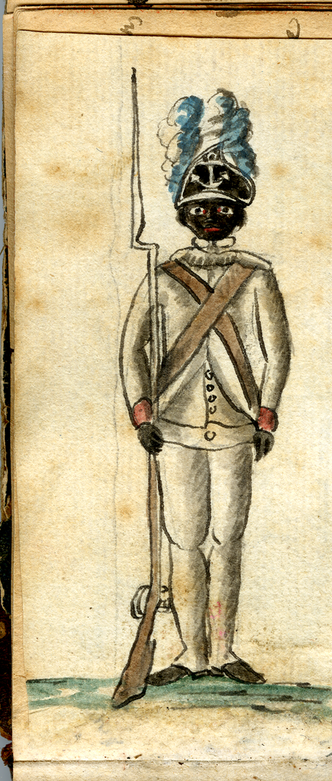
African Americans took part in the Revolutionary War from its opening battles, but they did so within a society that denied freedom to many of them. Free and enslaved people served as soldiers, sailors, laborers, guides and support workers. Their choices were shaped by local circumstances and by the possibility of liberty. Service on either side cannot be explained simply as acceptance of the political arguments advanced by white Patriot or British leaders.
Black men fought at Lexington and Concord and at Bunker Hill. Washington and other leaders initially resisted wider enlistment, but military needs and existing service helped change policy. Most Black Patriot soldiers served in units that also included white men. Rhode Island recruited an especially important contingent in 1778, offering freedom to enslaved recruits through a state arrangement. Military participation involved hardship as well as opportunity, including disease, exposure and the dangers faced by other soldiers.
The British also made freedom a weapon of war. Lord Dunmore's 1775 proclamation offered liberty to certain enslaved people belonging to rebels who would serve the Crown. It did not abolish slavery throughout the empire or free everyone who reached British lines. Nevertheless, British promises drew people seeking escape from bondage. Families and individuals assessed uncertain options amid military movement, shortages and the risk of recapture. African American agency lay in these efforts to turn a war between others into a struggle for their own freedom.
Independence did not bring general emancipation. Some veterans obtained freedom, while others remained enslaved or faced insecurity after service. Black Loyalists also experienced difficult evacuation and resettlement. The contrast between revolutionary language and continuing bondage became a lasting challenge to the new republic. African American participation should therefore be understood as more than a contribution added to a conventional military narrative: it exposes the different meanings of liberty within the war and the limits of the settlement that ended it. The different policies of individual colonies and military authorities meant that the prospects of an enslaved recruit could change sharply with place and time.
 National Park Service: Black Patriots
 BlackPast: Fighting for Freedom on Both Sides