 Go Back

Seventeenth-century Virginia ran on bound labor. Most English immigrants arrived as indentured servants, signing contracts to work four to seven years for the master who paid their passage, in exchange for 'freedom dues,' often including land, at the end. Tens of thousands came; disease and overwork killed many before their terms ended, and those who survived increasingly found that the best tobacco land along the Chesapeake's rivers was already claimed by the great planter families who governed the colony. By the 1670s Virginia held a dangerous class: young, landless, armed freedmen with no future on the frontier's edge.
The spark came from the frontier's violence. Colonists pressing onto Indigenous land clashed with the Susquehannock and other nations, and in 1675 a dispute over a debt spiraled into raids and reprisals. Frontier settlers demanded war, but Governor William Berkeley, protecting his own fur-trade interests and wary of all-out conflict, refused and authorized only defensive forts. To the frontier, this looked like betrayal by a distant, corrupt clique in Jamestown, the 'green spring faction' of Berkeley's cronies.
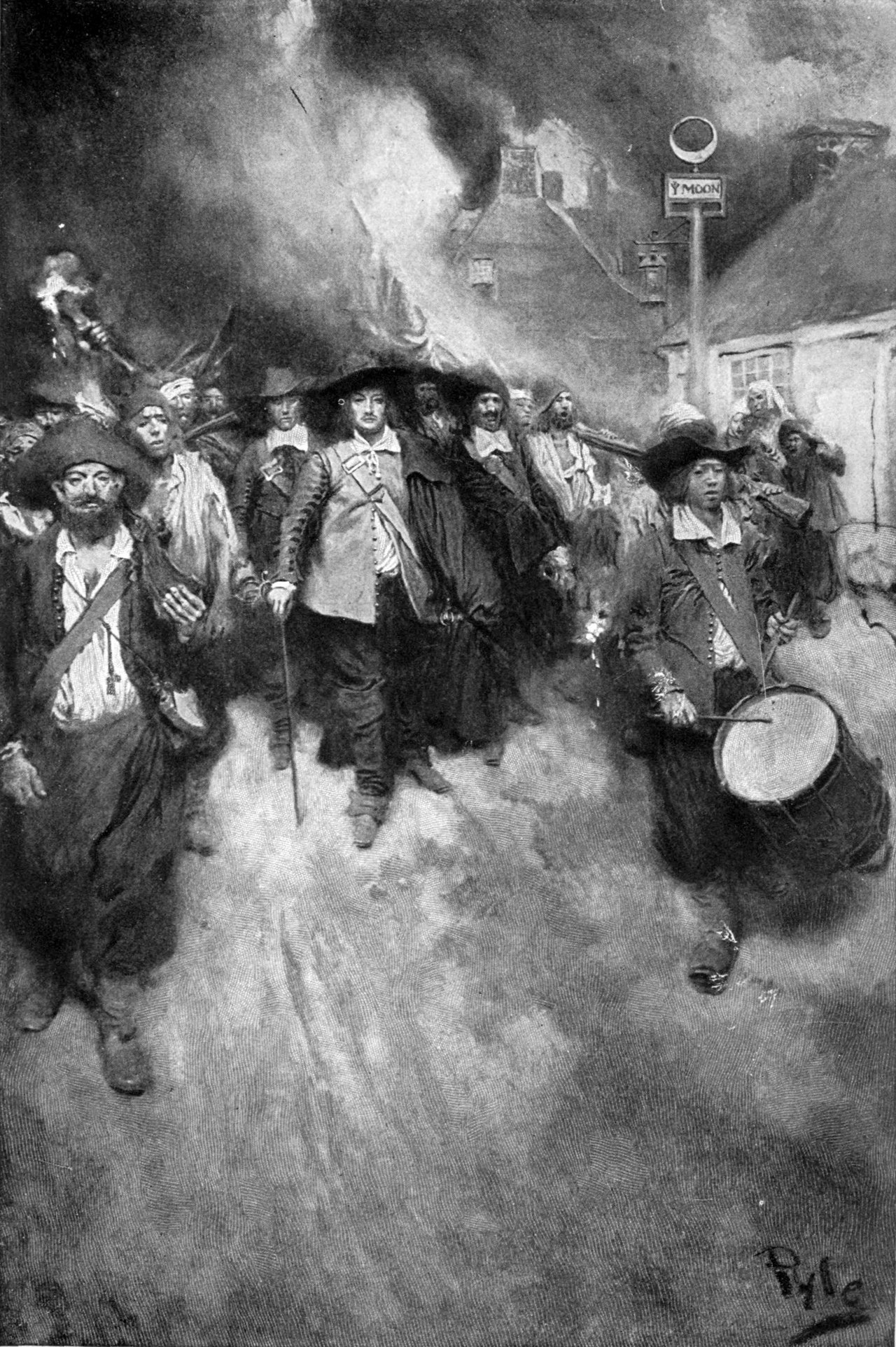
Nathaniel Bacon, a young, charismatic, newly arrived member of the governor's own council, put himself at the head of the angry freedmen. In 1676 his volunteers attacked the peaceful Pamunkey and Occaneechi, enraging Berkeley, who declared Bacon a rebel. The quarrel became civil war: Bacon was elected to the assembly, arrested, released, and returned at the head of five hundred men to force a commission from the governor at gunpoint. When Berkeley fled across the Chesapeake, Bacon's army burned Jamestown to the ground in September 1676.
The rebellion collapsed as suddenly as it rose. Bacon died of dysentery in October, his movement leaderless. Berkeley regained control and hanged twenty-three rebels. But the uprising changed Virginia. Planters drew a lasting lesson about the danger of a white servant underclass, and over the following decades they shifted decisively to enslaved African labor, sharpening racial law to divide poor whites from enslaved Blacks. Historians read Bacon's Rebellion as a turning point: the moment the Chesapeake's labor system and its racial order began to harden into their enduring form.
 Britannica: Bacon's Rebellion
 National Park Service: Bacon's Rebellion
National Park Service: An Indigenous History of Bacon's Rebellion