 Go Back

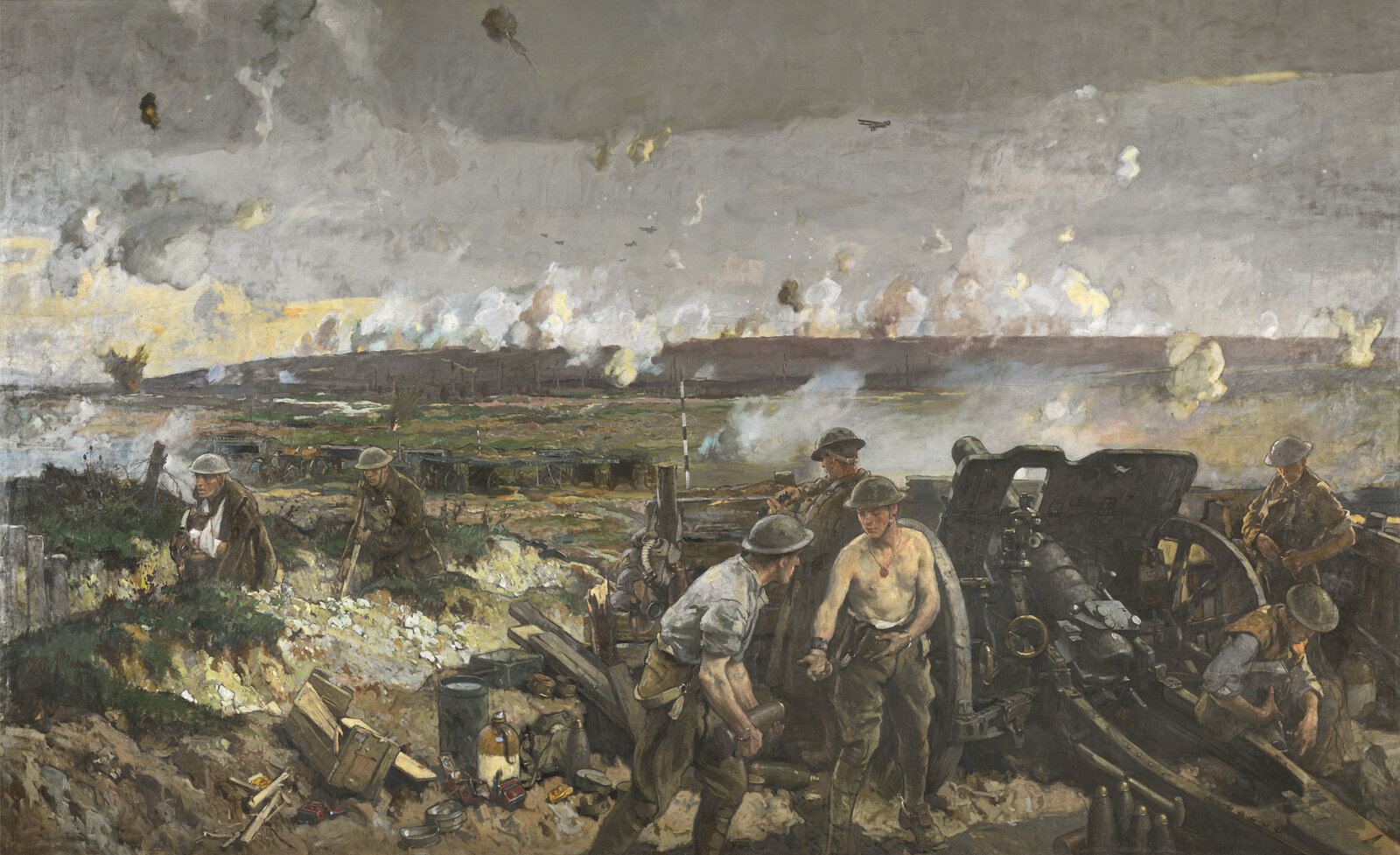
When Britain declared war in August 1914, Canada, as a self-governing dominion of the Empire, was automatically at war, and Prime Minister Robert Borden threw the country in wholeheartedly. Within weeks a first contingent of over thirty thousand volunteers was sailing for England, the beginning of a Canadian Expeditionary Force that would enlist more than 620,000 men and women from a nation of eight million. The Canadians' blooding came at the Second Battle of Ypres in April 1915, where they held the line through the first poison gas attacks of the western front at a cost of six thousand casualties, and then in the mud of the Somme in 1916.
The Canadian Corps won its defining victory at Vimy Ridge in April 1917. For the first time all four Canadian divisions attacked together, behind meticulous preparation by commanders such as Arthur Currie: miles of tunnels, rehearsed infantry tactics, and a perfectly timed creeping artillery barrage. In four days, from 9 to 12 April, the Corps took the ridge that French attacks had failed to hold, at a cost of nearly 3,600 dead. Hill 70 and Passchendaele followed in 1917, and in 1918 the Corps spearheaded the Allied advance of Canada's Hundred Days from Amiens to Mons. By the armistice the Canadians were regarded as shock troops; some 61,000 had died and 172,000 been wounded.
The war divided Canada at home. Volunteering slowed as casualty lists lengthened, and in 1917 Borden brought in the Military Service Act, imposing conscription. Quebec, where few French Canadians felt ties to either empire, rose in anger: Henri Bourassa campaigned against the law, and anti-conscription riots in Quebec City at Easter 1918 left four civilians dead. Borden's Union government won the bitter 'khaki election' of December 1917 with a franchise manipulated by the Wartime Elections Act, which gave the vote to women with soldiers in the family while stripping it from immigrants naturalized from enemy countries. Farmers, promised their sons would be exempt, saw the exemption cancelled after the vote.
The war's aftermath carried Canada toward autonomy. Borden insisted on a distinct Canadian signature on the Treaty of Versailles and a separate seat in the new League of Nations; in 1922 Canada declined to rally automatically to Britain in the Chanak crisis, and in 1923 it signed the Halibut Treaty with the United States without a British countersignature, a first in imperial history. At home the country counted the cost in pensions, memorials, and a deepened French-English divide that the conscription struggle had carved into Canadian politics.
 The Canadian Encyclopedia: Battle of Vimy Ridge
The Canadian Encyclopedia: Canadian Expeditionary Force