 Go Back

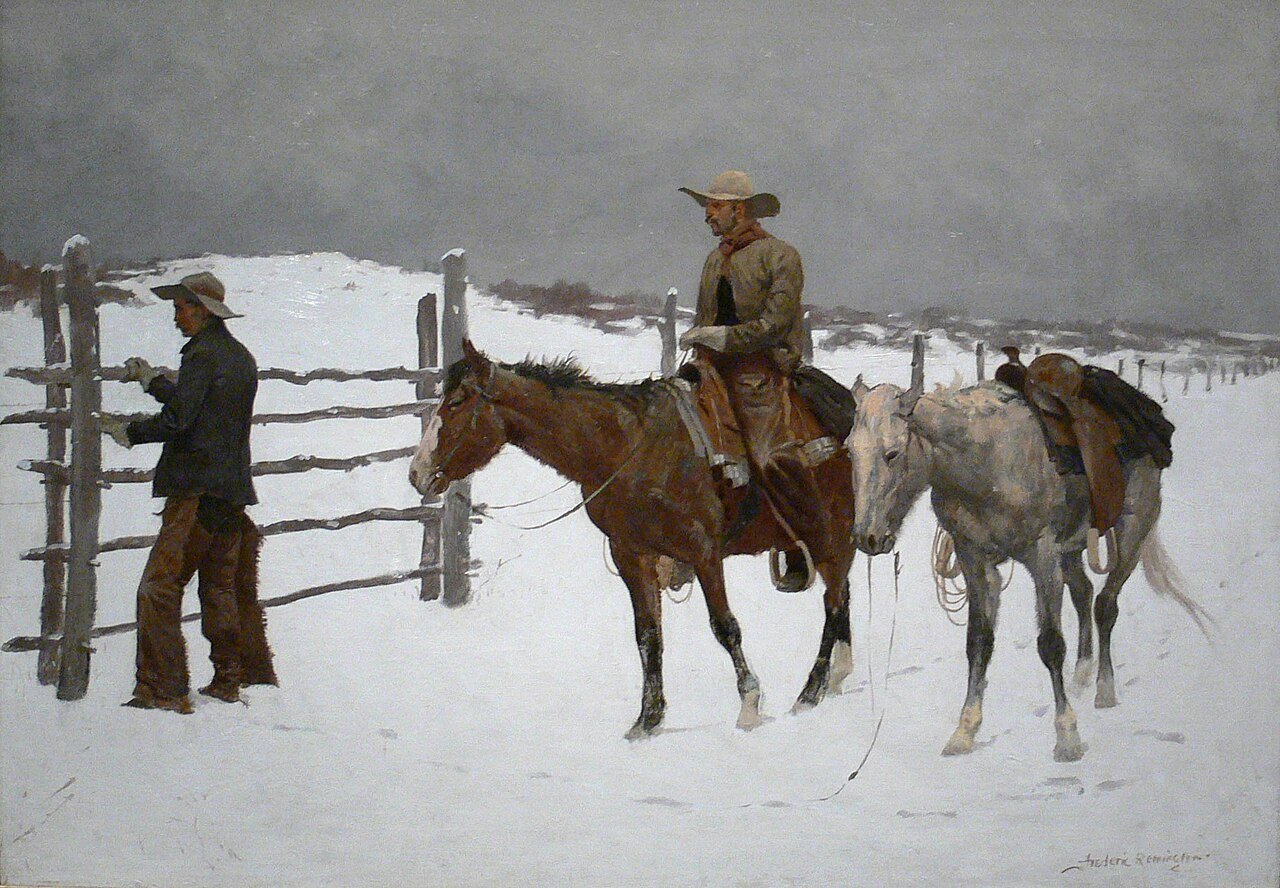
The Cattle Drives and the Open Range. After the Civil War, Texas swarmed with longhorn cattle worth four dollars a head at home - and forty dollars in the beef-hungry cities of the North. The problem was geography, and the solution was the drive: a crew of a dozen cowboys, a remuda of horses, and two or three thousand longhorns pushed a thousand miles north up the Chisholm Trail to the new railroad towns of Kansas - Abilene, then Ellsworth, Dodge City - where the rails met the range. Between 1867 and the mid-1880s, some five million cattle walked north out of Texas.
The drive made the cowboy: the Texas vaquero's heir - Black, Mexican and white in proportions the films forgot - working fourteen-hour days in the saddle, fighting stampedes, rivers and rustlers for thirty dollars a month. And at the trail's end it made the cattle town, where the marshals - Wild Bill Hickok among them - disarmed the cowboys at the city limits while the saloons took their wages. The open range itself was a brief miracle of economics: free grass on the public domain, herds owned by ranchers and, increasingly, by Eastern and Scottish investors who made and lost fortunes in the beef bonanza.
The world of the open range died in three blows. Barbed wire - 'the devil's rope' - fenced the range and triggered the fence-cutting wars; the railroads reached Texas and ended the long drive's reason to exist; and the terrible winters of 1885-87 - above all the 'Great Die-Up' of 1886-87, when blizzards killed hundreds of thousands of cattle on the open grass - bankrupted the range barons and proved that unfenced, unhusbanded grazing was a gamble against nature.
The real era of the trail drive lasted barely twenty years; its afterlife is immeasurable. The cowboy - laconic, mounted, free - became the American national hero, invented almost before the fact by dime novels and Buffalo Bill's Wild West, and fixed forever by Hollywood. Dodge City, the Chisholm Trail and the longhorn remain the vocabulary in which America tells itself about the West.
 Britannica: Cowboy
Britannica: Chisholm Trail
Britannica: Dodge City