 Go Back

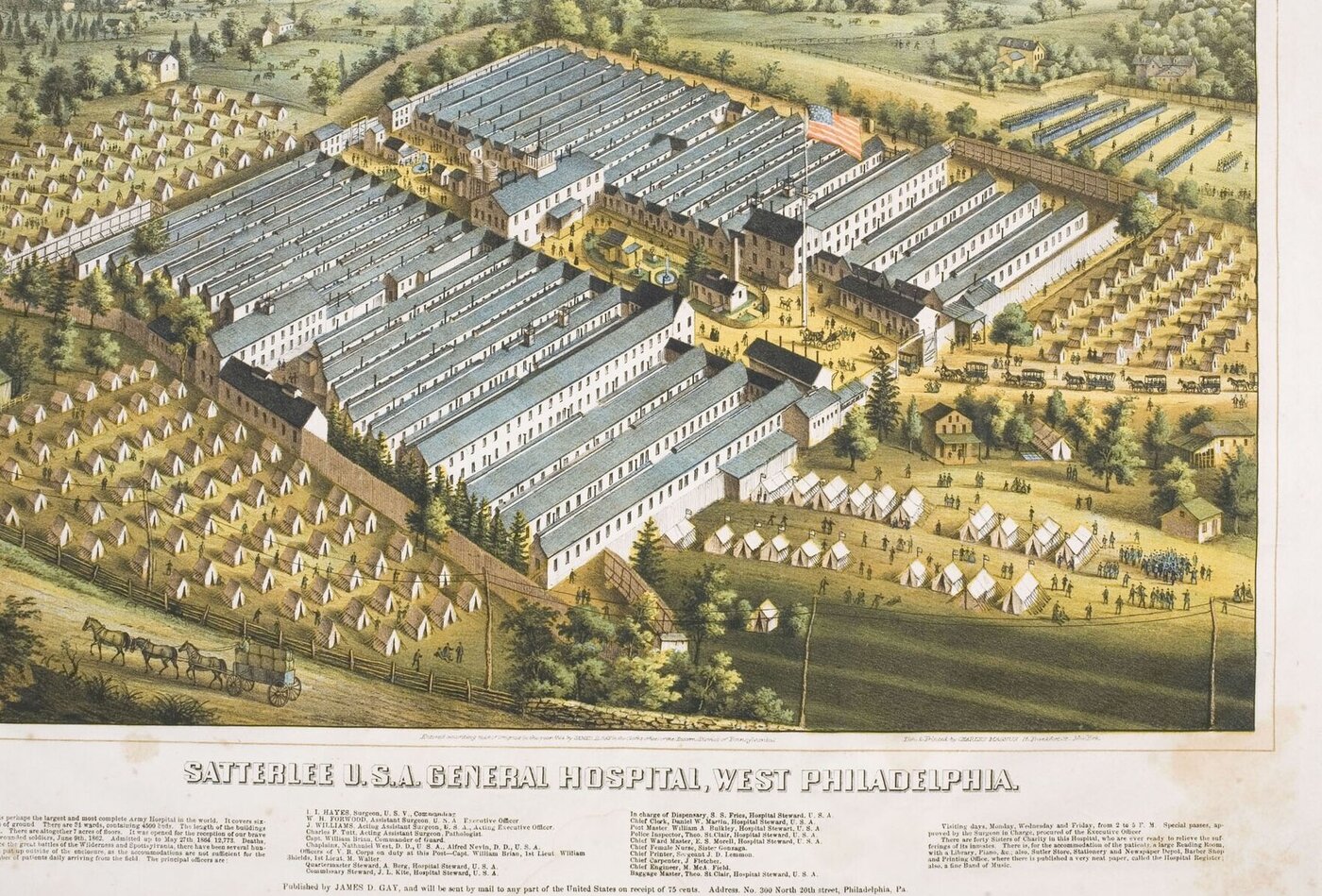
The Civil War was fought before germ theory, and disease killed roughly two soldiers for every one who died of wounds. Crowded camps bred dysentery, typhoid, malaria, measles, and pneumonia, and armies on the march carried their epidemics with them. A wound to the abdomen or chest was usually fatal; the slow-moving Minié ball shattered bone, and infection followed surgery as a matter of course. At the war's start the tiny prewar medical corps was overwhelmed, and the care of millions of volunteers had to be invented as the war went on.
Out of that improvisation came lasting institutions. The United States Sanitary Commission, a civilian organization, inspected camps, supplied nurses and bandages, and pressed the army on hygiene. Surgeon Jonathan Letterman, medical director of the Army of the Potomac, built an organized ambulance corps and a triage system of field dressing stations, division hospitals, and general hospitals that treated casualties by severity rather than rank, the ancestor of modern military medicine. Huge pavilion-style general hospitals, such as Satterlee in Philadelphia and Chimborazo in Richmond, housed thousands of patients in airy wards that reduced cross-infection.
Surgeons worked at brutal speed under fire, but anesthesia was standard: chloroform or ether was used in the great majority of operations, and the war's image of men biting bullets through conscious amputations is largely myth. Amputation was the common answer to shattered limbs, performed in minutes by experienced hands. Women served in the wards despite official resistance, Clara Barton and the volunteer nurses Dorothea Dix recruited among them, and the writer Walt Whitman spent years comforting the wounded in Washington hospitals. Armies on both sides kept medical records that filled the six-volume Medical and Surgical History of the War of the Rebellion.
The war professionalized American medicine. It trained thousands of surgeons, created a nursing profession that women led after the war, demonstrated the value of sanitation and hospital design, and left a system of veterans' care and pensions that became a major federal obligation. The ambulance, triage, and evacuation systems Letterman sketched in 1862 still underlie military and emergency medicine. That the war's lessons spread so slowly into civilian public health was the era's tragedy; that they were learned at all was its legacy.
 National Park Service: Medicine and Medical Practices
 Britannica: United States Sanitary Commission