 Go Back

New England colonists did not scatter across the wilderness; they planted towns. Massachusetts and Connecticut granted land to groups of proprietors who laid out a meetinghouse and common pasture surrounded by family house lots, with outlying fields divided among them. The town was at once congregation, school district and government. Each year, men gathered in town meeting to elect selectmen and constables, vote taxes, assign roads and fence common land, a training ground in self-rule that made the New England town meeting a byword for grassroots democracy.
Rocky soil and a short growing season pushed New Englanders to the sea. Fishing fleets took cod on the Grand Banks, colonial shipwrights built so many oceangoing vessels that by the eve of the Revolution at least a third of the British merchant fleet was American-built, and Yankee merchants carried lumber, fish, horses and provisions to the West Indies, returning with sugar and molasses to distill into rum. Boston, Newport and Portsmouth became Atlantic ports tied into the trade of three continents, while every tidewater village built its own vessels. New England's wealth floated on salt water.
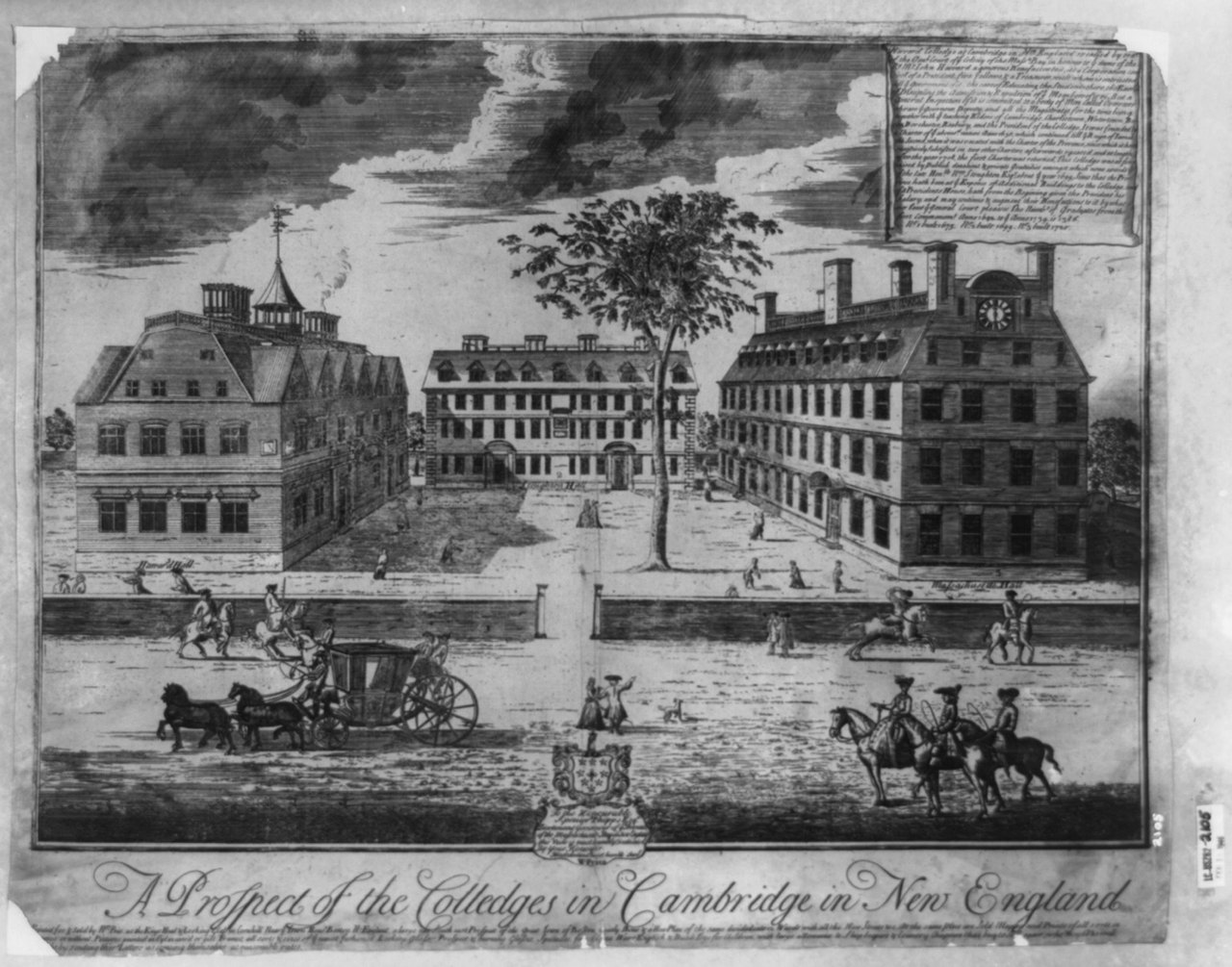
Congregational orthodoxy made reading essential: every believer was expected to read the Bible. Massachusetts required public schools by law from 1647, and literacy became widespread in the region. Harvard (1636) and Yale (1701) trained ministers, while town grammar schools and 'dame schools' taught children their letters. Printing presses in Boston and Cambridge poured out sermons, almanacs and primers, the New England Primer selling in the millions across the colonial era.
By the eighteenth century the old Puritan unity was fraying. Prosperous port merchants, 'half-way' church memberships, the revivals of the Great Awakening and steady immigration diluted the founders' vision, even as town discipline endured. Yet the institutions of town, school and congregation remained the frame of daily life, and the habits they taught, meeting, voting, reading, arguing, would make New England a seedbed of revolution when crown and colony came into conflict.
 Smithsonian NMAH: Within These Walls, a New England House
 OpenStax U.S. History: English Settlements in America
 National Park Service: Town of Churches, Boston