 Go Back

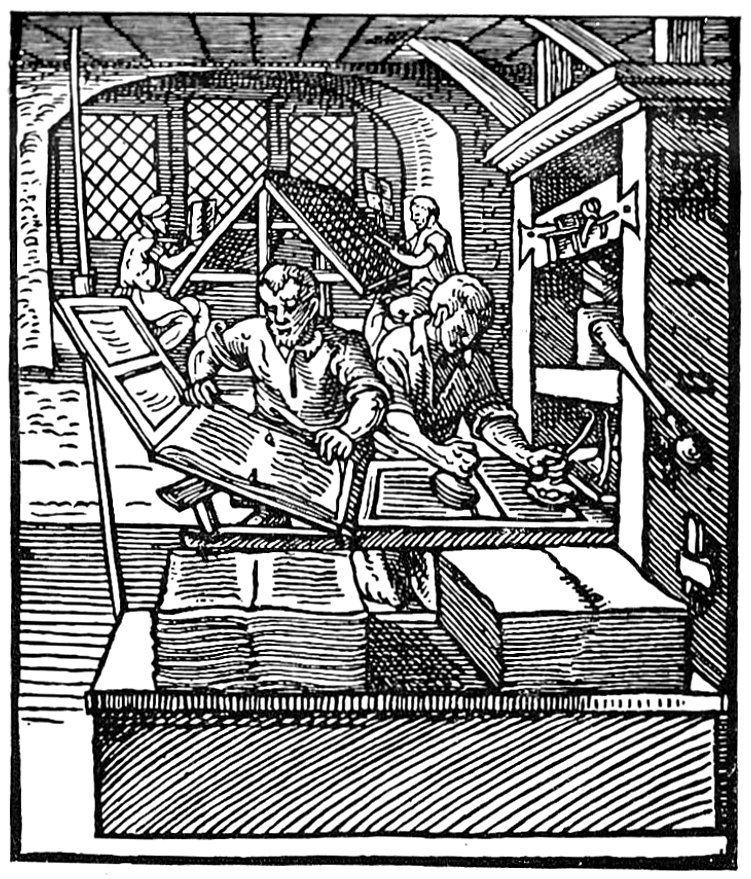
The first printing press in British North America arrived at Cambridge, Massachusetts, in 1638, where Stephen Daye's shop produced the Bay Psalm Book of 1640, the first book printed in the English North American colonies. For a century, printing was a tightly held craft: a press required heavy capital, and authorities licensed printers, who made their living from government contracts, sermons, almanacs and blank forms. By 1700 presses worked in Boston, Cambridge, New York and Philadelphia; by the mid-eighteenth century, dozens of presses operated in colonial towns.
Printing's great engine was the newspaper. The Boston News-Letter of 1704 was the first continuously published paper in America; by mid-century weeklies like Franklin's Pennsylvania Gazette and the Boston Gazette reached far beyond their cities. Newspapers carried shipping news, advertisements, essays and reprinted London politics, and printers swapped copies so that news jumped from colony to colony. In an age of bad roads, the post riders carrying papers stitched thirteen scattered colonies into a single conversation, creating what historians call a colonial public sphere.
The press also tested the limits of power. In 1735 New York printer John Peter Zenger was tried for seditious libel after his newspaper attacked the royal governor. His lawyer Andrew Hamilton argued that truth should be a defense, and the jury's acquittal became an enduring landmark for freedom of the press, celebrated by generations of Americans. Colonial printers learned that their presses could challenge authority as well as serve it.
When the imperial crisis came, print made it a shared cause. Printers spread the Stamp Act protests, serialized the patriotic essays of John Dickinson and Samuel Adams, and by the time shots were fired at Lexington in 1775, colonial newspapers and pamphlets had already created something new: an American public that read, argued and acted together. When Tom Paine's Common Sense appeared in January 1776, printers carried it to an unprecedented circulation, and its argument for independence ran through that public in a matter of weeks.
 Britannica: John Peter Zenger
 Smithsonian NMAH: The Franklin Common Press
 Library of Congress: Chronicling America, Historic Newspapers