 Go Back

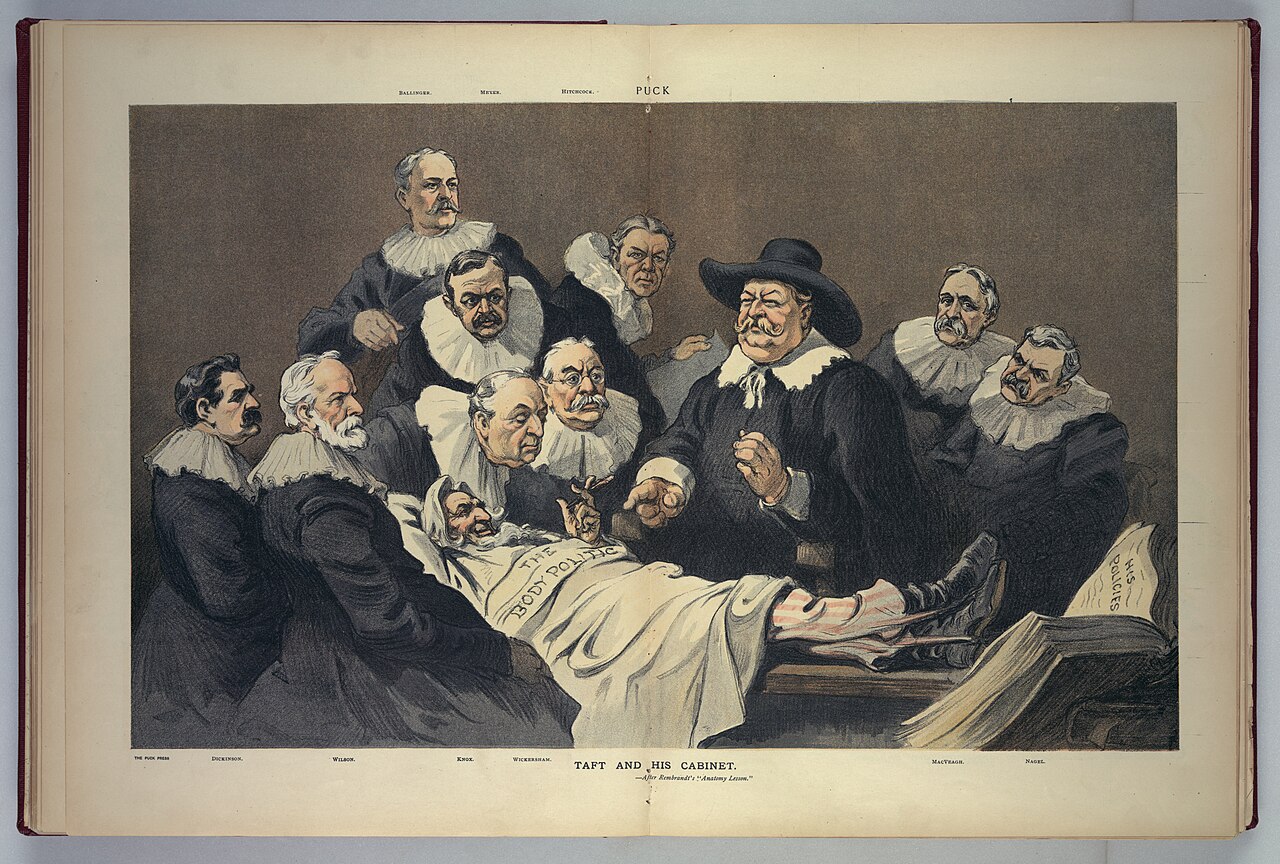
President William Howard Taft and his secretary of state, Philander C. Knox, believed American diplomacy should serve American business. Their policy, soon derided as 'dollar diplomacy,' promised to 'substitute dollars for bullets': instead of sending marines, the United States would replace unstable governments' European debts with loans from American banks, giving the bankers, and Washington, leverage over customs houses and budgets across Latin America and Asia.
The model had roots in Roosevelt's intervention in the Dominican Republic, where American loans were exchanged for control of the customs service. Under Taft it was applied widely. In Nicaragua the administration supported the overthrow of President Jose Santos Zelaya, installed a friendly successor, placed an American collector over the customs, and pressed a treaty guaranteeing new loans on the country. The Senate refused to ratify that convention, but bankers made the loans regardless, and in the end marines landed and stayed for years. Similar financial protectorates were pressed on Honduras, and Knox won American bankers a place in an international loan consortium in China.
Dollar diplomacy failed on its own terms. American bankers were reluctant lenders, the loans deepened rather than settled instability, and the targeted peoples resented foreign control of their revenues. The Chinese arrangement collapsed amid world opposition, and by 1912 the administration quietly abandoned the policy's more ambitious forms. The custom of intervention, however, outlived the slogan.
By 1924 the United States combined financial supervision with military occupation in much of the Caribbean basin: marines remained in Nicaragua and Haiti, American fiscal advisers sat in a half-dozen capitals, and the State Department still reviewed loans as a matter of policy. Dollar diplomacy left a legacy of Latin American resentment toward the 'colossus of the North' that shadowed inter-American relations as the era closed.
 Britannica: Dollar Diplomacy
 Office of the Historian: Dollar Diplomacy, 1909-1913