 Go Back

Dred Scott was an enslaved man whose owner, an army surgeon, had taken him for years into the free state of Illinois and the free territory of Wisconsin. In 1846 Scott sued for his freedom in Missouri, arguing that residence on free soil had made him free. After eleven years of litigation, the Supreme Court decided his case in March 1857. Chief Justice Roger B. Taney's opinion held that Black Americans, whether enslaved or free, were not and could not become citizens of the United States, and that Congress had no power to ban slavery in the territories, making the Missouri Compromise unconstitutional. Instead of settling the slavery question, the decision wiped out the legal basis for compromise and delighted the South while horrifying the North.
Northern reaction fused fear and fury. Republicans charged that a slave power conspiracy meant to nationalize slavery, and the new party's ranks swelled. The ruling hung over the 1858 Illinois Senate race, where Abraham Lincoln pressed Stephen Douglas to explain how popular sovereignty could survive a decision forbidding any ban on slavery. Douglas answered with his Freeport Doctrine, arguing that territorial settlers could still exclude slavery by refusing to protect it, a position that saved his Senate seat but split the Democratic Party between North and South.
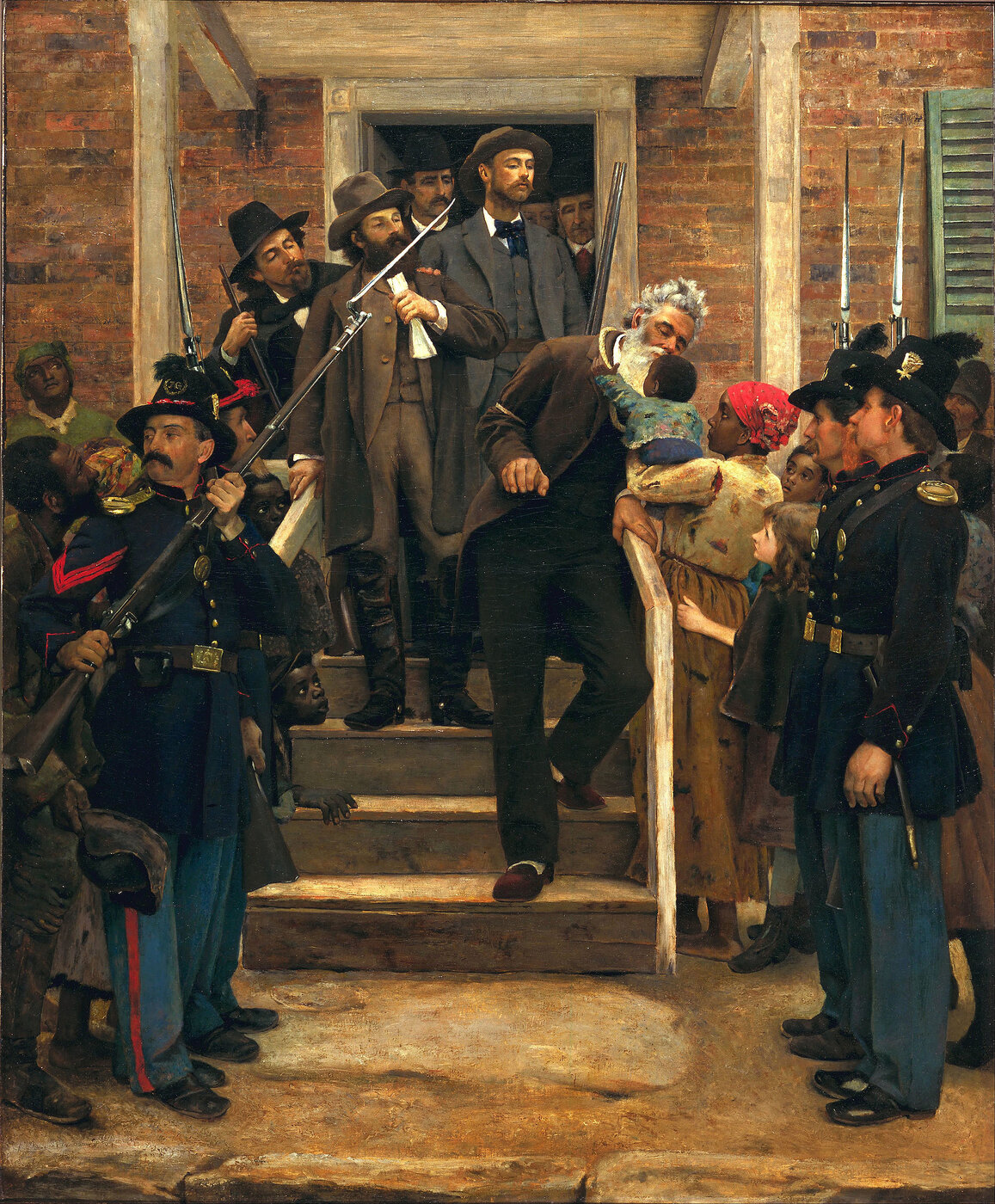
John Brown chose a shorter road. Fresh from the guerrilla war in Kansas, the veteran abolitionist planned to seize the federal arsenal at Harpers Ferry, Virginia, arm the enslaved people of the surrounding country, and build a mountain stronghold of freedom. On the night of October 16, 1859, Brown and twenty-one followers, Black and white, captured the arsenal. Local militia and then United States Marines under Colonel Robert E. Lee stormed the engine house where Brown made his stand. Ten of his men were killed and Brown was captured, tried by the state of Virginia for treason, and hanged on December 2, 1859, conducting himself with a calm dignity that impressed even his enemies.
Across the North, church bells tolled for Brown and writers like Thoreau and Emerson hailed him as a martyr; across the South, his raid confirmed that abolitionists meant to loose a slave rebellion, and militias drilled for the conflict to come. The next year the Democratic Party broke apart, the Republican Abraham Lincoln won the presidency without a single southern electoral vote, and South Carolina led the Deep South out of the Union. The crisis that compromise could no longer contain became the Civil War, covered on its own page.
 Britannica: Dred Scott Decision
Britannica: John Brown
 National Park Service: Harpers Ferry National Historical Park