 Go Back

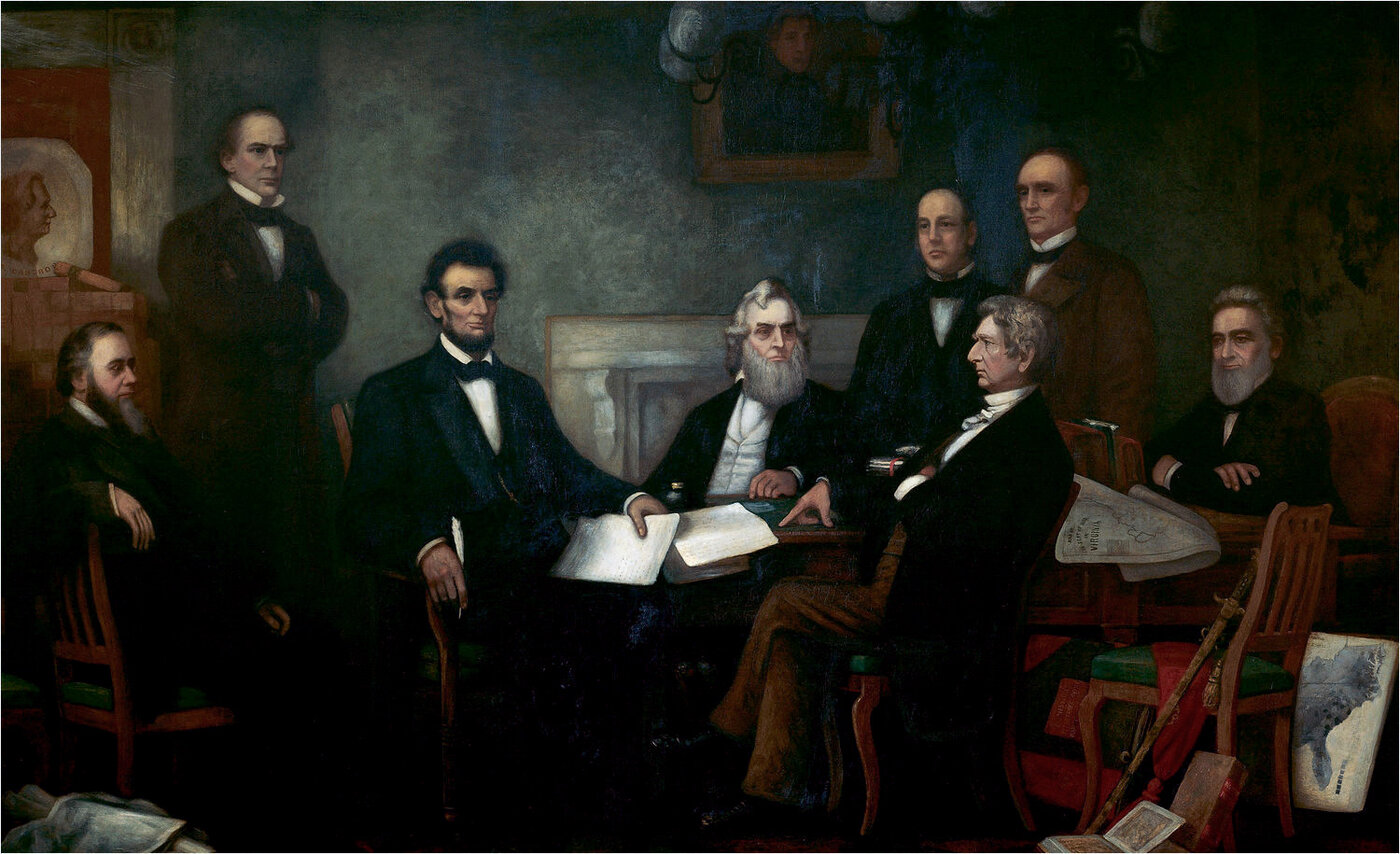
The Civil War did not begin as a war to end slavery: Lincoln's stated purpose was to preserve the Union, and he moved carefully to hold the loyal slave states of the border. The enslaved themselves forced the issue. From the war's first weeks, freedom seekers fled to Union lines, and in May 1861 General Benjamin Butler refused to return them, declaring them contraband of war. As Union armies advanced, hundreds of thousands liberated themselves, laboring for the Union and draining the Confederacy's workforce. Congress responded with Confiscation Acts in 1861 and 1862 that freed enslaved people used by the rebellion.
On September 22, 1862, after the Union victory at Antietam, Lincoln issued a preliminary warning, and on January 1, 1863, he signed the Emancipation Proclamation. It declared free all enslaved people in the states then in rebellion, a wartime measure under his powers as commander in chief that exempted the border states and occupied areas. Its practical reach grew only as Union armies advanced, but it transformed the war: every Union advance now carried freedom, the Confederacy could no longer hope for British or French intervention on behalf of slavery, and the Union cause became openly a fight against bondage.
The Proclamation also opened the Army to Black men, who had been barred from service at the war's start. By the end of the war roughly 180,000 Black soldiers had served in the United States Colored Troops, about a tenth of the Union army, with thousands more Black sailors in the navy. The 54th Massachusetts Infantry's assault on Fort Wagner in July 1863 proved Black soldiers' courage to a skeptical public; Black troops fought at Milliken's Bend, Port Hudson, and the Crater at Petersburg, and some three hundred were massacred after surrendering at Fort Pillow in 1864. They fought for equal pay as well, receiving less than white soldiers until Congress equalized pay in 1864.
Because the Proclamation rested on war powers, abolitionists pushed for a constitutional guarantee. The Thirteenth Amendment, abolishing slavery everywhere in the United States, passed Congress in January 1865 and was ratified that December. In all, about four million Americans walked out of slavery, the largest emancipation in the Atlantic world. Freedom's first fruits, family reunification, schools, churches, and political organizing, defined the Reconstruction struggles covered on the following pages, and the memory of emancipation, celebrated as Juneteenth from the last Texas freedpeople's liberation in June 1865, endured for generations.
 Britannica: Emancipation Proclamation
 Library of Congress: The Civil War (African American Odyssey)
Britannica: Thirteenth Amendment