 Go Back

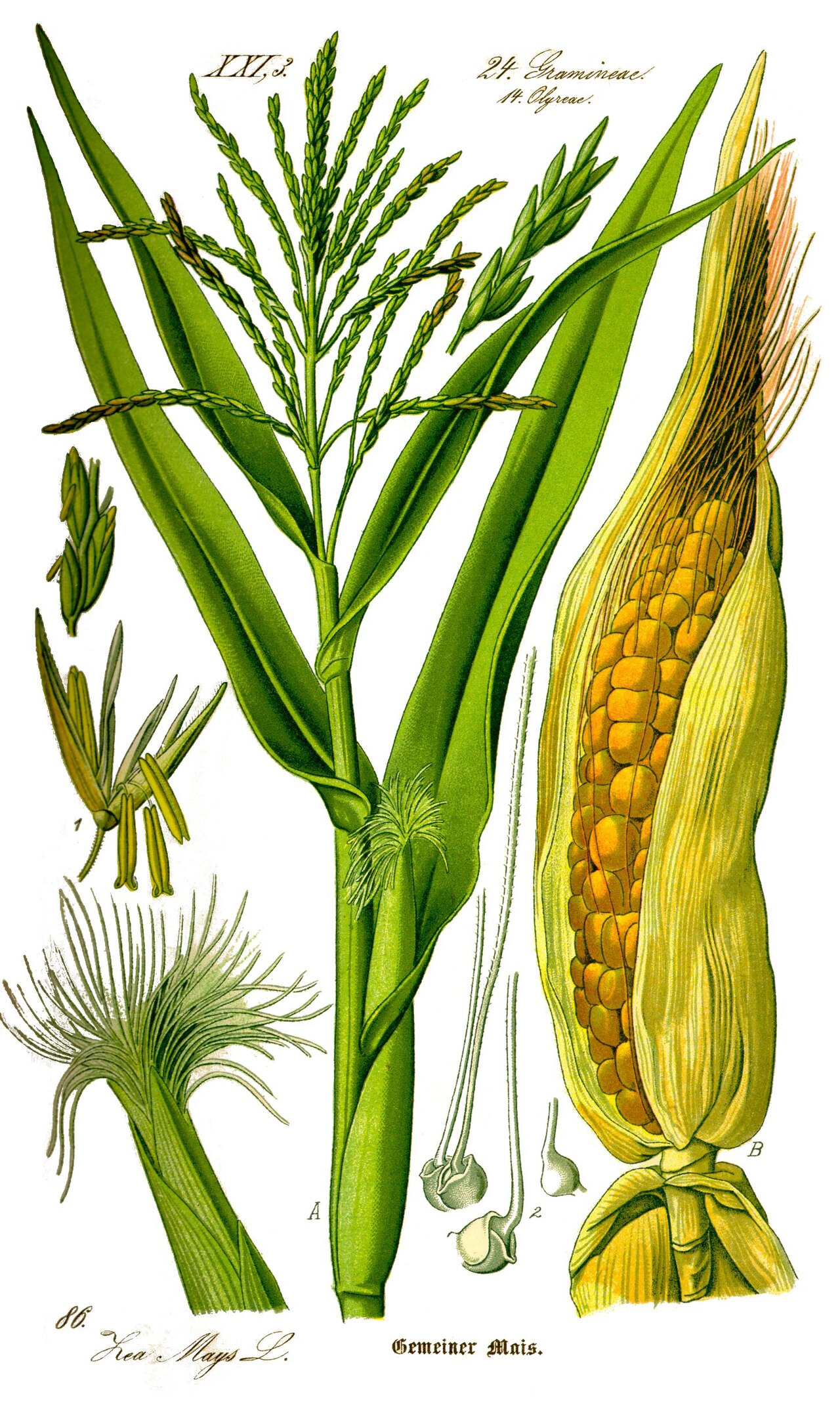
Farming supported most people in Britain's mainland North American colonies, but there was no single colonial agricultural system. Climate, soils, labor and access to markets produced different regional patterns. Indigenous crops such as maize, beans and squash were combined with plants and animals brought across the Atlantic. Food production depended on this exchange of knowledge and species, even as European settlement increasingly dispossessed the Indigenous communities whose cultivation had shaped the land.
Northern farms often combined grain, livestock, gardens and orchards. Families used dairy products, preserved foods and stored crops to meet needs across the seasons, while selling surpluses when markets were available. The middle colonies became important producers of wheat and other foodstuffs for towns and overseas customers. Farms were not isolated units: roads, rivers, mills and ports linked household labor to commerce. What a family ate depended on resources and local supply as well as inherited food traditions.
In the Chesapeake and farther south, plantations concentrated on export crops such as tobacco and rice. These enterprises relied increasingly on enslaved Africans and their descendants, whose forced labor created wealth for owners and merchants. Large estates existed alongside smaller farms rather than replacing them entirely. Ownership of extensive acreage did not mean all of it was cultivated at once; woodland, pasture and exhausted fields formed parts of agricultural holdings. Access to land and control over labor were major sources of inequality.
Colonial diets and farming practices thus reflected both adaptation and power. Wealthier households could command a wider variety of foods, while servants, enslaved people and poorer settlers faced tighter limits. Cultivation for household use overlapped with production for sale, and proximity to markets affected the balance between them. The demand for additional farmland also pushed settlement into contested territories. Agriculture was consequently more than a background to colonial politics: it shaped trade, family labor, slavery and the conflicts over property that accompanied the growth of British America. Dairy cattle supplied both food and manure, illustrating how household consumption and the maintenance of soil fertility could depend on the same animals.
 Encyclopedia.com: Agriculture Overview
Encyclopedia.com: Food and Social Diversity