 Go Back

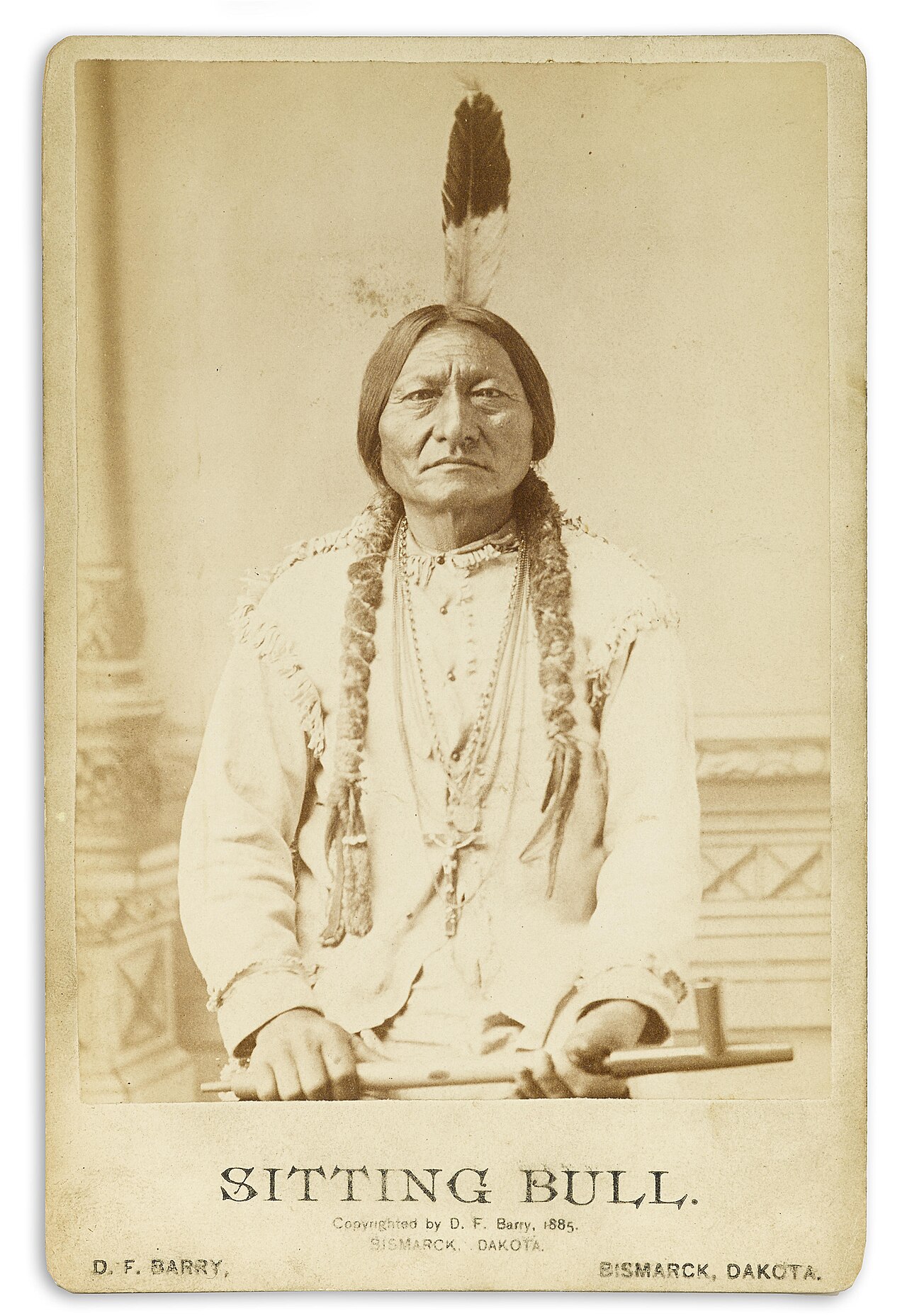
The Great Sioux War and the Little Bighorn. The Treaty of Fort Laramie in 1868 had promised the Lakota the Great Sioux Reservation, including the Black Hills, 'for as long as the grass should grow.' In 1874 Custer's expedition found gold in those hills, and when the miners rushed in, the government moved to buy the hills - and, when the Lakota refused to sell, ordered all the free bands onto the reservation by an impossible midwinter deadline. Sitting Bull and Crazy Horse, leading the free Lakota and Cheyenne in the Powder River country, refused. In 1876 the army came in three converging columns.
On the Little Bighorn, on 25 June 1876, the war made its legend. Lieutenant Colonel George Armstrong Custer, commanding the Seventh Cavalry, divided his regiment and attacked a village far larger than he dreamed - perhaps the largest gathering of Native warriors ever assembled on the Plains. Major Reno was beaten back to the bluffs; Captain Benteen joined him; and Custer's own five companies, some 210 men, were surrounded and killed to the last man on the ridge that now bears his name. 'Custer's Last Stand' reached the East on the eve of the nation's Centennial, and the shock of it - the Centennial summer, the cavalry annihilated - hardened the country's will.
The victory was the war's end, not its turning. The army wintered in the field, harried the villages through the snows, and starved the free bands into the agencies; Crazy Horse surrendered in May 1877 and was bayoneted in a guardhouse scuffle four months later; Sitting Bull held out in Canada until 1881. The Black Hills were taken; the Great Sioux Reservation was broken into pieces.
The Little Bighorn became at once the supreme legend of the West - a martyrdom to its own age, a masterpiece of resistance to ours. The Lakota never sold the Black Hills: in 1980 the Supreme Court ruled the taking illegal and awarded compensation, now grown past a billion dollars; the Lakota still refuse the money. The hills, they answer, are not for sale.
 Britannica: Battle of the Little Bighorn
Britannica: Sitting Bull
Britannica: Crazy Horse