 Go Back

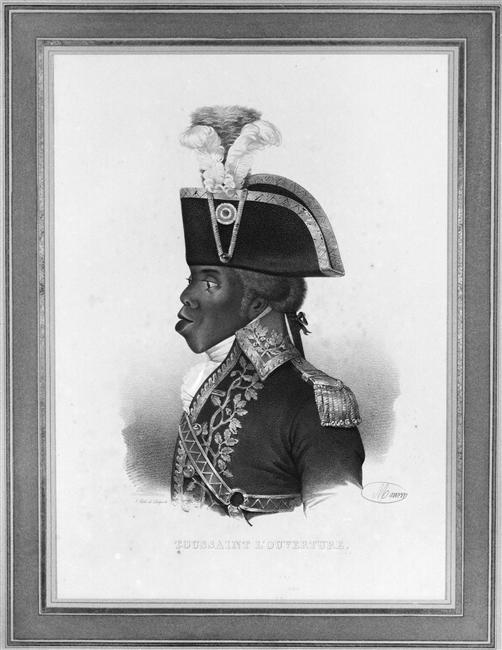
The revolt that began in Saint-Domingue in 1791 transformed American politics, commerce and ideas about slavery. The French colony had been a major market for American merchants and a highly profitable producer of sugar and coffee. When enslaved people challenged its plantation order, officials and slaveholders in the United States faced a revolution whose claims to freedom exposed the limits of their own. Their responses combined commercial calculation, fear and shifting diplomacy.
American policy was inconsistent. Some leaders supported white colonists trying to suppress the uprising, while John Adams's administration later cooperated with Toussaint Louverture. Jefferson took a different approach toward the struggle that ended in Haitian independence in 1804. The United States did not formally recognize Haiti until 1862. This delay shows how the interests of slaveholding politicians affected relations with a neighboring independent state, even while merchants continued to seek profitable exchanges.
The conflict also helped reshape the continent. Napoleon's failure to recover control of Saint-Domingue weakened his plans for a renewed American empire. Combined with renewed European war and other pressures, it contributed to his decision to sell Louisiana in 1803. Refugees carried the upheaval into American ports: white colonists, free people of color and enslaved people arrived in different circumstances. Their movement altered communities, especially New Orleans, where migrants helped shape language, culture and the city's social structure.
Haiti's victory offered a powerful example of emancipation achieved through resistance. It alarmed slaveholders while giving opponents of slavery and people held in bondage evidence that plantation power could be overturned. These meanings did not produce one uniform American response. The same revolution could be regarded as a danger, an inspiration or an opportunity for trade and expansion. Its impact on the United States therefore extended beyond foreign policy: it connected the republic's growth to an Atlantic struggle over freedom, racial hierarchy and the survival of slavery. Refugee movement also complicated American debates about immigration, because people arriving from the colony brought political rivalries and demands that officials could not easily separate from events abroad.
 Office of the Historian: The United States and the Haitian Revolution
 Duke University: Haiti and the United States