 Go Back

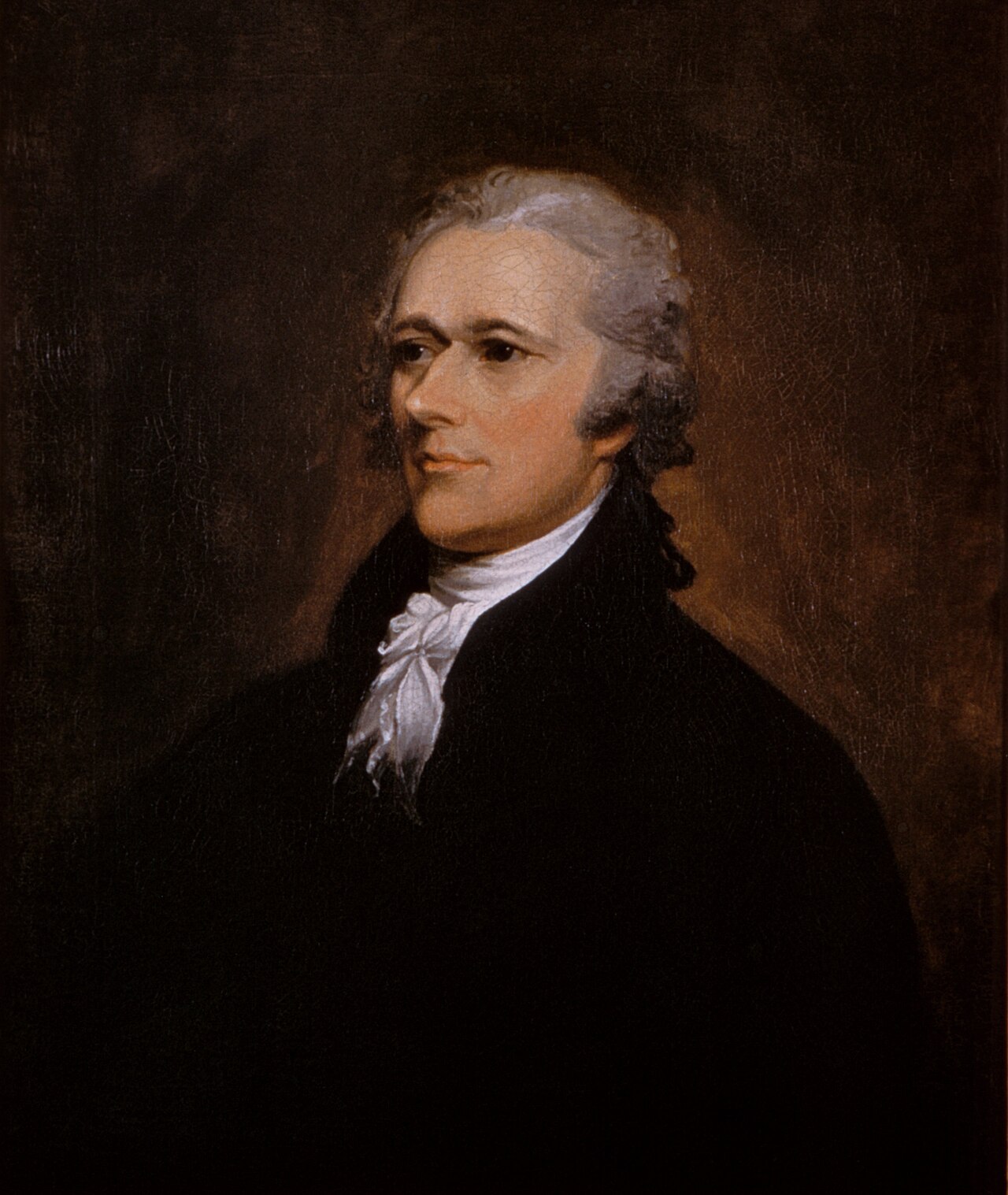
The first national political parties developed during the 1790s from disagreements within the government created by the Constitution. Alexander Hamilton, Washington's treasury secretary, favored policies that would strengthen federal finances and connect public credit with commercial growth. Thomas Jefferson and James Madison opposed important parts of this program. Their dispute concerned the meaning of the Revolution and the Constitution as well as particular taxes, debts and institutions.
Hamilton promoted funding the public debt, federal assumption of state debts and a national bank. He believed reliable credit would support the government and economic development. Opponents feared that these arrangements rewarded financial interests and concentrated power in a distant administration. The bank raised a constitutional question because the document did not expressly authorize one. Hamilton defended implied powers, while Jefferson favored a narrower reading of federal authority. Washington ultimately approved the bank in 1791.
Foreign affairs intensified the division. Revolution and war in Europe made relations with Britain and France central political questions. Federalists associated order and security with policies their opponents considered too favorable to Britain. Jefferson's supporters, increasingly organized as Republicans, accused Federalists of aristocratic ambitions. Newspapers, local networks and elections turned disagreements among officials into a wider contest for public support. Neither coalition represented a perfectly uniform class or region, and both claimed to protect republican government.
The election of 1800 brought Jefferson's supporters to the presidency after Federalist rule under Washington and John Adams. The transfer of power showed that organized opposition could win office within the constitutional system. It did not end argument over federal authority, commerce or foreign policy, and later administrations did not consistently follow every position they had taken in opposition. The first party system gave political conflict a durable organizational form. Its importance lies in the emergence of competing national coalitions where many founders had hoped public virtue would make parties unnecessary. The term Federalist had earlier described support for the Constitution; its later use as a party name did not mean all former ratification allies remained together.
 Britannica: Federalist Party
Britannica: Democratic-Republican Party