 Go Back

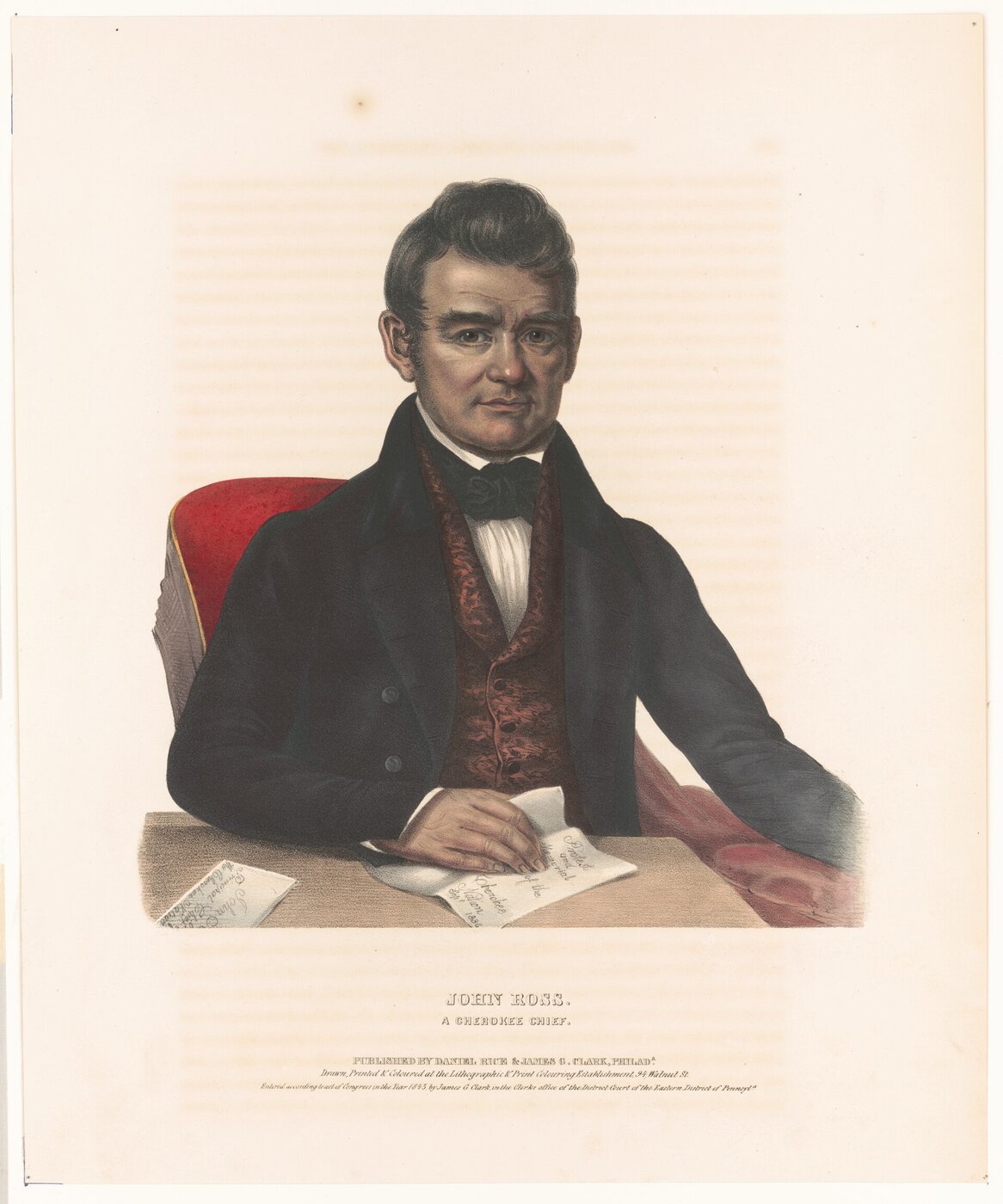
In the early nineteenth century, the Cherokee, Choctaw, Chickasaw, Creek, and Seminole nations held millions of acres of fertile land across the American Southeast, land that white settlers and cotton planters wanted for themselves. Pressed by southern states, especially Georgia, President Andrew Jackson made removal the centerpiece of his Indian policy. In 1830 Congress passed the Indian Removal Act, authorizing the president to negotiate treaties exchanging southeastern homelands for territory west of the Mississippi. Supporters framed removal as voluntary and humanitarian, but the law gave the government enormous power to coerce nations that refused to leave.
The targeted nations resisted through every legal and political channel open to them. The Cherokee had built a literate society using Sequoyah's syllabary, published a bilingual newspaper, and adopted a written constitution modeled on that of the United States. When Georgia moved to extend state law over Cherokee territory and seize their land, the Cherokee sued. In Worcester v. Georgia (1832), Chief Justice John Marshall ruled that the Cherokee Nation was a distinct political community in which Georgia's laws had no force. Georgia ignored the ruling, and Jackson refused to enforce it. In 1835 a small, unauthorized faction signed the Treaty of New Echota, surrendering all Cherokee land; the vast majority of the nation, led by Principal Chief John Ross, rejected it as fraudulent.
Removal proceeded by force. The Choctaw were driven west beginning in 1831, thousands dying of disease and exposure on the journey. Creek resistance in 1836 was crushed and followed by forced deportation. In 1838 some seven thousand federal and state troops rounded up roughly sixteen thousand Cherokee into stockades, then marched them west through the winter of 1838-1839. About four thousand people, a quarter of the nation, died from cold, hunger, and sickness on the route the Cherokee called the Trail Where They Cried. The Seminole in Florida fought back in the Second Seminole War (1835-1842), the costliest Indian war in American history, and even then many were shipped west.
In the new Indian Territory, later Oklahoma, the removed nations rebuilt their governments, schools, and economies from almost nothing. Removal cleared some fifty million acres for white settlement and the spread of cotton slavery, and it set a precedent the government would repeat: treaty promises made under pressure and later broken. Half a century later a different policy, the Dawes Act of 1887, went further and broke up tribal landholding itself, dividing reservations into individual allotments. The Cherokee, Choctaw, Chickasaw, Creek, and Seminole survived as sovereign nations, and their fight against removal remains a defining case of the limits of American law when it collided with land hunger.
 Britannica: Trail of Tears
 National Park Service: Trail of Tears National Historic Trail
 Library of Congress: Indian Removal Act