 Go Back

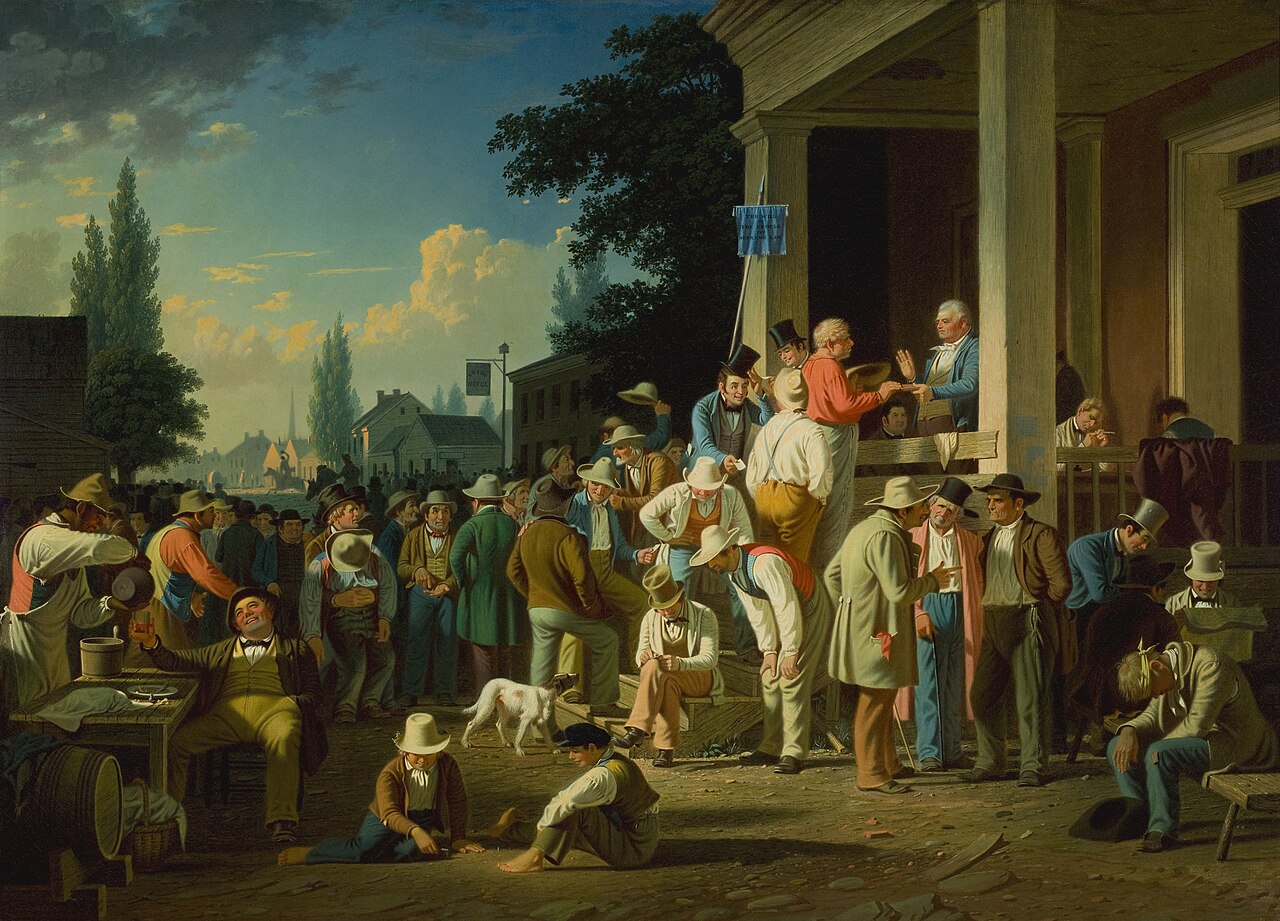
The political changes associated with Andrew Jackson rested on a broader expansion of participation among white men. In the decades after the Revolution, states increasingly reduced property qualifications for voting. This process began before Jackson's presidency and was shaped by state decisions rather than one national act. It weakened an older assumption that only men with sufficient property possessed the independence necessary to vote. Yet the widening of the electorate was sharply bounded by race and gender.
Jackson's victory in 1828 drew on a growing politics of organization, newspapers and mass campaigning. Supporters presented him as a defender of ordinary citizens against entrenched privilege. The Democratic coalition brought together groups from different regions and economic positions, rather than expressing a single class interest. Opponents questioned both his policies and his use of executive authority. Public meetings, party networks and electoral competition made participation more visible and sustained between elections.
The movement's language of equality did not extend equally to everyone. Enslaved people remained excluded from liberty and political rights. Free Black people faced restrictions, and some states narrowed their access to voting while expanding it for white men. Women were generally denied the franchise. Indigenous peoples faced removal and pressure on their sovereignty. The democratic practices celebrated by Jackson's supporters therefore developed alongside coercion and exclusion, not in place of them.
Jacksonian politics also intensified arguments over the bank, patronage and the balance between national and state authority. Its opponents developed their own organization, helping produce a competitive party system. The period's significance cannot be captured either by calling it universal democracy or by ignoring the real expansion of white male participation. It shows how a society could broaden political power within one group while protecting boundaries around others. Understanding those simultaneous developments explains both the energy of popular politics and the limits of the republic's claims to equality in the early nineteenth century. A voter newly eligible under state law still needed access to information and an opportunity to participate, giving party organization a growing practical importance.
 HISTORY: Jacksonian Democracy
 Gilder Lehrman Institute: Making White Male Democracy