 Go Back

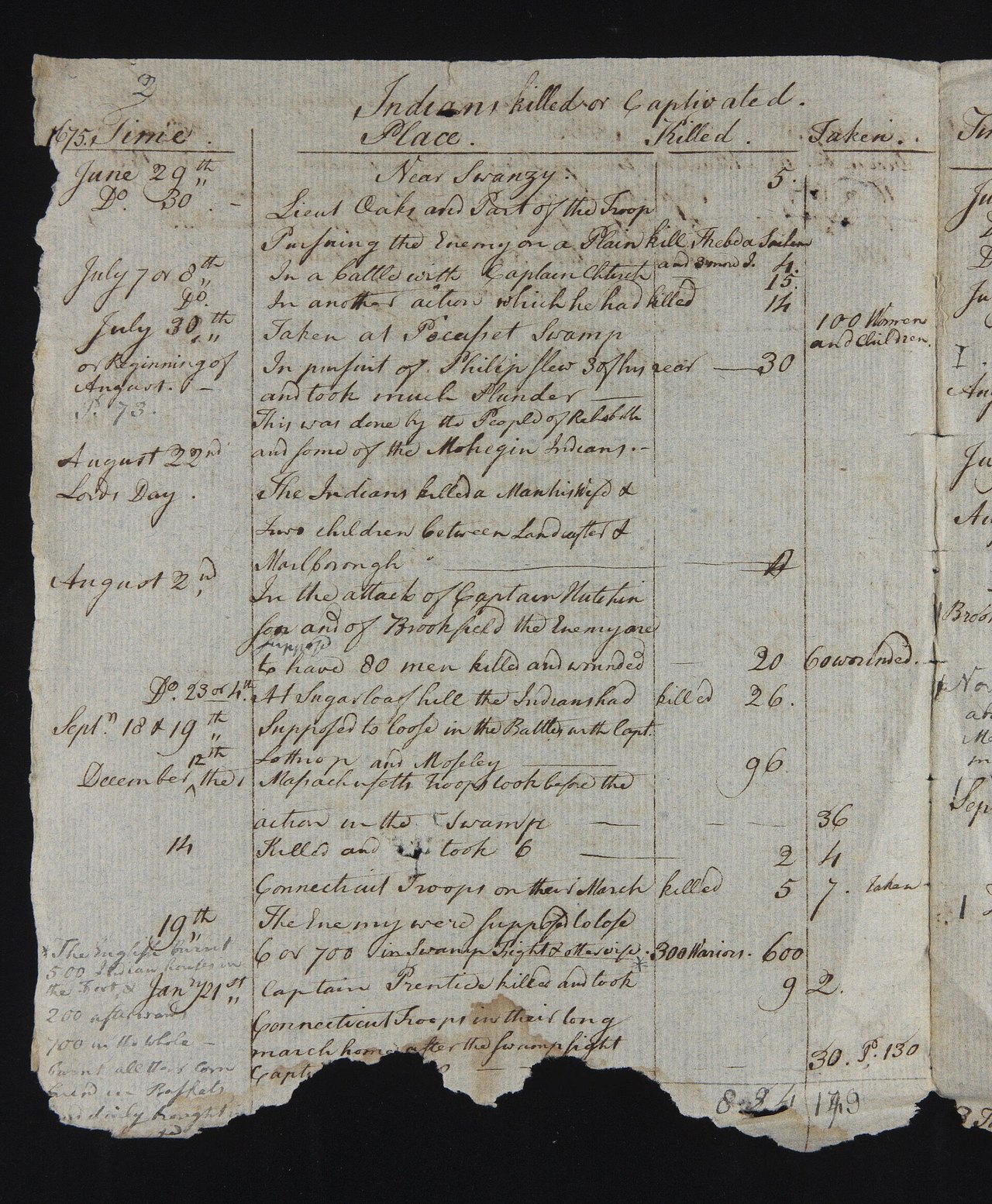
In 1675, two generations after the Mayflower, the alliance between the Wampanoag and the English collapsed into the bloodiest war per capita in American history. Metacom, called King Philip by the English, was the son of Massasoit, the sachem who had made peace with Plymouth in 1621. By his time the balance had shifted utterly: colonial towns had multiplied, Native land had been fenced for farms and herds, and Native people were being dragged before English courts under English law. When three Wampanoag were tried and hanged for the murder of John Sassamon, a Christian Native informant, in June 1675, warriors attacked Swansea, and New England ignited.
The war that followed was a war of whole peoples. Colonial militia marched against Metacom's homeland at Mount Hope, forcing the Wampanoag into flight and alliance-building; the colonists' demand that the neutral Narragansett surrender fugitives backfired, driving that powerful nation into the war. In December 1675, a thousand colonial troops stormed the Narragansett winter fort in the Great Swamp Fight, killing hundreds of women, children and elders. Through the bitter winter, Native forces struck back, burning town after town: Lancaster, Medfield, Groton, and more than half of New England's settlements were attacked.
Spring turned the tide. Native forces, short of gunpowder, food and allies, could not plant their corn, while colonial troops, now allied with the Mohegan, Pequot and Mohawk, hunted the war parties down. Metacom's support melted away; his wife and son were captured in August 1676, and days later he was cornered in a swamp and shot by an Indigenous soldier serving with the English. His head was displayed on a pole at Plymouth for twenty years. His wife and child were sold into slavery in the West Indies.
King Philip's War destroyed Native power in southern New England. Several thousand Native people were dead, enslaved or driven from their homelands, and the survivors were confined to small praying towns and reservations. But it nearly destroyed New England too: a dozen towns lay in ashes, one in ten military-age colonial men was dead, and the economy took a generation to recover. The war remains a landmark of what colonial expansion cost, and for the Wampanoag and their neighbors, a catastrophe survived but never forgotten.
 Britannica: King Philip's War
 HISTORY: King Philip's War
 Smithsonian NMAI: The First Thanksgiving Timeline