 Go Back

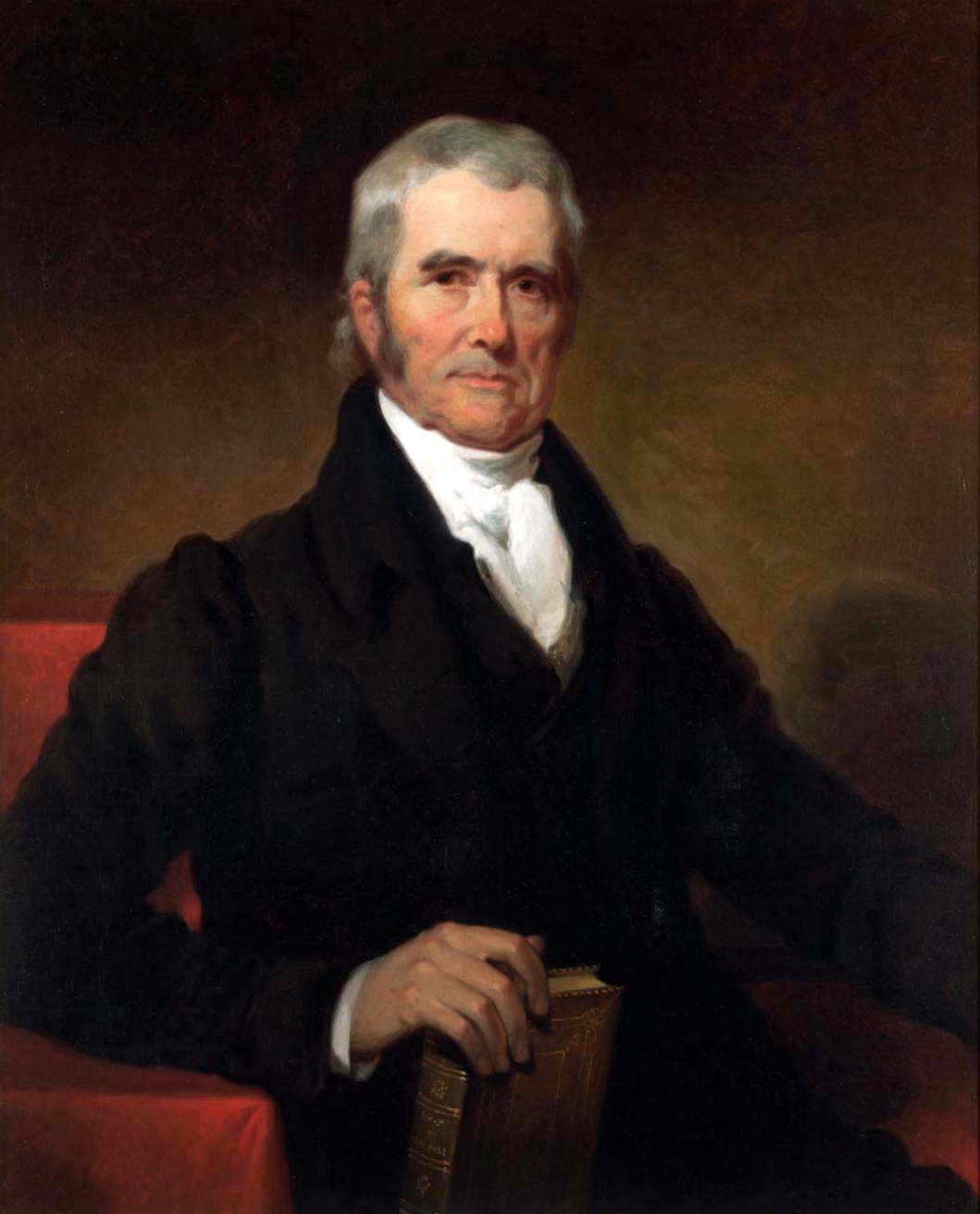
Marbury v. Madison arose from the transfer of presidential power in 1801. In the final days of John Adams's administration, appointments were made to judicial offices. William Marbury was named a justice of the peace, and his commission was signed and sealed, but it was not delivered before Thomas Jefferson took office. The new administration withheld it. Marbury asked the Supreme Court to compel Secretary of State James Madison to hand it over.
The dispute placed Chief Justice John Marshall in a difficult position. He had served as Adams's secretary of state when the commissions were being processed. An order against Madison might be ignored by the executive, exposing the Court's weakness. Refusing all relief could appear to accept an unlawful denial of Marbury's appointment. Marshall's opinion instead separated the questions: whether Marbury had a right, whether a legal remedy existed and whether this Court could supply that remedy in the form requested.
In February 1803, the Court concluded that Marbury had a right to his commission but that it could not issue the requested order under its original jurisdiction. Marshall treated the relevant provision of the Judiciary Act of 1789 as conflicting with the Constitution's allocation of that jurisdiction. A written constitution, the opinion argued, was superior to an ordinary statute. Courts deciding a case had to follow the Constitution when the two could not be reconciled.
Marbury therefore lost his immediate claim for an order, while the Court asserted the principle of judicial review over federal legislation. It was the first Supreme Court decision declaring an act of Congress unconstitutional. The ruling did not mean judges could decide any political dispute or exercise unlimited power. Its authority developed within a constitutional system that continued to produce arguments over courts and elected government. The case's importance lies in linking constitutional supremacy to the judiciary's work of deciding cases, making judicial review a central feature of American constitutional law. The opinion thus denied the particular remedy while explaining why judges could examine the validity of the statute on which that remedy depended.
 Britannica: Marbury v. Madison
 Library of Congress: Marbury v. Madison