 Go Back

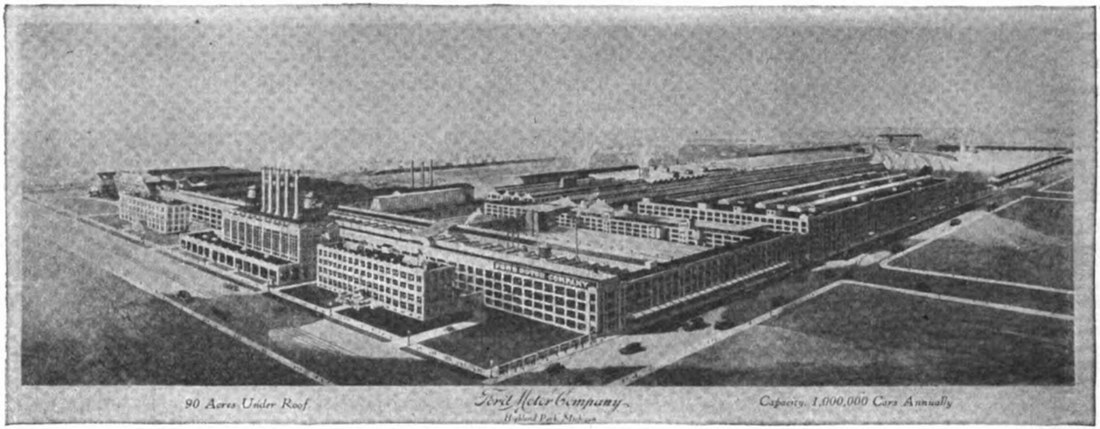
Mass production, making large numbers of identical goods from standardized, interchangeable parts, developed over a long period, but Henry Ford made it a world-changing system. Ford announced the Model T in October 1908 as a car 'for the great multitude': simple, rugged, and cheap. At his new Highland Park plant in Michigan, his engineers spent years rearranging machines so that work flowed continuously from one operation to the next.
The breakthrough came in 1913-1914 with the moving assembly line. Instead of workers walking to the car, the car moved past the workers, each performing one small, repeated task. The time to assemble a Model T chassis collapsed from twelve and a half hours to 93 minutes. Ford shared the gains strategically: in 1914 he introduced the five-dollar day, roughly double prevailing wages, which cut turnover, built loyalty, and turned his own workers into car buyers.
Falling prices created a mass market. Ford's standardized designs and expanding assembly lines helped make cars affordable to a much wider public. Other industries adopted similar production methods, and by 1924 a consumer culture of installment buying, national advertising, and branded goods was reshaping American life. This growth also brought repetitive factory work, dependence on wages and credit, and new demands for roads and fuel.
The automobile remade the country itself. Millions of Americans took to the road, suburbs grew, roads were paved, and roadside businesses from gas stations to tourist camps sprang up to serve drivers. Farming, courtship, leisure, and the map of every American town changed. By 1924 the United States was building most of the world's cars, and the Fordist formula of high wages and low prices was hailed, and criticized, as the model of a new industrial civilization.
 Britannica: Mass Production
Britannica: Henry Ford
Britannica: Assembly Line