 Go Back

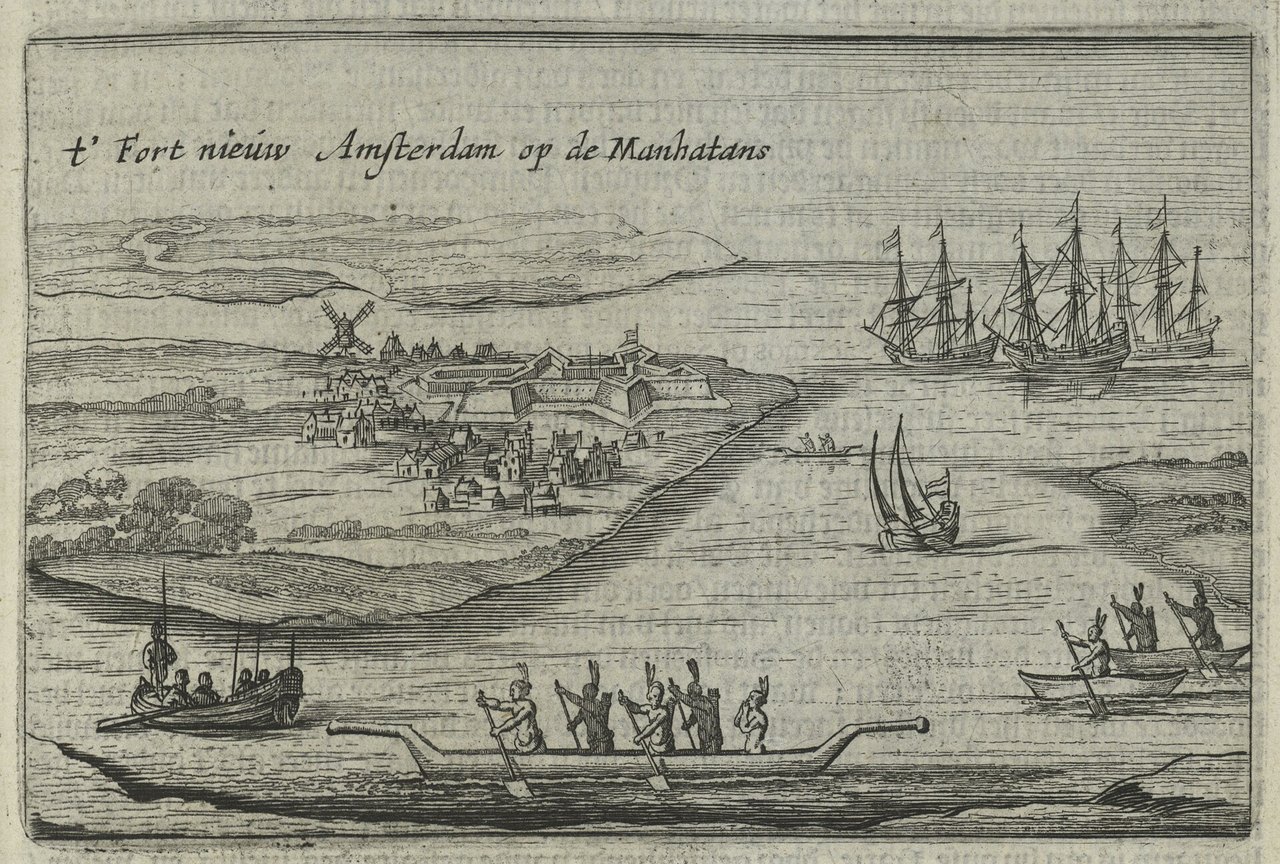
In 1609 Henry Hudson, an English captain sailing for the Dutch East India Company, explored the river that now bears his name and reported a land rich in furs. Dutch traders followed, and in 1624 the new Dutch West India Company planted permanent settlers, purchasing Manhattan Island from its Indigenous inhabitants in 1626 for goods famously valued at sixty guilders. The colony of New Netherland was never a farmer's refuge but a business venture: its purpose was profit, above all the beaver pelts that poured down the Hudson to Fort Orange, near today's Albany, one of the busiest fur markets in the Atlantic world.
New Amsterdam, the little capital at Manhattan's tip, was a company town with a windmill, a fort and a waterfront of warehouses, and soon one of the most cosmopolitan places on earth. In 1643 a visiting Jesuit claimed to hear eighteen languages spoken there. Walloons, Germans, Scandinavians, Jews expelled from Brazil, free and enslaved Africans, and English Puritans all settled under Dutch rule. The colony's pragmatic tolerance was commercial as much as idealistic, but it gave New Netherland a plural character long before toleration was fashionable.
The company's rule was often harsh and inept. Director-General Willem Kieft's reckless war against neighboring Native peoples in the 1640s devastated the colony and its fur trade; his successor, the one-legged Peter Stuyvesant, governed firmly, took the Swedish colony of New Sweden on the Delaware in 1655, and built New Amsterdam into an orderly port, though colonists chafed at having no elected assembly. Meanwhile the 'patroonship' system, vast manorial estates granted to wealthy investors, struggled to attract the farmers the colony needed.
New Netherland fell without a shot. In August 1664 four English frigates appeared in the harbor, and Stuyvesant, unsupported by his company and facing citizens unwilling to fight, surrendered. The English renamed the province New York, and though the Dutch briefly retook it in 1673, the colony was gone by 1674. Its legacies endured: New York's commercial energy, ethnic diversity, legal customs and place names, from Harlem to Brooklyn, are the inheritance of the Dutch Atlantic's four decades on the Hudson.
 Britannica: New Netherland
 National Park Service: The Rise and Fall of New Netherland
National Park Service: New Netherland, the Dutch Commercial Colony