 Go Back

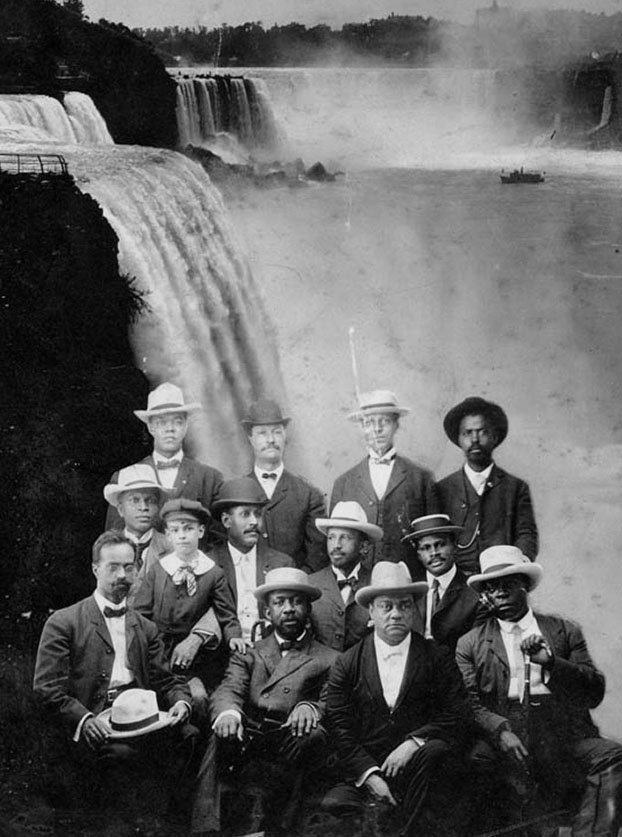
The Niagara Movement and the Founding of the NAACP. At the opening of the twentieth century, Black America's leadership was dominated by Booker T. Washington's accommodation: industrial education, economic patience, silence on the vote and on Jim Crow. In 1905 a small band of young Black intellectuals and ministers, led by W.E.B. Du Bois and William Monroe Trotter, met on the Canadian side of Niagara Falls - denied rooms on the American side - to organize open resistance. The Niagara Movement's declaration rejected patience outright: 'We refuse to allow the impression to remain that the Negro-American assents to inferiority, is submissive under oppression and apologetic before insults.'
The Niagara Movement never grew past four hundred members - harassed by Washington's network, starved of funds - but it drew the line that the century would follow: full civil rights, the vote, equal education, protest without apology. Then, in August 1908, a race riot in Springfield, Illinois - Abraham Lincoln's own town - left Black residents lynched within sight of the statehouse, and a white socialist writer, William English Walling, asked in print the question that founded the NAACP: 'What large and powerful body of citizens is ready to come to their aid?'
On Lincoln's birthday, 12 February 1909, Walling, Mary White Ovington, Oswald Garrison Villard and sixty others - Black and white, including the Niagara remnant - issued 'the Call'; the National Association for the Advancement of Colored People was chartered in 1910, with Du Bois as its one Black national officer, founding editor of its magazine The Crisis. The Crisis became the movement's voice - one hundred thousand readers within a decade - and the association's lawyers began the long courtroom siege of Jim Crow: the grandfather clauses struck down in 1915, Louisville's residential segregation law in 1917.
The NAACP grew into the largest civil rights organization in the country - hundreds of thousands of members by 1919, the anti-lynching crusade, the legal campaigns that ended, forty-five years later, at Brown v. Board of Education. The line from Niagara's four hundred to the March on Washington runs straight: organized, legal, unapologetic protest, 'assenting to inferiority' never again.
 Britannica: Niagara Movement
Britannica: NAACP
Britannica: W.E.B. Du Bois