 Go Back

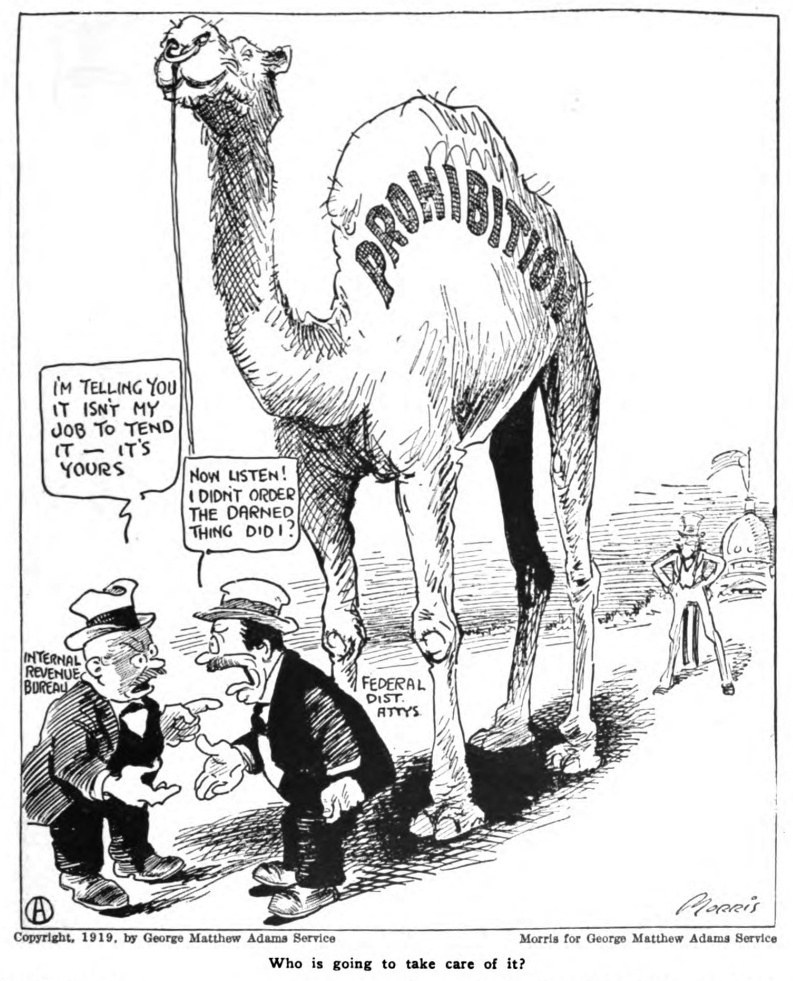
Prohibition was the culmination of a century of temperance crusading. Reformers had long blamed alcohol for poverty, domestic violence, and political corruption, and organizations like the Woman's Christian Temperance Union and, from 1893, the Anti-Saloon League built a political machine dedicated to destroying the liquor trade. World War I, with its grain shortages and hostility to German-American brewers, gave the drys their opening: the Eighteenth Amendment, banning the manufacture, sale, and transportation of intoxicating liquors, was ratified in January 1919, and Congress passed the Volstead Act that October to enforce it. Prohibition took effect in January 1920.
The dry experiment changed drinking habits but did not end drinking. Saloons closed and alcohol consumption fell at first, especially in rural areas that had supported the law. But in the cities, illegal 'speakeasies' multiplied; within a few years New York City alone counted tens of thousands of them. Homemade 'bathtub gin,' smuggled Canadian whiskey, and medicinal and sacramental exemptions supplied the demand that the law could not suppress.
Enforcement was starved and outmatched. Congress funded far too few agents to police 18,000 miles of coastline and every city block, and bribery became routine. Bootlegging grew into big business: liquor came over the Canadian border, off 'Rum Row' ships anchored outside the three-mile limit, and out of thousands of illicit stills and breweries. Organized criminal syndicates in the big cities made fortunes from the trade and defended them with bribery and violence, corrupting police, judges, and politicians, while the fashion for hip flasks and cocktails made lawbreaking a kind of urban chic.
By 1924 the country was already arguing over whether the 'noble experiment' had failed. Defenders pointed to lower alcohol consumption and better health; critics pointed to crime, corruption, and disrespect for law. The debate ran on unresolved through 1924, with the drys still holding Congress and repeal advocates gaining ground.
 Wikipedia: Prohibition in the United States
 Britannica: Volstead Act
Britannica: Eighteenth Amendment