 Go Back

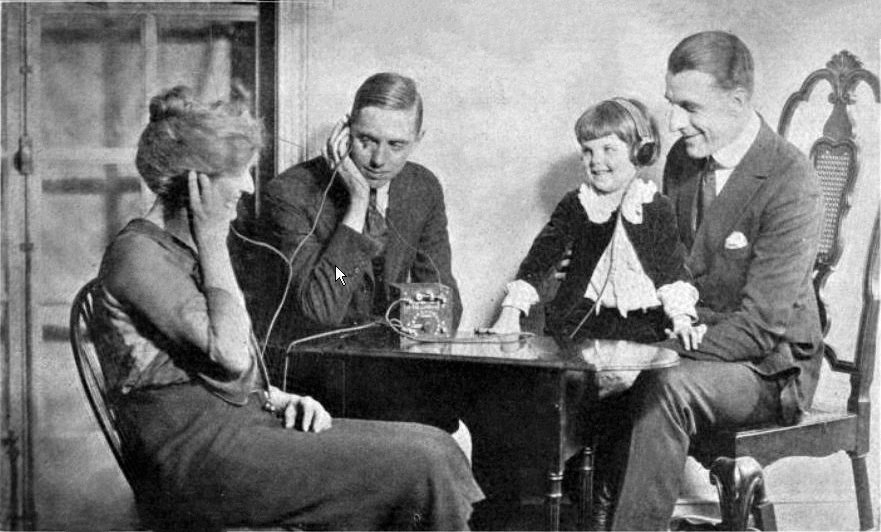
Radio and the Birth of Broadcasting. In 1920 radio was a hobby for amateur 'hams' with headphones and crystal sets - point-to-point chatter, a wireless telegraph for enthusiasts. That year two things changed it forever: Frank Conrad, a Westinghouse engineer in Pittsburgh, began playing phonograph records over his experimental station 8XK, and the department stores started selling receivers to his listeners; and Westinghouse, seeing a market, built the first true broadcasting station, KDKA, which on 2 November 1920 read the returns of the Harding-Cox election into a thousand astonished homes. Broadcasting - one voice to everyone - was born.
The boom that followed astonished even its promoters. In 1922 there were thirty stations and sixty thousand sets; by 1924 there were over five hundred stations and three million sets, and the 'radio craze' - the boom-era madness for the new toy - was the decade's first great consumer mania. The airwaves jammed into chaos until Herbert Hoover's Commerce Department sorted the dial. Programming found its forms: the World Series by play-by-play from 1921, church services and crop reports, dance bands at night, and the first sponsored shows - the radio advertisement followed close behind.
The networks welded the stations into a national system: the National Broadcasting Company, founded by RCA in 1926, and CBS a year later, chained local stations to a single national voice by telephone lines, and a farmer in Iowa could hear the same orchestra as a family on Park Avenue the same night. The government answered with the Radio Act of 1927, licensing the airwaves 'in the public interest, convenience, or necessity' - the charter of American broadcasting.
Radio was the first medium of the modern kind: instant, national, and entering the home. It created mass culture as Americans had never known it - one nation laughing at the same joke at the same hour - and it made the political voice a household presence, from Coolidge's first broadcast inaugural to the fireside presidency of Franklin Roosevelt. Television and everything after lengthened its signal.
 Britannica: Radio
Britannica: National Broadcasting Company
Britannica: Radio Act of 1927