 Go Back

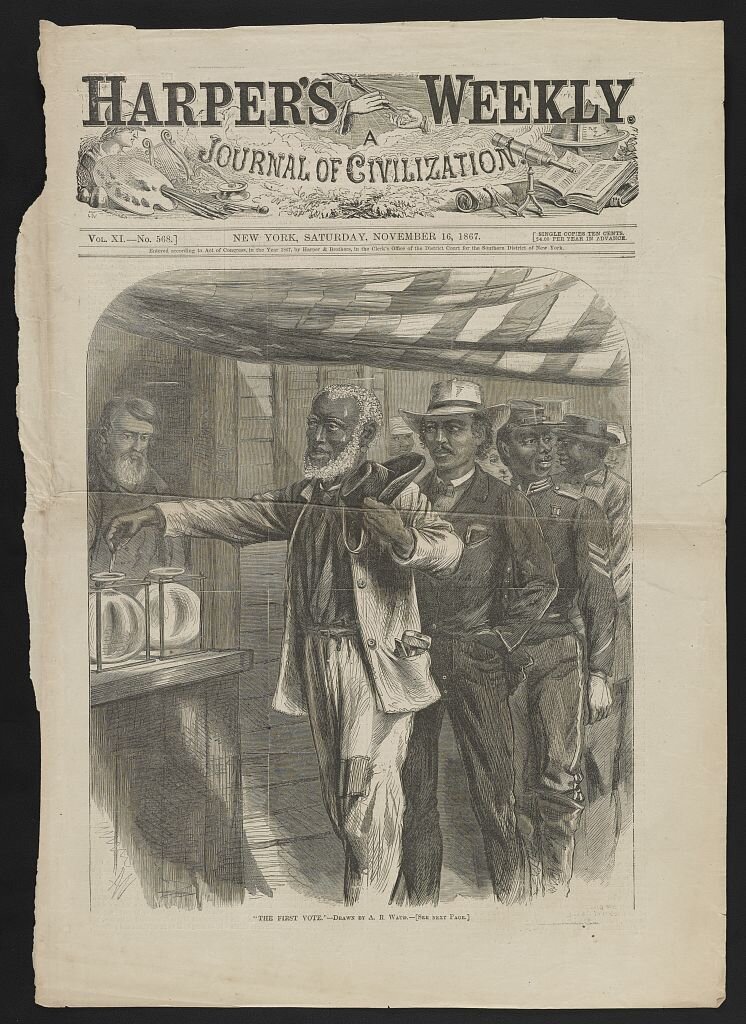
When the Civil War ended in 1865, the United States faced three enormous questions: how to readmit the defeated southern states, what place four million freedpeople would hold in the nation, and who would decide. Lincoln had proposed lenient readmission when a tenth of a state's voters swore loyalty, but his assassination in April 1865 left President Andrew Johnson, a Tennessee Democrat, in charge. Johnson pardoned most Confederates and allowed southern legislatures to enact the Black Codes, laws that restricted freedpeople's movement, labor, and rights so tightly they amounted to slavery in new dress.
Congressional Republicans, outraged by the Black Codes and by southern violence, seized control of Reconstruction. They passed the Civil Rights Act of 1866 over Johnson's veto, and in the Reconstruction Acts of 1867 they divided the South into five military districts and required new state constitutions providing Black male suffrage before readmission. Johnson's resistance to Congress led the House to impeach him in 1868; the Senate acquitted him by one vote. Under military protection, southern voters, Black and white, elected conventions that wrote the region's most democratic constitutions to date, and every former Confederate state was readmitted by 1870.
At the movement's heart stood three constitutional amendments. The Thirteenth, ratified in 1865, abolished slavery. The Fourteenth, ratified in 1868, made citizens of all persons born in the United States and subject to its jurisdiction, overturning Dred Scott, and guaranteed equal protection of the laws. The Fifteenth, ratified in 1870, forbade denying the vote on account of race, color, or previous condition of servitude. The Freedmen's Bureau, covered on its own page, worked alongside these changes to aid the transition from slavery to freedom.
Congressional Reconstruction transformed the South's politics and public life for a decade, described on the Black Political Participation page, before violence, exhaustion, and the Compromise of 1877 ended it, as the End of Reconstruction page recounts. Their promises of racial equality faced sustained resistance and uneven enforcement. The amendments nevertheless remained in the Constitution, the reason Reconstruction is often called America's unfinished revolution.
 Britannica: Reconstruction
 National Park Service: Reconstruction Era
 Library of Congress: Reconstruction and Its Aftermath