 Go Back

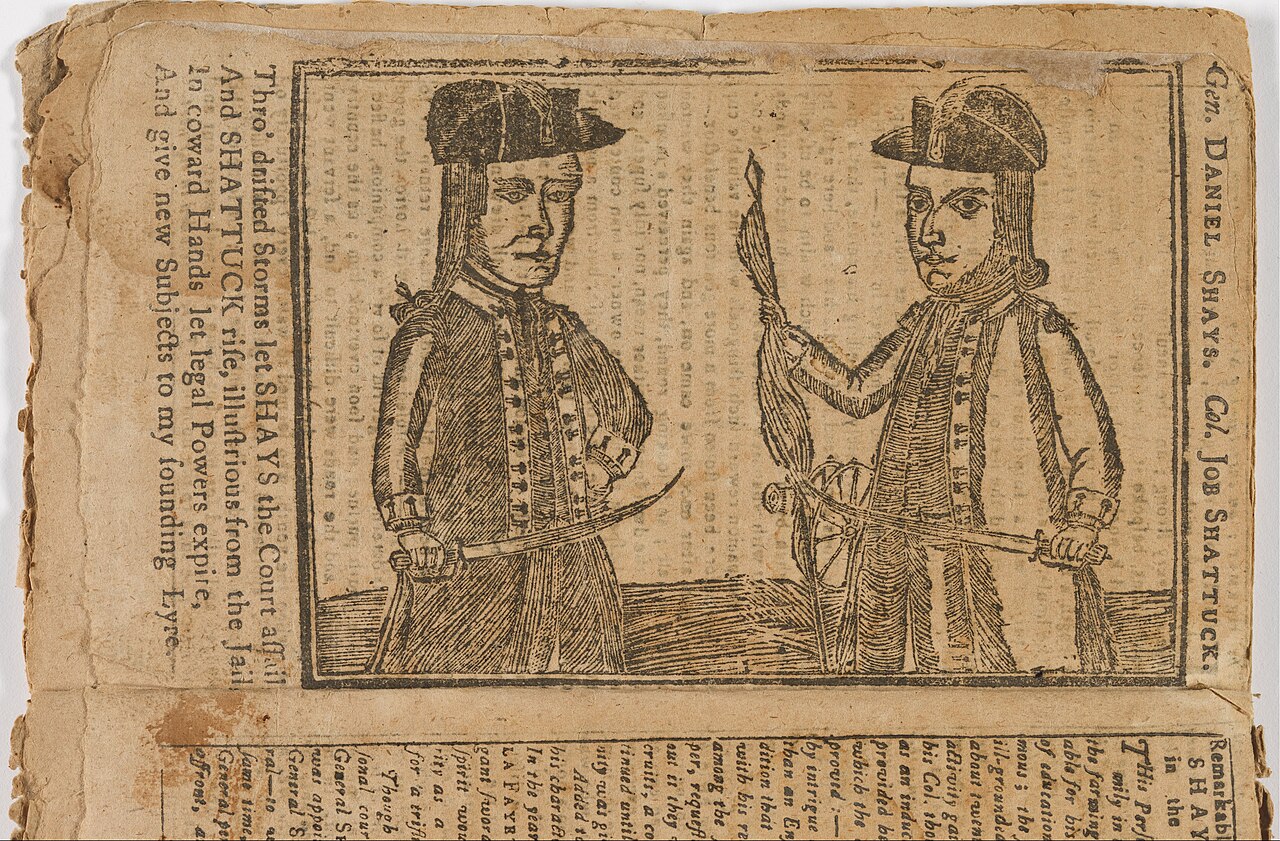
Shays' Rebellion (1786-87) was an armed insurrection of debt-pressed farmers in western and central Massachusetts - and the crisis that convinced a generation of Americans that the government they had won independence with was too weak to survive. It began in courtrooms, not on battlefields: after the Revolutionary War, debts, heavy state taxes and a desperate shortage of hard money pushed thousands of farm households toward foreclosure and debtors' jail. Protesters who had fought for their rights against Britain now watched a government of their own making take their farms.
The roots were a broken chain of credit. Massachusetts merchants traded on credit extended from Britain; shopkeepers bought on credit from the merchants; farmers bought from shopkeepers with promises against next year's harvest. When peace came in 1783, British creditors demanded payment in coin the country barely had, and the demands cascaded downward until they reached the yeoman farmer, whose taxes the state of Massachusetts also insisted on collecting in hard cash to pay its war debts. Courts filled with foreclosure suits; men who had marched to Bunker Hill and Saratoga faced prison for debts of a few pounds. Petitions for relief - paper money, tax delays - got nothing from a legislature dominated by the coastal merchant interest.
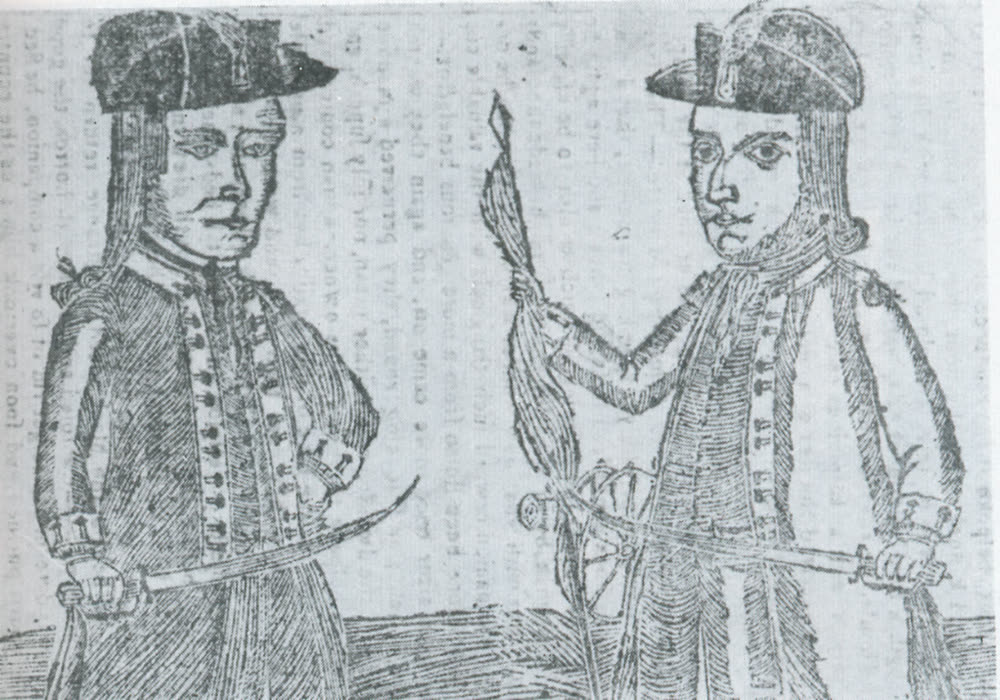
In the autumn of 1786 the farmers answered directly. Organized groups - calling themselves Regulators, after the earlier Carolina movements - surrounded courthouses at Northampton, Worcester, Concord and other towns and simply stopped the courts from sitting, breaking the machinery of debt collection without bloodshed. The most familiar of their leaders was Daniel Shays, a poor Pelham farmer who had been a captain in the Continental Army. Governor James Bowdoin's government responded with a severe Riot Act and, when Congress proved unable to help under the Articles of Confederation, raised a private army paid for by Boston's merchants and commanded by the veteran general Benjamin Lincoln.
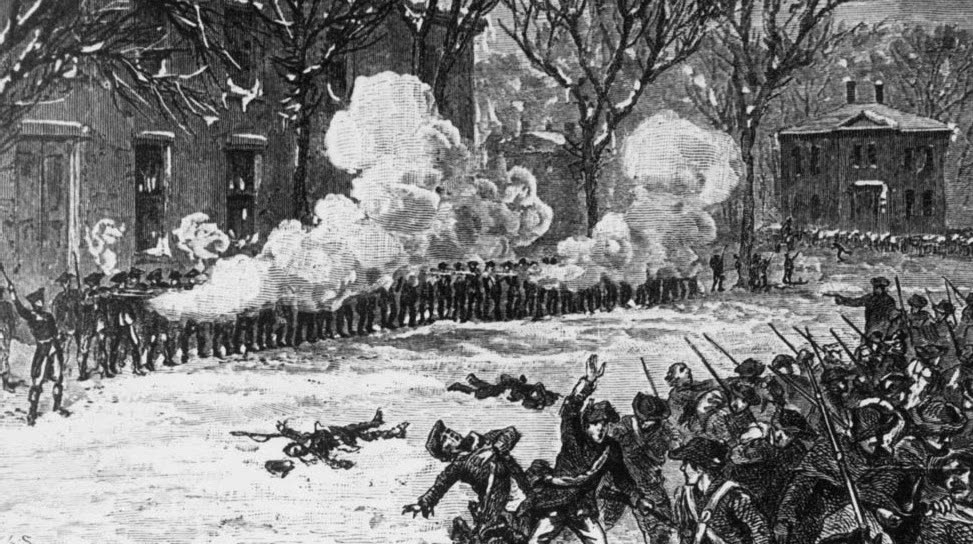
The confrontation came in January 1787. Shays and other leaders converged on the federal arsenal at Springfield, hoping its muskets and cannon would equip a march on Boston. On 25 January the defenders - state militia under William Shepard - fired warning shots and then grape into the advancing column, killing four and scattering the rest. Lincoln's army then chased the insurgents through a snowstorm and routed their main body at Petersham on 3 February. The rebellion collapsed. Shays fled to Vermont, outside Massachusetts' reach; condemned to death, he was pardoned in 1788 and died in obscurity on a veteran's pension. Voters, meanwhile, threw out Governor Bowdoin and elected John Hancock, and the new legislature eased the tax pressure that had caused the trouble. Military defeat had not erased the grievances.
The shock ran through every state. Under the Articles of Confederation the national government had been powerless - no army to send, no money to send it with - while a single state fought off insurrection with private funds. For men like Washington, who wrote anxiously of 'combustibles in every state', the lesson was that the confederation could not keep order; for others, the lesson was that distant government answered property before people. When the Constitutional Convention met in Philadelphia in May 1787, the memory of Springfield's snows sat in the room. Jefferson, watching from Paris, took the opposite view - 'a little rebellion now and then is a good thing' - but the Constitution that emerged gave the federal government the powers the rebellion had shown it lacked. Shays' Rebellion did not create the Constitution by itself, but it sharpened the question the delegates had to answer: how much authority a republic needs to survive, and what it owes the citizens who fight its wars.
 Britannica: Shays' Rebellion
 World History Encyclopedia: Shays' Rebellion