 Go Back

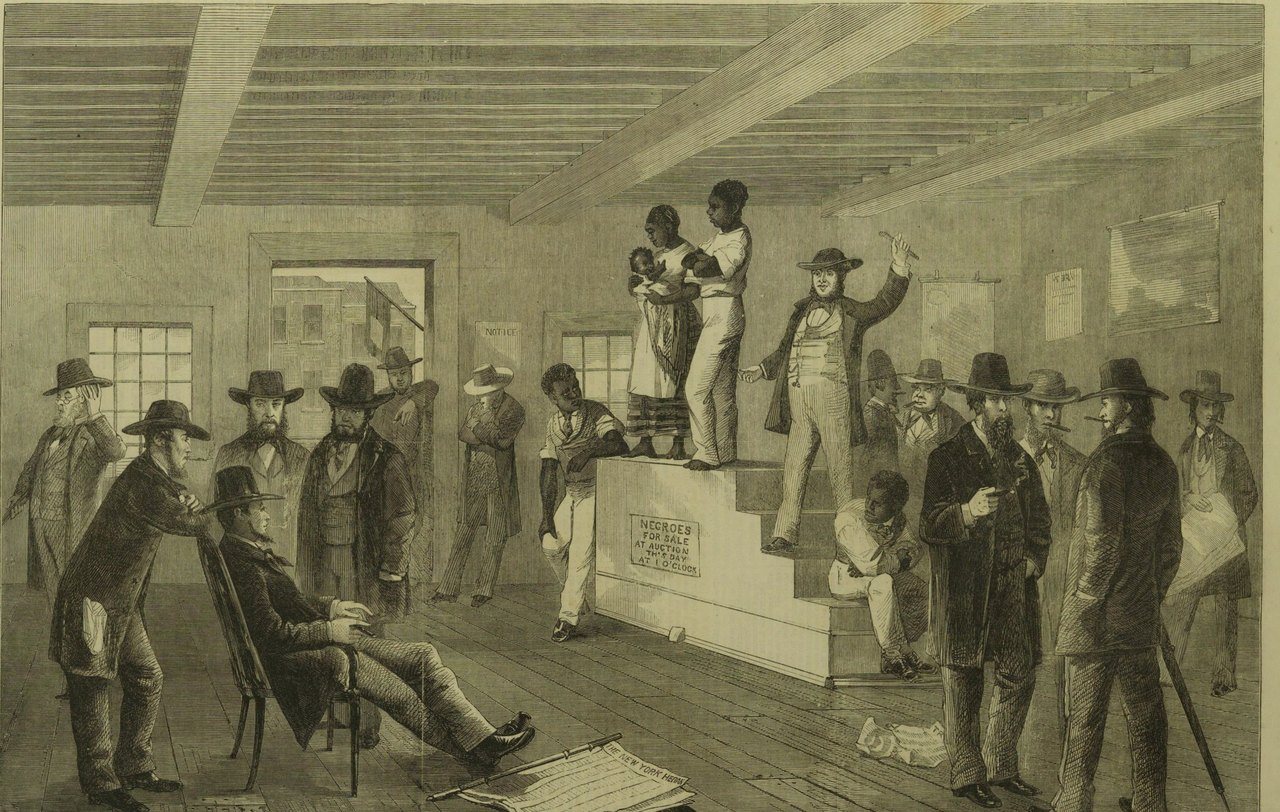
Between the sixteenth and nineteenth centuries, European traders carried between ten and twelve million Africans across the Atlantic in chains, one of the largest forced migrations in human history. Britain became the trade's greatest carrier, its ships sailing a triangular route: manufactured goods to West Africa, captives to the Americas, and sugar, tobacco and cotton home. On the Middle Passage, captives were packed below decks in filth and disease; roughly one in seven died at sea. This was not an incidental evil but the economic engine of the Atlantic world, and British North America stood within it.
The first Africans in the English mainland colonies, 'twenty and odd' captives, were landed at Virginia in 1619, into a society where their status was at first ambiguous, and some early Africans won freedom and property. Over the seventeenth century, however, colonial law closed around them. As planters shifted from indentured servants to enslaved Africans, statutes made slavery hereditary through the mother and permanent for life. By 1700, colonial statutes treated the great majority of Black colonists as enslaved property, though free Black people still lived in every region.
By the eighteenth century, slavery anchored entire regional economies. In the Chesapeake, enslaved workers grew tobacco; in the South Carolina and Georgia Lowcountry, they built and worked the rice and indigo plantations, their African skills essential to the crop; in the North, enslaved people labored on farms, in ports and in households, and northern merchants profited from slave-traded goods. By 1775 some 500,000 people of African descent lived in the thirteen colonies, a fifth of the population, the great majority enslaved.
Enslaved people resisted the system in every way open to them: work slowdowns, escape, the preservation of African family, faith and culture in the face of systematic dehumanization, and open rebellion from New York in 1712 to Stono in 1739. Their labor built colonial wealth, their presence shaped colonial law, and the contradiction between the colonists' language of liberty and the reality of slavery would haunt the nation they were about to found.
 Britannica: Transatlantic Slave Trade
 PBS Africans in America: From Indentured Servitude to Racial Slavery
 Slavery and Remembrance: American Revolution