 Go Back

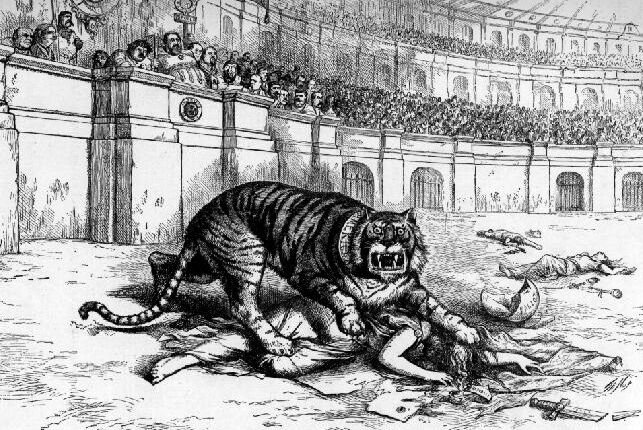
Tammany Hall and Urban Machine Politics. Tammany Hall began in 1789 as a patriotic fraternal society named for a Delaware chief, and grew by the 1850s into the Democratic organization of New York City - and the archetype of the American political machine. Its logic was simple and, in its way, honest: the machine served the immigrant poor whom nobody else served. The ward boss found the newcomer a job, a pushcart license, coal in winter, a lawyer in trouble, a turkey at Christmas; in return he asked only votes. Tammany turned the naturalization mill and the saloon into a system of government.
Its most notorious boss made the system infamous. William M. Tweed, Grand Sachem in the 1860s, ran the Tweed Ring, which looted New York on a scale still startling - the county courthouse that was budgeted at a quarter of a million and cost twelve million, with the Ring skimming two-thirds of every bill; the total theft guessed at anywhere from thirty to two hundred million dollars. Thomas Nast's cartoons in Harper's Weekly hounded Tweed to prison - the boss could not read the editorials, he said, but 'my constituents can't read, but they can see pictures.'
Yet the machine survived reform after reform, because it worked: Tammany built parks, docks and boulevards, naturalized and registered the immigrant masses, and - under later sachems like Charles F. Murphy - matured into a patron of the social legislation the poor actually needed; Al Smith and the New Deal's Frances Perkins were Tammany's graduates. Plunkitt of Tammany Hall, the machine's philosopher, explained it all: 'I seen my opportunities and I took 'em.'
The machines - Tammany in New York and its cousins in every American city - were the immigrant's ladder and the reformer's scandal at once: corruption and social service in one organization. Fiorello La Guardia and the New Deal broke Tammany's power in the 1930s, but the machine remains the durable American answer to a durable question: how the urban poor organized themselves into political power.
 Britannica: Tammany Hall
Britannica: William M. Tweed
Britannica: Thomas Nast