 Go Back

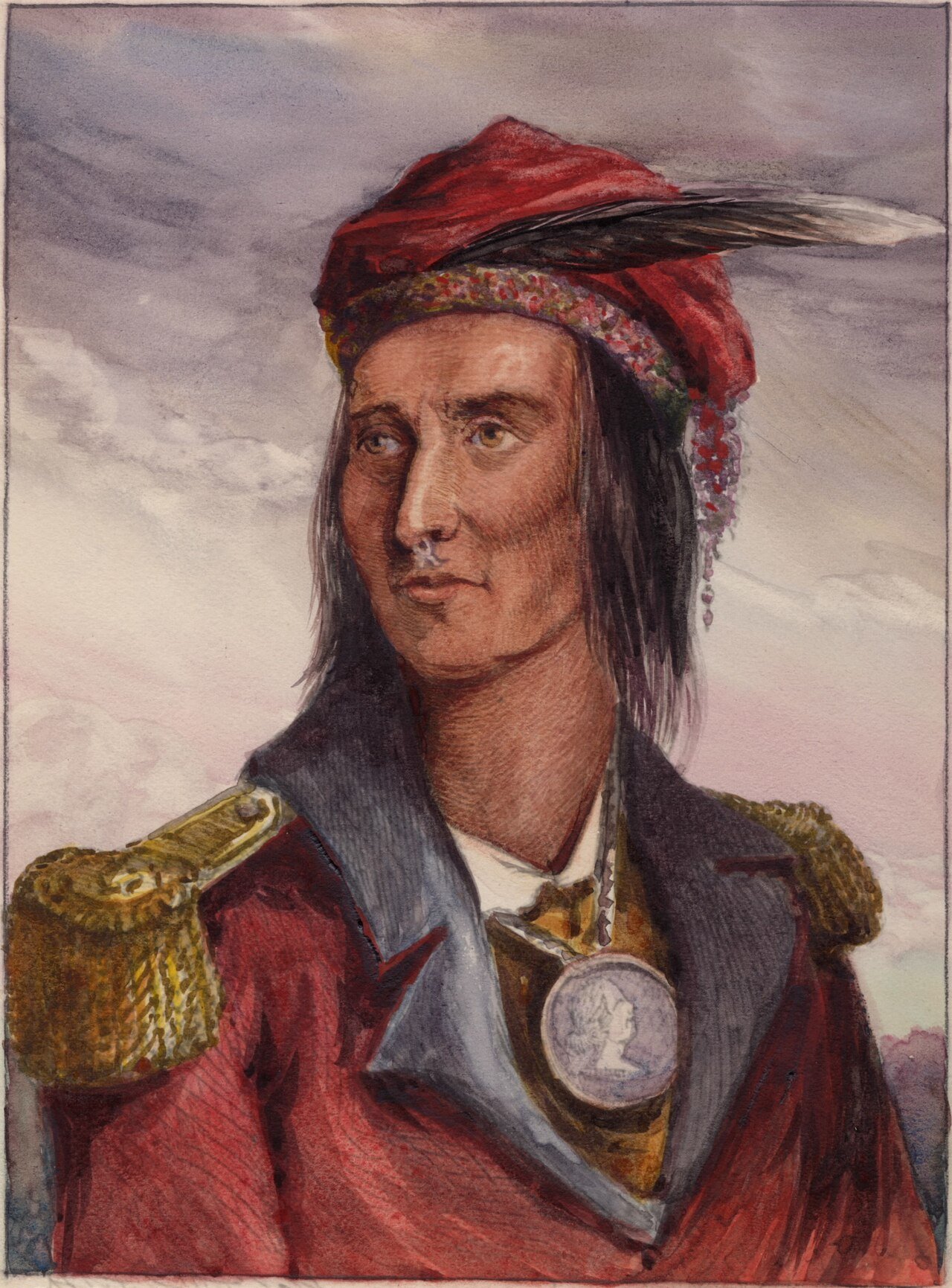
Tecumseh's Confederacy. By 1800 the Shawnee had been pushed from the Ohio Valley by a generation of war and by treaties that peeled their lands away tract by tract. Two brothers answered. Tenskwatawa, called the Prophet, preached a return to the ways of the ancestors - no alcohol, no trade goods, no more land sold - and Tecumseh, the statesman and orator, gave the revival a political program: the land belonged to all the Native nations in common, and no single tribe could sell what belonged to all.
From the village of Prophetstown on the Tippecanoe, Tecumseh built the greatest Native confederacy since Pontiac's, traveling from the Great Lakes to the Gulf to argue his case: unite, or be eaten state by state. Against him stood William Henry Harrison, governor of the Indiana Territory, whose treaty at Fort Wayne in 1809 had taken three million acres in one stroke. 'Sell a country!' Tecumseh told Harrison at Vincennes in 1810. 'Why not sell the air, the great sea, as well as the earth?'
While Tecumseh traveled south to recruit the Creeks in 1811, Harrison marched on Prophetstown and, in the confused dawn battle of Tippecanoe, drove off the Prophet's warriors and burned the town. The confederacy survived, but wounded; and when war came between America and Britain in 1812, Tecumseh took his warriors to the British side, the shield of Detroit and the terror of the frontier.
He was killed at the Battle of the Thames in 1813, and with him died the last great hope of a united Native state in the old Northwest. The confederacy's defeat opened the region beyond the Ohio to the settler flood and broke Native military power east of the Mississippi. Tecumseh remains what his enemies called him - the most formidable Native leader America ever faced; even Harrison, his nemesis, judged him 'one of those uncommon geniuses' produced by revolution.
 Britannica: Tecumseh
Britannica: Battle of Tippecanoe
Britannica: William Henry Harrison