 Go Back

The Acadians were French-speaking farmers who settled the marshlands around the Bay of Fundy from 1604, building dikes to reclaim rich farmland from the tides. When mainland Nova Scotia passed to Britain by the Treaty of Utrecht in 1713, the Acadians found themselves a French Catholic majority under British Protestant rule. They asked to remain neutral in the empire's wars, refusing an unconditional oath of allegiance that might force them to fight France, and for decades British governors tolerated this 'neutrality'. By the 1750s, however, war with France was returning, and British officials came to see some fourteen thousand neutral Acadians as a threat at Britain's back.
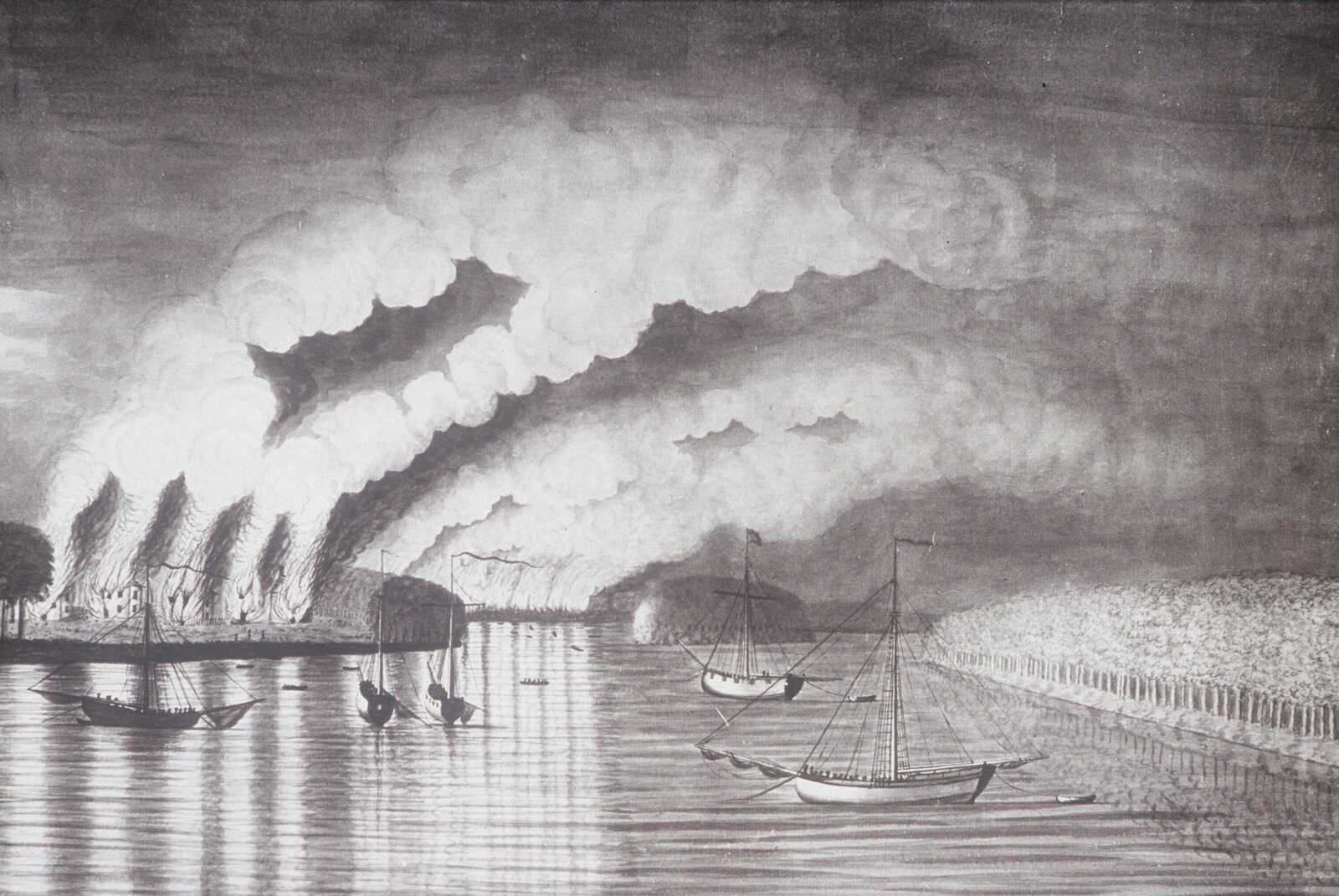
In the summer of 1755, after British and New England forces captured the French Fort Beauséjour, Governor Charles Lawrence and his council resolved to remove the Acadians entirely. The blow fell first at Grand-Pré: on 5 September 1755 the men and boys of the district were summoned to the village church, told their lands and livestock were forfeit, and held prisoner until ships arrived. Over the following months roughly seven thousand Acadians were herded aboard vessels while their farms and villages were burned; by the time the removals ended around 1764, some eleven thousand five hundred of eighteen thousand had been deported, and families were deliberately scattered.
The exiles were dumped along the Atlantic seaboard from Massachusetts to Georgia, where colonial assemblies often refused them help, or shipped to Britain and later France. Hundreds died of smallpox and other shipboard diseases, and hundreds more drowned in 1758 when overcrowded transports such as the Duke William and the Violet sank in the Atlantic. Not all submitted: many Acadians escaped to the woods, to Quebec, or to Île Saint-Jean, and fighters like Joseph Broussard, called Beausoleil, waged guerrilla war along the Petitcodiac and St. John rivers against the deportation.
New England 'Planters' were brought in to farm the emptied dykelands from 1760. When the surviving exiles were permitted to return from 1764, their best lands were gone, and they rebuilt on the margins of Nova Scotia and in what became New Brunswick, while others found their way to Louisiana, where they became the Cajuns. Henry Wadsworth Longfellow's 1847 poem Evangeline fixed the tragedy in world memory. The Acadian nation the British meant to dissolve endured, and its descendants still call the deportation le Grand Dérangement, the Great Upheaval.
 Britannica: Acadia
 UNESCO World Heritage: Landscape of Grand Pré