 Go Back

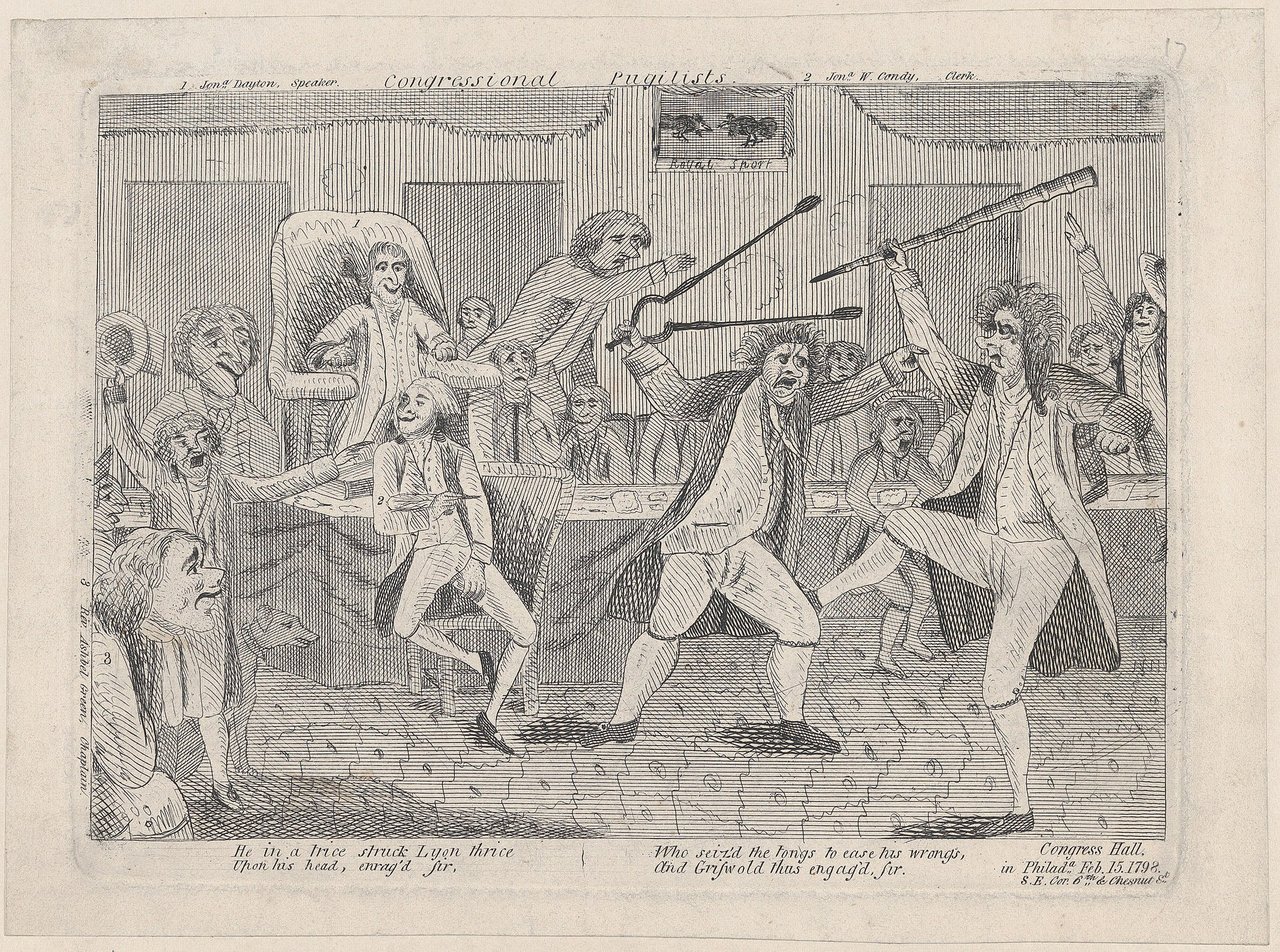
The Alien and Sedition Acts. In 1798, with war against France looming and the parties at each other's throats, the Federalist Congress passed and President Adams signed four laws that tested the young Constitution almost to breaking. The Naturalization Act stretched the wait for citizenship from five to fourteen years; the Alien Friends Act let the president expel any foreigner he judged dangerous; the Alien Enemies Act awaited war. But it was the fourth, the Sedition Act, that made the crisis: it made 'false, scandalous and malicious' writing against the government a crime.
The Federalists used it exactly as the Republicans feared. Some twenty-five men were arrested under the act, and the most prominent Republican editors and one sitting congressman - Matthew Lyon of Vermont, jailed for mocking Adams and re-elected from his cell - were fined or imprisoned. The law had teeth but no legitimacy: it punished speech against the President and Congress while carefully sparing the vice president, Thomas Jefferson.
Jefferson and Madison answered with the Kentucky and Virginia Resolutions, secretly authored, declaring the acts unconstitutional and asserting that the states could judge when the federal government had overstepped - a doctrine of interposition with a long and dangerous afterlife. The Resolutions won few converts among the states, but they made the acts the center of the election of 1800 - and the voters threw the Federalists out.
Jefferson pardoned every prisoner of the Sedition Act, Congress repaid the fines, and the act expired unmourned in 1801; the Alien Friends Act died with it. The Naturalization Act was repealed; the Alien Enemies Act, alone, survives to this day. The crisis fixed the American answer: under the First Amendment, the price of a republic is that its government may be criticized - a doctrine the Supreme Court would not fully articulate until the twentieth century, citing 1798 as the mistake.
 Britannica: Alien and Sedition Acts
 Encyclopedia.com: Kentucky and Virginia Resolutions