 Go Back

In 1663 Charles II granted a vast coastal territory between Virginia and Spanish Florida to eight Lords Proprietors who had helped restore him to the throne. They named it Carolina and envisioned a hierarchical society under their elaborate, never-fully-imposed Fundamental Constitutions. Reality took a different course. Settlers from crowded Barbados arrived with enslaved Africans and a plantation model, while Virginians spread into the northern sounds. Charles Town, founded in 1670 on the harbor where two rivers meet, grew into the richest city in the southern colonies.
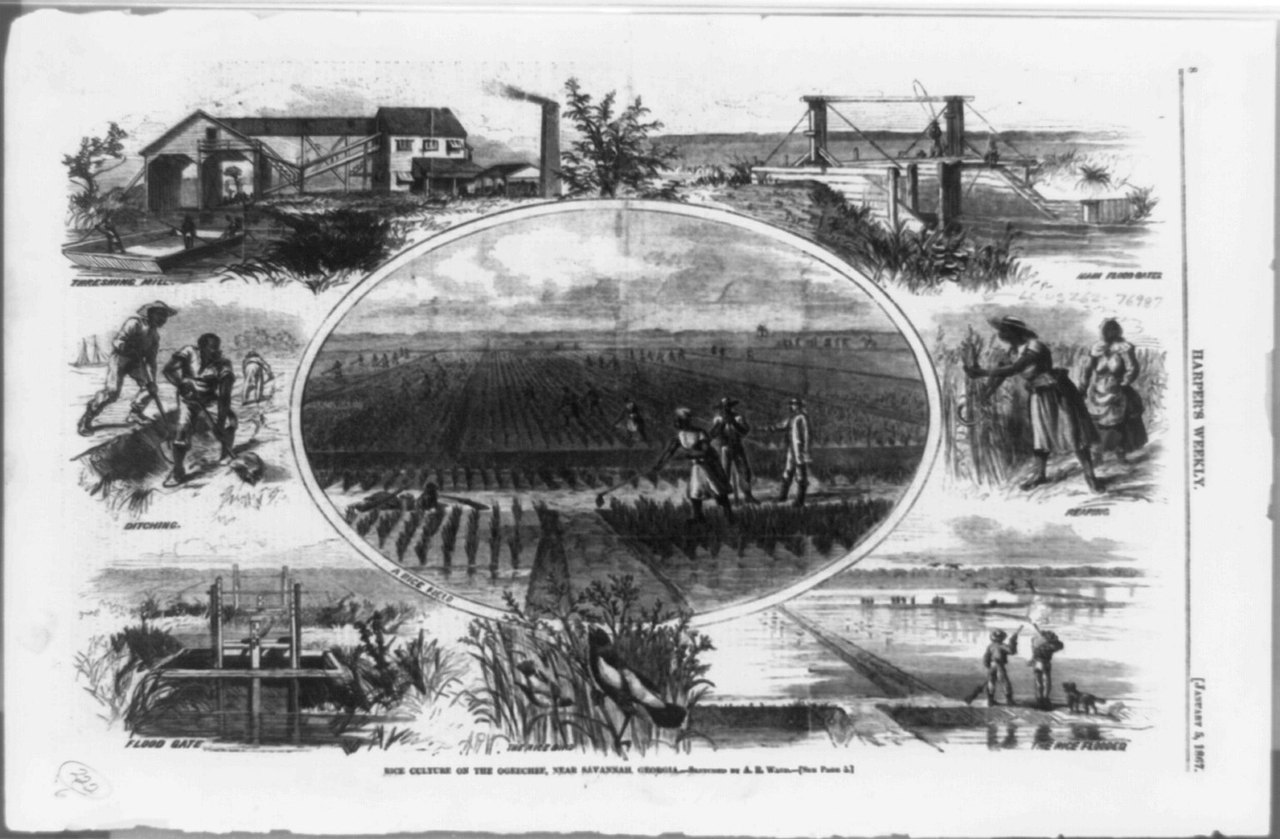
Early Carolinians traded deerskins and naval stores with the region's Native nations and raised cattle in open pinewoods. Then, in the 1690s, planters proved that rice would thrive in the tidal swamps of the Lowcountry. Rice made Carolina a fortune, but it was a fortune built on African knowledge and African backs. The crop's engineering, clearing swamps, building banks, gates and trunks to manage tidal flooding, and its arduous processing, depended on the skills of enslaved people from West Africa's own rice coast, who were imported in huge numbers. By 1708 enslaved Africans were a majority of South Carolina's population.
The plantation regime was maintained by force and resisted in kind. The 1739 Stono Rebellion, the colony's largest slave uprising, prompted the harsh Negro Act of 1740, which tightened every control on Black life. Yet in the isolation of swamp and sea island, enslaved people built the durable Gullah-Geechee culture, preserving African language, foodways and crafts. South Carolina split administratively from poorer, small-farm North Carolina in 1712, and both became royal colonies in 1729 after the proprietors' misrule and the Yamasee War had nearly broken them.
Rice, indigo and the Atlantic trade made South Carolina's planters the wealthiest men in mainland British America, a gentry of townhouses, libraries and racehorses floating on enslaved labor. That wealth gave South Carolina outsized influence in the coming Revolution, and a fierce determination to defend the slavery that produced it, a contradiction written into American history from the very start.
 Britannica: South Carolina History
 National Park Service: Life and Labor at a Rice Plantation
 Encyclopedia.com: Colonial Settlements