 Go Back

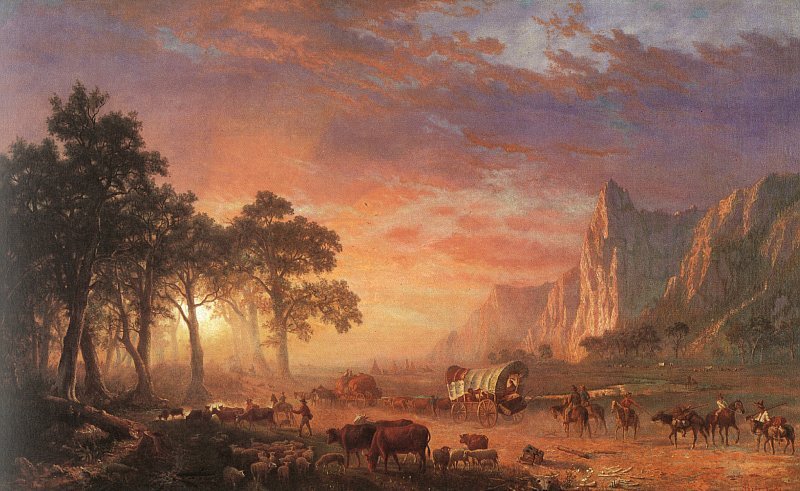
The Closing of the Frontier. In 1890 the Superintendent of the Census noted, almost in passing, that the West could no longer be divided into settled and unsettled zones: 'there can hardly be said to be a frontier line.' After three centuries, the line of settlement - the moving edge that had defined America since Jamestown - had dissolved into a web of scattered settlements across the map. The statement was statistical; its meaning was civilizational.
The meaning was supplied three years later by a young Wisconsin historian at the Chicago World's Fair - the Columbian Exposition, itself a celebration of the four hundred years since the continent's 'discovery.' Frederick Jackson Turner, reading a paper called 'The Significance of the Frontier in American History,' argued that the frontier had made the American: democracy, individualism, ingenuity, nationalism itself were not European inheritances but frontier products, reborn at each westward stage. 'American history has been in a large degree the history of the colonization of the Great West. The existence of an area of free land... and the advance of American settlement westward, explain American development.'
The Turner thesis made its author famous and its claim the master key of American history for two generations - and it carried a question as urgent as its answer: if the frontier had made America, what would America become with the frontier gone? The closing shadowed the new century's expansions - the Spanish-American War and overseas empire, the conservation movement to save what wild land remained, the cult of the strenuous life, the dude ranch and the Western film.
Later historians demolished parts of the thesis - the frontier was never 'free land' but conquered land, and its democracy was for white men - but its hold endures: 'the American frontier,' wrote one of its critics, 'is the oldest and most persistent of American myths.' Turner himself had the last word on what the census had recorded: 'And now, four centuries from the discovery of America, at the end of a hundred years of life under the Constitution, the frontier has gone, and with its going has closed the first period of American history.'
 Britannica: Frederick Jackson Turner
Britannica: World's Columbian Exposition
Britannica: United States - The American West