 Go Back

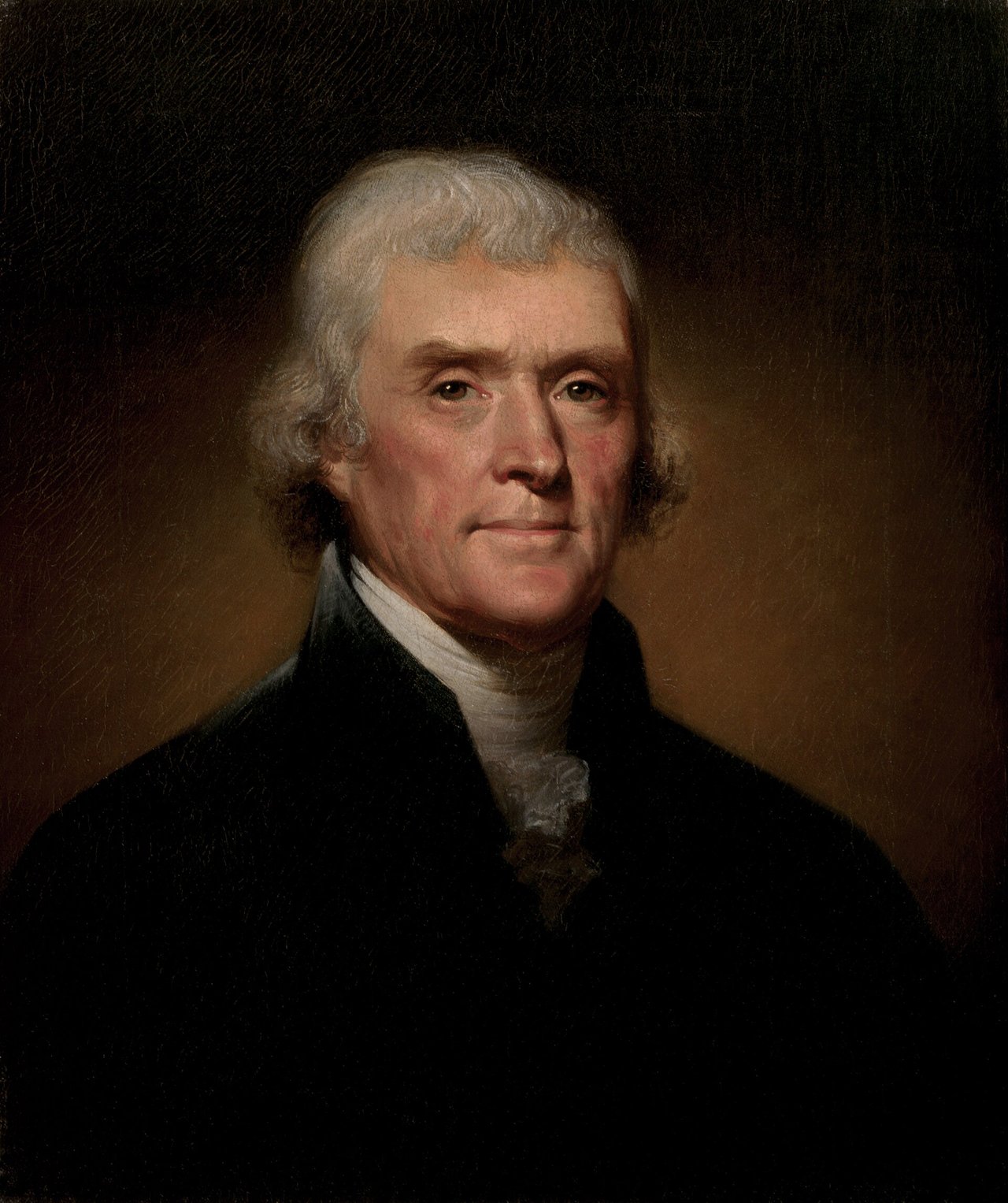
The Election of 1800. In the young republic's first dozen years, power had passed only between friends. The election of 1800 changed that: President John Adams and the Federalists against Thomas Jefferson and the Democratic-Republicans, in a campaign of genuine ferocity - Federalist newspapers warning that Jefferson meant anarchy and atheism, Republican editors jailed under the Sedition Act for answering back. When the electors met, the Republicans won - and then nearly lost the prize to their own ticket, for Jefferson and his running mate Aaron Burr finished tied at seventy-three votes each.
The tie threw the choice into the lame-duck, Federalist House of Representatives, which ballot after ballot deadlocked through a February week in 1801, while Federalist intriguers toyed with installing Burr or someone else entirely. On the thirty-sixth ballot a handful of Federalists, persuaded in part by Bayard of Delaware and by Burr's own silence, stood aside, and Jefferson was chosen president - with Burr, the man who would not withdraw, as his unwanted vice president.
On 4 March 1801 Jefferson walked to the Capitol with the marshal of the District and a few congressmen, and took the oath from Chief Justice Marshall, his distant cousin and political enemy. 'We are all Republicans, we are all Federalists,' he said, in an inaugural that set out to lower the temperature of the republic. Adams had left Washington before dawn - but he had left, and that was the point.
The election of 1800 proved the thing that had never been proved: that power could pass peacefully from one party to its opponents under a written constitution. Jefferson called it the Revolution of 1800, as real a revolution as 1776's, achieved by ballots instead of bayonets. Every peaceful transfer of power since descends from that February week of thirty-six ballots.
 Britannica: United States Presidential Election of 1800
Britannica: Thomas Jefferson
Britannica: Aaron Burr