 Go Back

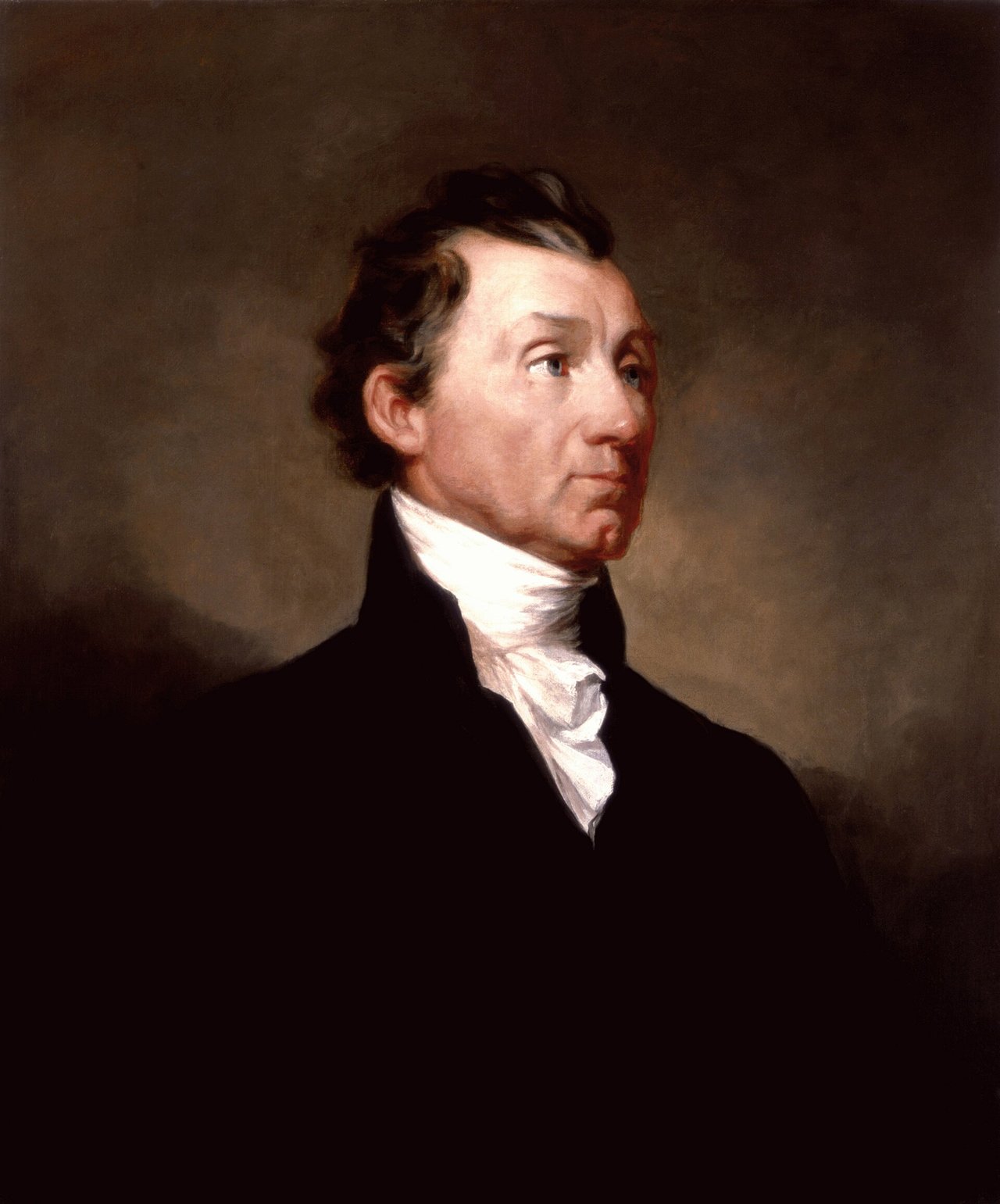
The Era of Good Feelings. A Boston newspaper coined the name in 1817, when President James Monroe toured New England and Federalist Boston cheered a Republican president: after the War of 1812, the party system itself seemed to fade. The Federalists, disgraced by the Hartford Convention's secessionist mutterings during the war, were dying; Monroe won re-election in 1820 with every electoral vote but one; and for a few years the United States had, in effect, one party, one mood, and boundless confidence.
The good feelings were real achievements. The economy boomed on cotton, land and credit; the nation fixed its boundaries in a diplomatic harvest - Florida acquired from Spain in 1819, the transcontinental line drawn to the Pacific in the same treaty; the Supreme Court under Marshall strengthened the national government in McCulloch v. Maryland; and in 1823 the Monroe Doctrine told the Old World the Americas were closed to new colonization. A second Bank of the United States, protective tariffs, internal improvements: the war's generation built the national state its fathers had feared.
Underneath, the cracks ran deep. The Panic of 1819 - the first great depression - burst the land boom and left debtors hating the Bank. And in 1819-21 the Missouri Crisis warned of the sectional storm to come: whether slavery would spread west divided Congress for the first time along a straight geographical line, and 'like a fire bell in the night,' wrote the aging Jefferson, it 'awakened and filled me with terror.'
The era died in the election of 1824, when four candidates of the same party tore the one-party system apart, and the 'corrupt bargain' that made John Quincy Adams president set Andrew Jackson's democracy on the march. The Era of Good Feelings left the nation larger, richer and more confident - and the two great questions, slavery's expansion and the powers of the national government, sharpened for the coming generation.
 Britannica: United States - The Era of Good Feelings
Britannica: James Monroe