 Go Back

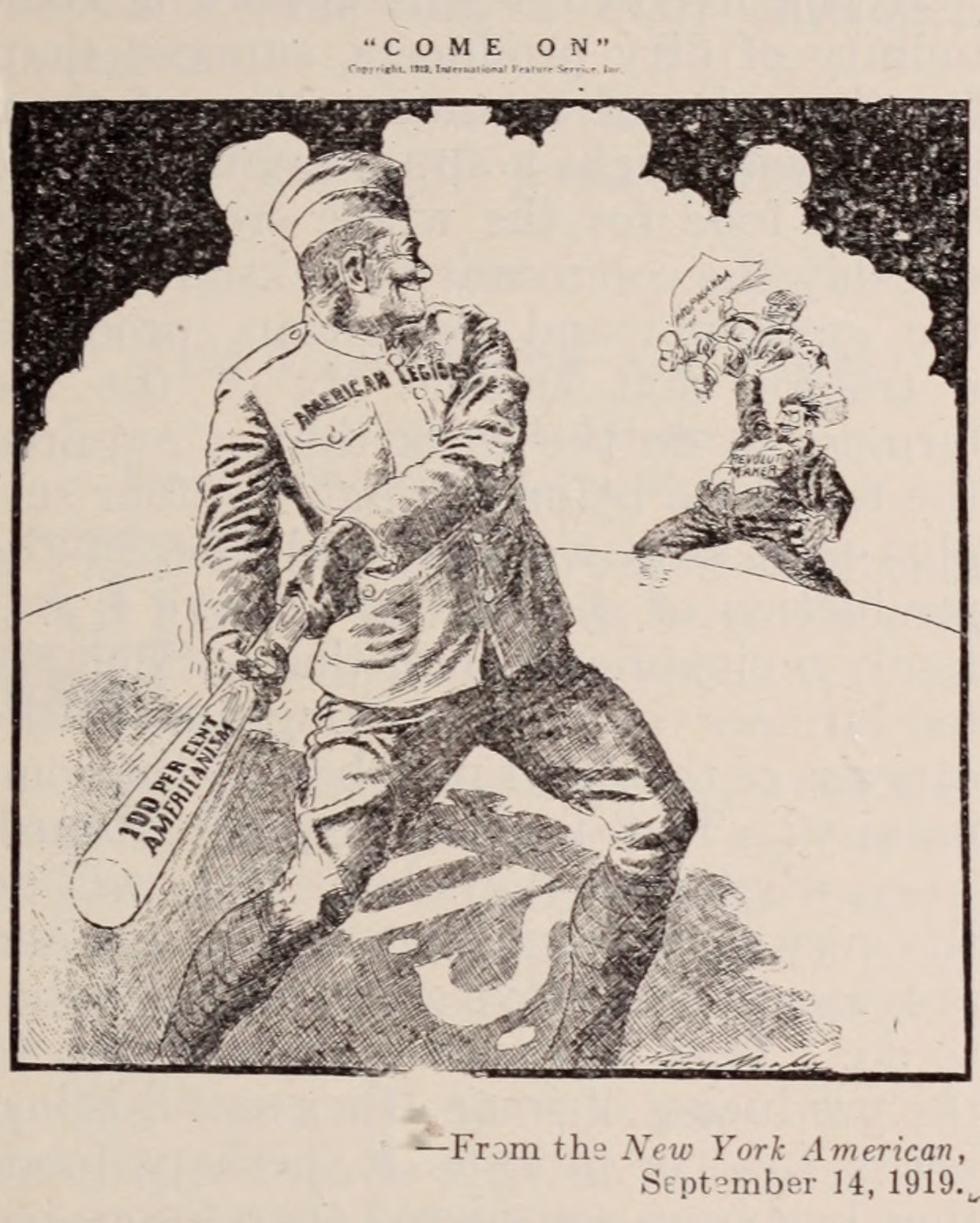
In 1919, many Americans feared their country was next in line for revolution. The Bolsheviks had seized power in Russia in 1917 and called for world revolution; at home, a wave of strikes, including a general strike in Seattle and a national steel strike, convinced much of the public that radical agitators were behind labor unrest. Fear turned to panic in 1919 when anarchists mailed bombs to officials and businessmen, and in June bombs exploded in eight cities, one destroying the front of Attorney General A. Mitchell Palmer's own house.
Palmer, who hoped to ride the panic to the presidency, struck back with the full power of the Justice Department. Beginning in November 1919 and climaxing in a single coordinated sweep on January 2, 1920, federal agents and local police raided radical headquarters, labor halls, and poolrooms in dozens of cities, arresting thousands of suspected radicals, many of them immigrants. Hundreds were held without hearings, and 249 alleged radicals, including the anarchist Emma Goldman, were deported to Soviet Russia aboard a ship the press nicknamed the 'Soviet Ark.'
The Palmer Raids trampled civil liberties: warrants were ignored, prisoners were beaten, and most of those arrested were neither communists nor criminals. Lawyers, labor leaders, and a few brave officials protested, and the assistant secretary of labor refused to deport people on flimsy evidence. When Palmer's prediction of a giant May Day 1920 uprising came to nothing, the scare began to collapse.
By late 1920 the First Red Scare was fading, but its mark remained. It had legitimized political surveillance by the federal government, poisoned the labor movement's wartime gains, and fed the demand for immigration restriction that produced the quota laws of 1921 and 1924. Its pattern, fear of internal enemies, mass arrests, and civil liberties sacrificed to security, became a lasting caution in American politics.
 History.com: Red Scare
 Britannica: A. Mitchell Palmer