 Go Back

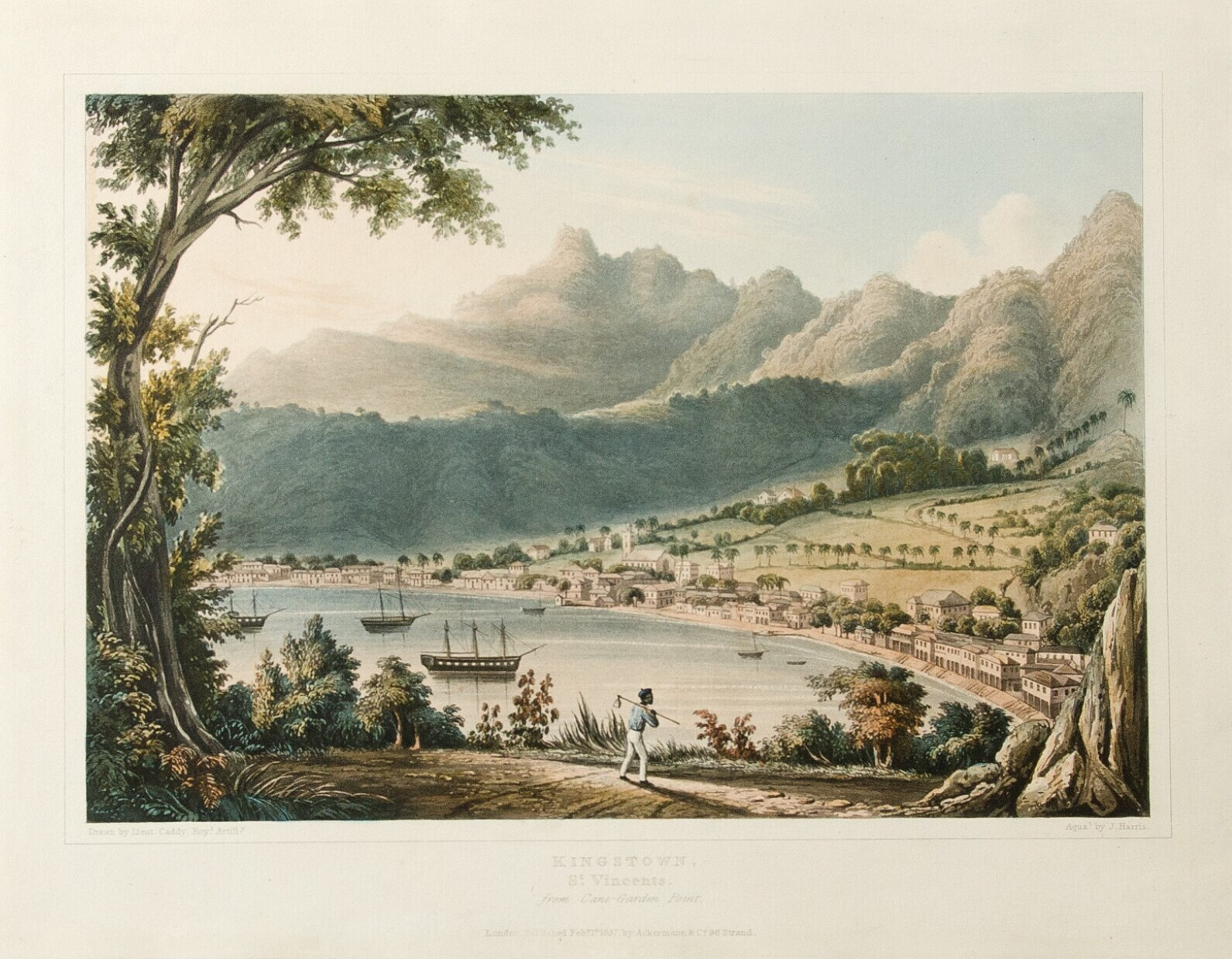
The Garifuna people were forged in resistance on the island of St. Vincent in the eastern Caribbean. In the seventeenth century Africans - shipwrecked, escaped, or brought by trade - found refuge among the island's Kalinago, the Island Caribs, and from their union emerged the community the British called the Black Caribs, who kept the Arawak-derived language and much of the culture of their Indigenous forebears while absorbing African heritage. By the eighteenth century they held most of St. Vincent, farming, trading, and refusing both European powers' claims to their land.
Britain and France fought over St. Vincent for decades, but Britain's drive to expand plantations brought conflict with the Garifuna. Under Joseph Chatoyer, the Black Caribs resisted in the Second Carib War of 1795-96. Chatoyer was killed in March 1795, but resistance continued until British forces defeated the Garifuna in 1796. From July of that year, British authorities rounded up thousands of men, women, and children and confined them on Balliceaux, where many died from disease and harsh conditions. In 1797 the surviving exiles were sent to Roatán in the Bay of Honduras.
From Roatán the exiles crossed to the mainland coast in 1797, landing first near Trujillo in Honduras, and from there they spread along the Caribbean shore of Central America. Welcomed by the Spanish as farmers and soldiers, they settled the coasts of what became Honduras, Nicaragua, Guatemala, and Belize, famed as fishermen, cassava farmers, and the finest boatmen of the coast. Wherever they landed they rebuilt their towns - Dangriga, Livingston, Tela, Orinoco - carrying with them the seeds, songs, and rites of St. Vincent.
The Garifuna kept their identity alive across three nations and two centuries. Their language still bears the imprint of the Island Carib world; their punta music, wanaragua dances, and the dügü ritual, in which the ancestors are called, sustain the culture of exile. A people Britain tried to erase in 1797 had, by the early twentieth century, become an unbroken thread of Indigenous and African survival along the entire Central American coast.
 Britannica: Garifuna
 UNESCO Intangible Heritage: Garifuna language, dance and music
 Saint Vincent and the Grenadines Ministry of Tourism: Garifuna Exile Story