 Go Back

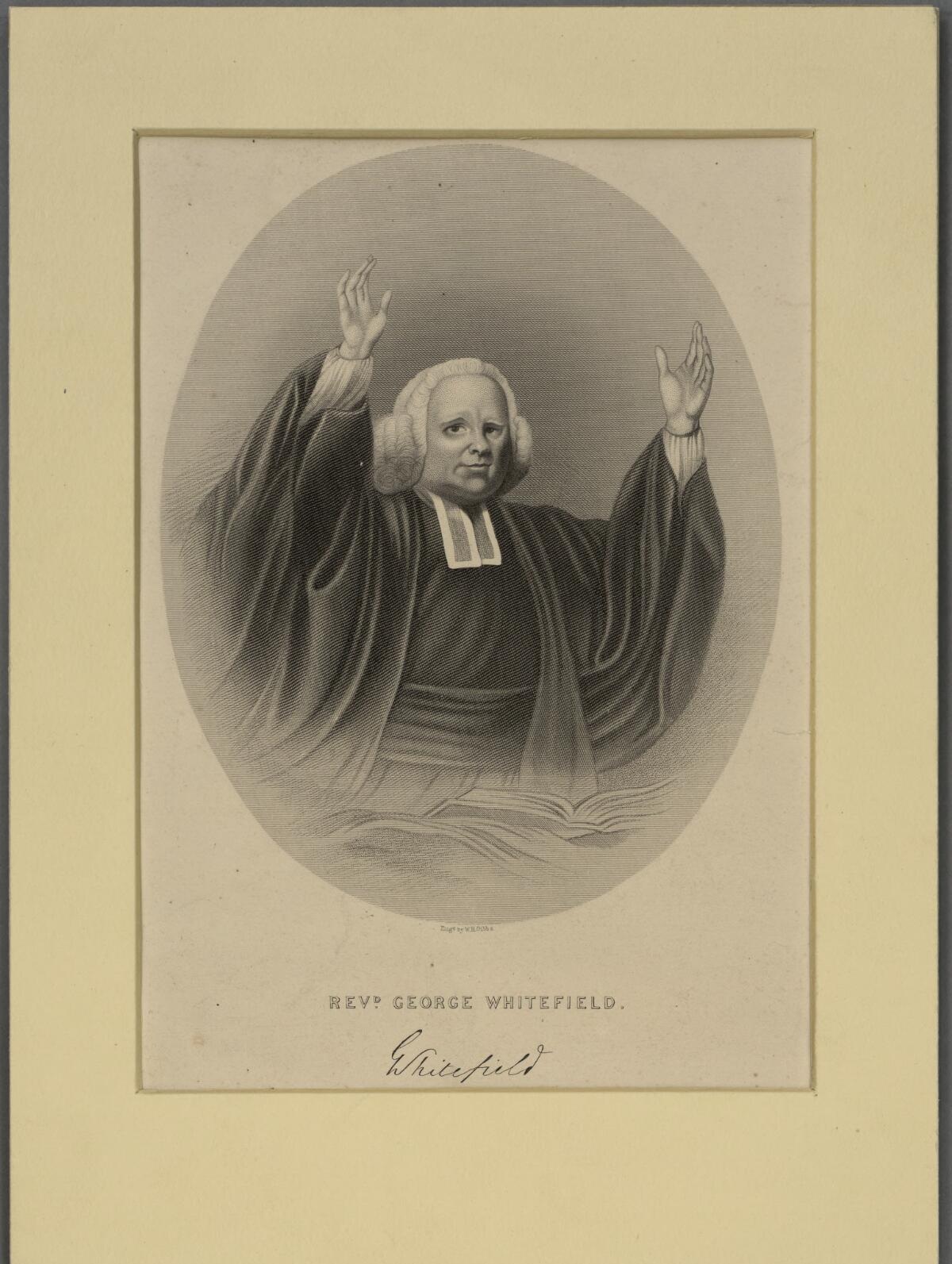
The Great Awakening was a wave of religious revival that spread through Britain's North American colonies during the early eighteenth century, especially the 1730s and 1740s. It developed in communities already divided by different churches, patterns of settlement and social rank. Jonathan Edwards became associated with revivals in New England, while the English preacher George Whitefield carried his message between colonies. The movement mattered beyond church membership because it brought large audiences together and made the authority of established leaders a subject of public argument.
Whitefield's travels connected places that otherwise had separate political institutions and local concerns. Outdoor preaching reached people beyond a single congregation, and printed sermons and reports extended the audience further. Listeners were encouraged to judge the sincerity of religious experience rather than accept social position or formal education as sufficient evidence of authority. This did not remove inequality, but it gave some ordinary colonists a new reason to question whether their existing ministers spoke for them.
Revival also divided communities. Supporters welcomed emotional preaching and renewed participation, while critics feared disorder and challenged the qualifications of itinerant speakers. Congregations and denominations split over these disagreements. The resulting competition helped enlarge the range of religious choices available to colonists, although toleration remained uneven and established churches continued to hold legal advantages in some colonies. The movement was therefore both a source of shared experience and a cause of conflict within colonial society.
The Awakening encouraged the growth of educational institutions and helped religious groups train their own ministers. Its legacy included a public accustomed to competing speakers, published controversy and voluntary association. These practices formed part of the setting in which later imperial disputes unfolded. The revival should not be treated as a direct plan for independence: its participants disagreed over politics, and religious renewal was their immediate concern. Its historical importance lies in the way it changed participation, communication and challenges to authority before the American Revolution. Sermons and revival reports circulated in print, allowing controversy to reach readers who had never heard a traveling preacher in person.
 Britannica: Great Awakening
 World History Encyclopedia: Religion in Colonial America