 Go Back

In 1900 nearly eight million Black people, about 90 percent of all Black Americans, lived in the South. Many were trapped in sharecropping and other forms of debt peonage, kept in an inferior position by Jim Crow laws and denied political rights. From 1916 a growing number left for cities in the North and West in search of work and an escape from racial violence. Wikipedia gives a conservative estimate of 400,000 Black Southerners leaving between 1916 and 1918.
Several pressures combined. Farm failures and crop damage from the boll weevil added to the poverty of the rural South. The First World War slowed European immigration, and a military draft began in 1917, so Northern factories, foundries and slaughterhouses faced labor shortages. Black newspapers helped carry the news. Robert S. Abbott's Chicago Defender published train schedules, songs and cartoons, called the North a promised land, and carried job listings, and papers such as the Amsterdam News and the Pittsburgh Courier did the same for their own cities.
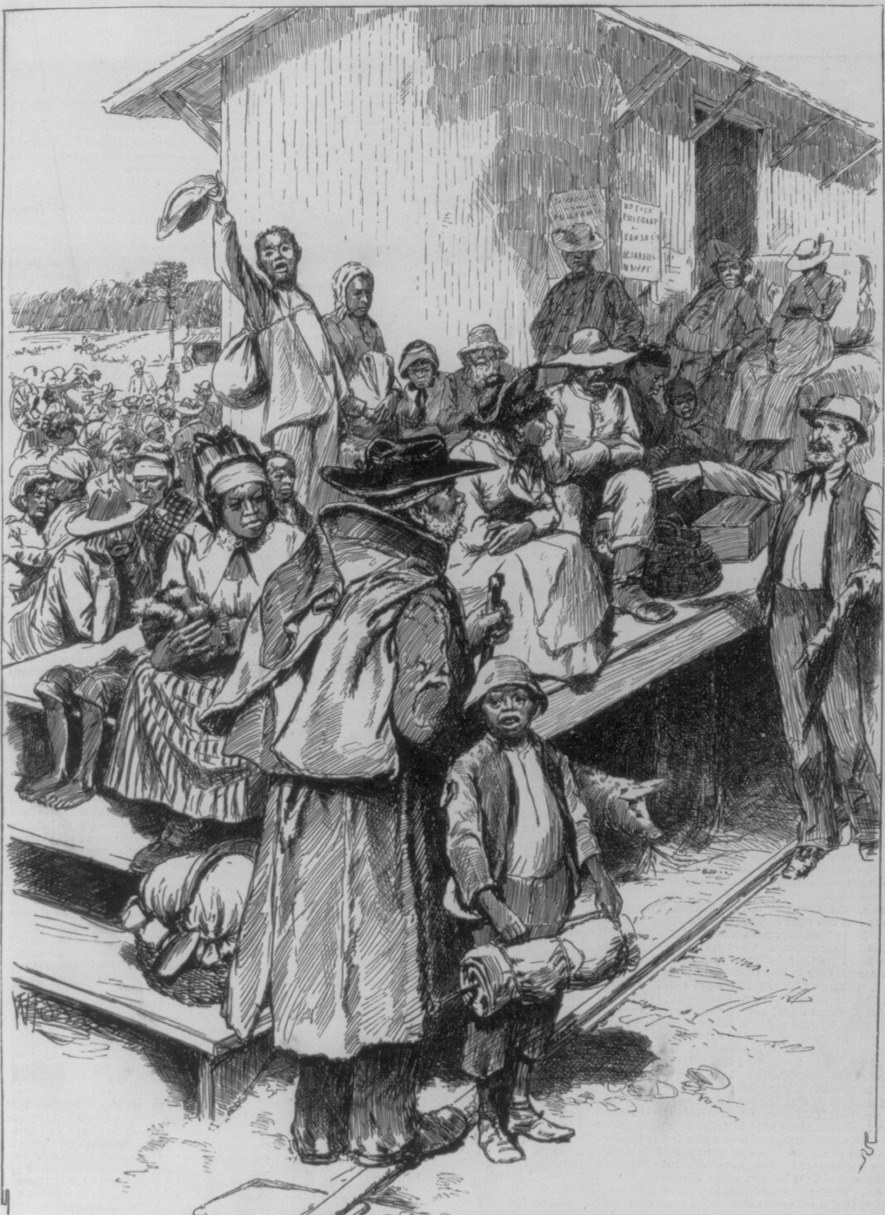
The engraving on this page, published in Frank Leslie's Illustrated Newspaper in 1890, shows Black families leaving North Carolina by rail. It records an earlier movement than the one described here. Northern cities were not free of discrimination. Migrants met segregated housing and schools, poor working conditions and low pay, and sometimes violence. The East St. Louis riot of 1917 killed between 40 and 200 Black residents, according to Wikipedia. In the Red Summer of 1919, racial violence spread through at least 26 cities.
The Chicago riot of 1919 killed 38 people, 23 Black and 15 white, injured 537 and left about 1,000 Black families homeless. Black veterans of the war were among those who fought back. Even so, the movement changed the cities that received migrants. Between 1910 and 1920 the number of Black workers in industry nearly doubled, from 500,000 to 901,000. The Immigration Act of 1924 later cut European immigration further. This page covers only the first wave, to 1924. The Great Migration continued until 1970, and an estimated six million people took part over its whole course.
 Britannica: Great Migration
 Wikipedia: Great Migration