 Go Back

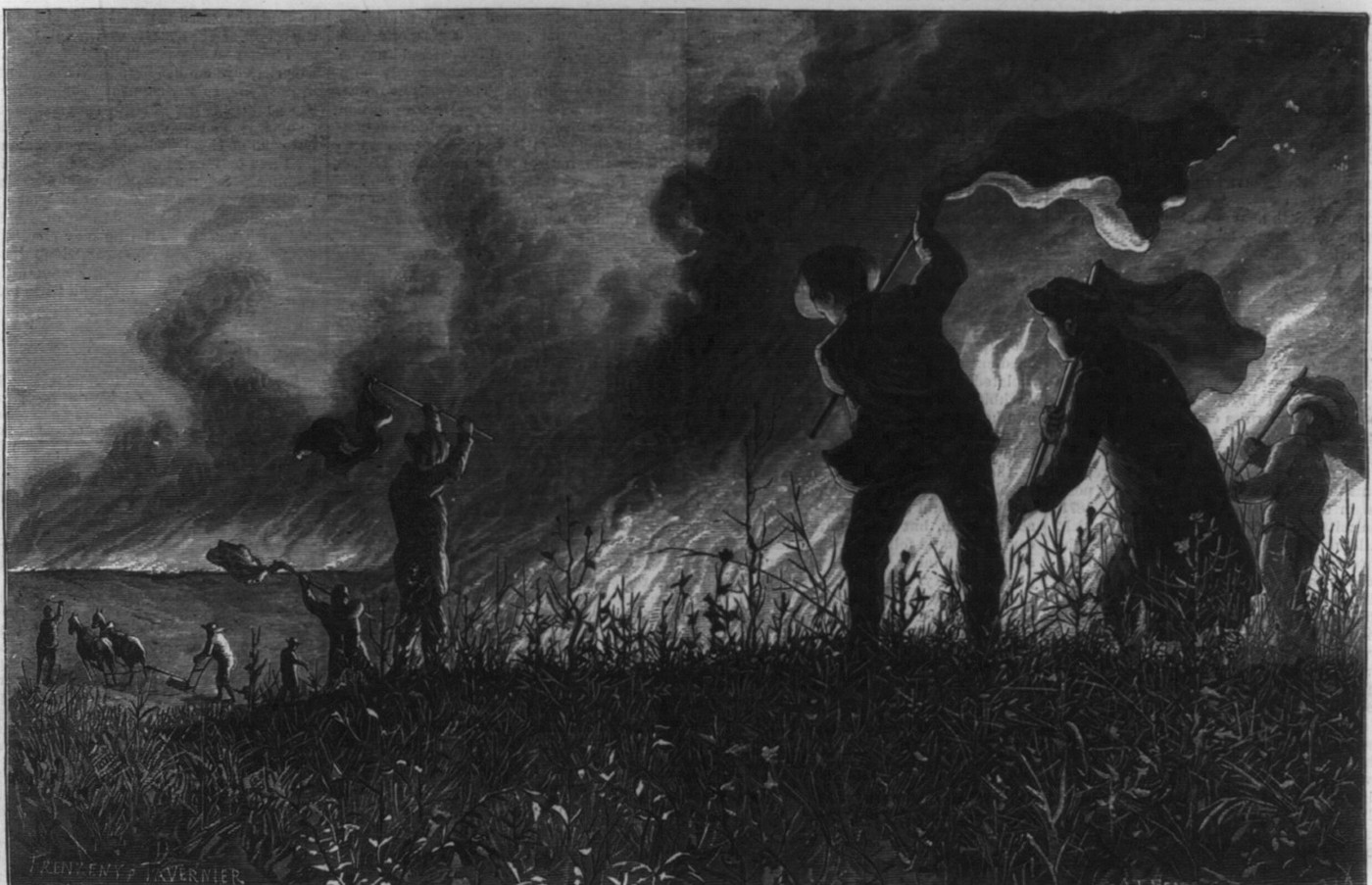
On May 20, 1862, in the midst of the Civil War, President Lincoln signed the Homestead Act, the fulfillment of a generation of demands for free land. The law offered any adult citizen or intended citizen, including women, freedpeople, and immigrants, title to 160 acres of public land in exchange for a small filing fee, five years of residence, and improvements to the claim. Southern opposition to free homesteads had blocked the idea for decades; secession removed it. Together with the Morrill land-grant college act and the Pacific Railway Act, passed the same year, the Homestead Act turned the federal government into an engine of western development.
Homesteading was brutally hard. On the treeless plains settlers cut sod for houses, burned buffalo chips for fuel, and watched drought, blizzards, and grasshopper swarms destroy their crops; the barbed wire invented in 1874 let farmers fence fields and finally hold the open range. Many families failed and sold out. Land speculators and railroads used dummy claims and legal loopholes to amass land that was meant for settlers. Yet the law worked: the peak year of homestead claims was 1913, when settlers filed on eleven million acres of the public domain in a single year.
The land was not empty. The plains and prairies belonged to Indigenous nations whose treaties were made and broken as settlement advanced. The same decades brought the Sand Creek massacre of 1864, the destruction of the buffalo that underpinned plains economies, the reservation system, and the wars recounted on the Plains Indian Wars page. In 1887 the Dawes Act broke tribal lands into individual allotments, stripping Indigenous nations of much of their remaining land. The homestead frontier and Indigenous dispossession were two faces of the same transformation.
By 1890 the census declared the frontier line gone, and in 1893 the historian Frederick Jackson Turner argued that free land had shaped American democracy and character. The wheat and cattle kingdoms the homesteaders and ranchers built fed the industrial East and the world, and homesteading continued on ever more marginal land into the twentieth century, with enlarged claims for dryland farming. Its formative era belongs to the generation after 1862, and by 1924 the homestead frontier it created had become the agricultural heart of the nation.
 Britannica: Homestead Act of 1862
 National Park Service: Homestead National Historical Park
Britannica: Dawes General Allotment Act