 Go Back

The Mexican-American War (1846-1848) redrew the map of North America. Its roots lay in Texas, which had broken from Mexico in 1836 and was annexed by the United States in 1845. Mexico had never accepted Texan independence, and the two nations disputed the border: Mexico claimed the Nueces River, the United States the Rio Grande. When President Polk sent Zachary Taylor's army marching into the disputed land between the rivers in 1846, a clash with Mexican cavalry gave the United States its war - fought, critics like the young Congressman Abraham Lincoln and Lieutenant Ulysses S. Grant said, for territory and the expansion of slavery.
The war was fought on three fronts. Taylor's army won at Monterrey in September 1846, then held off Santa Anna's far larger force at Buena Vista in February 1847 - 4,600 Americans against some 15,000 Mexicans. A column under Stephen Kearny marched overland to seize New Mexico and then California, where American settlers had already proclaimed the short-lived Bear Flag Republic and the navy occupied the ports. The northern campaign made Taylor a national hero and, soon enough, president.
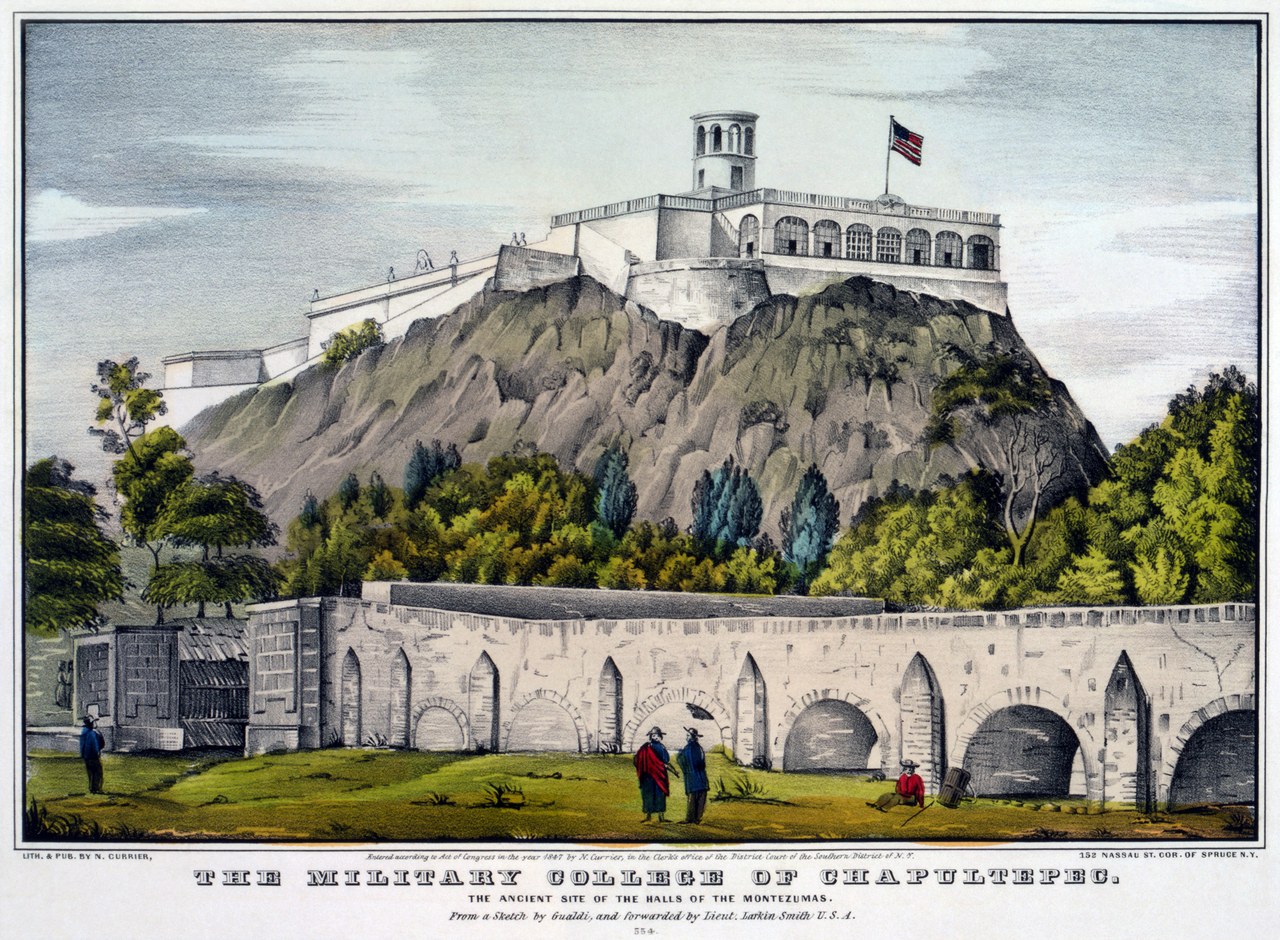
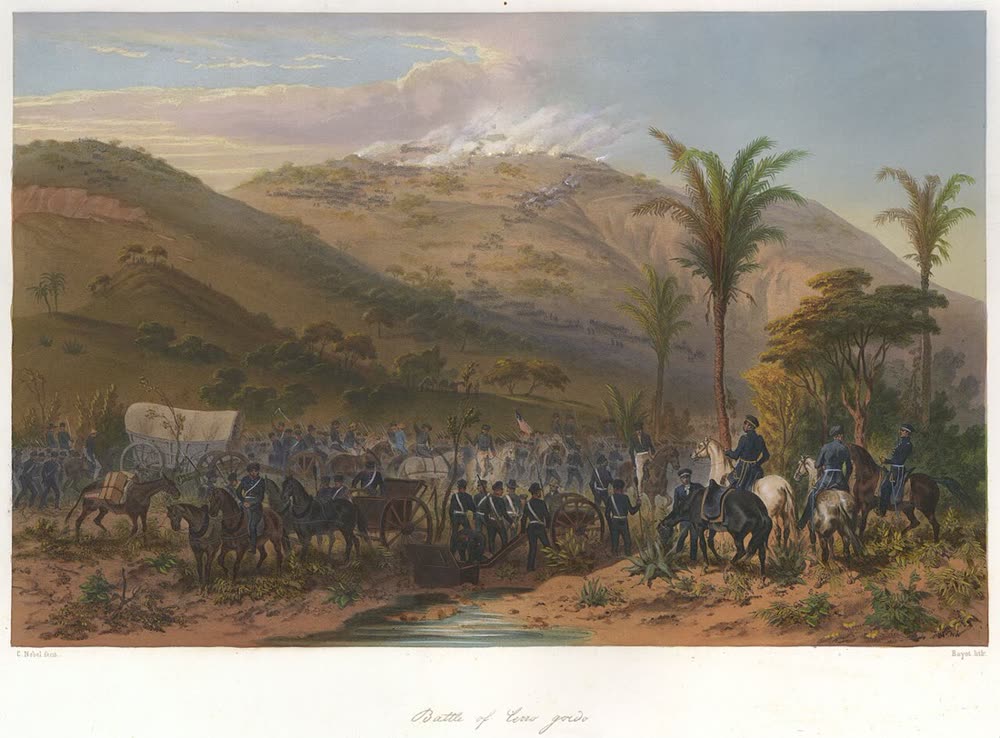
The decisive campaign belonged to General Winfield Scott. In March 1847 his army went ashore near Veracruz in the first large-scale amphibious operation in American history, took the port, and marched inland on the old National Road. At Cerro Gordo in April he destroyed Santa Anna's hastily gathered army; at Contreras and Churubusco in August he broke the defenses before the capital; and on September 13-14 his men stormed the fortress of Chapultepec - where six young military cadets died in its defense, remembered in Mexico as the Ninos Heroes - and entered Mexico City.
The Treaty of Guadalupe Hidalgo, signed in February 1848, ended the war on terms that transformed the continent. Mexico recognized the loss of Texas up to the Rio Grande and ceded California, Nevada, Utah, Arizona, and parts of Colorado, Wyoming, and New Mexico - half its national territory - in return for fifteen million dollars. Some hundred thousand Mexicans suddenly found themselves citizens of the United States, with treaty promises about their land and rights that the following years largely broke.
The war made the United States a continental power, and it deepened the quarrel that would tear it apart: whether slavery would spread into the new lands became the question of American politics, leading within a dozen years to civil war. In Mexico the defeat left a lasting wound and a long memory. Grant, who fought through the whole campaign, later called it 'one of the most unjust ever waged by a stronger against a weaker nation.' It remains among the most consequential - and most contested - wars in the history of both nations.
 Library of Congress: Mexican War: A Resource Guide
 Texas State Historical Association: Mexican War
 PBS American Experience: The Mexican-American War
 National Park Service: U.S.-Mexican War