 Go Back

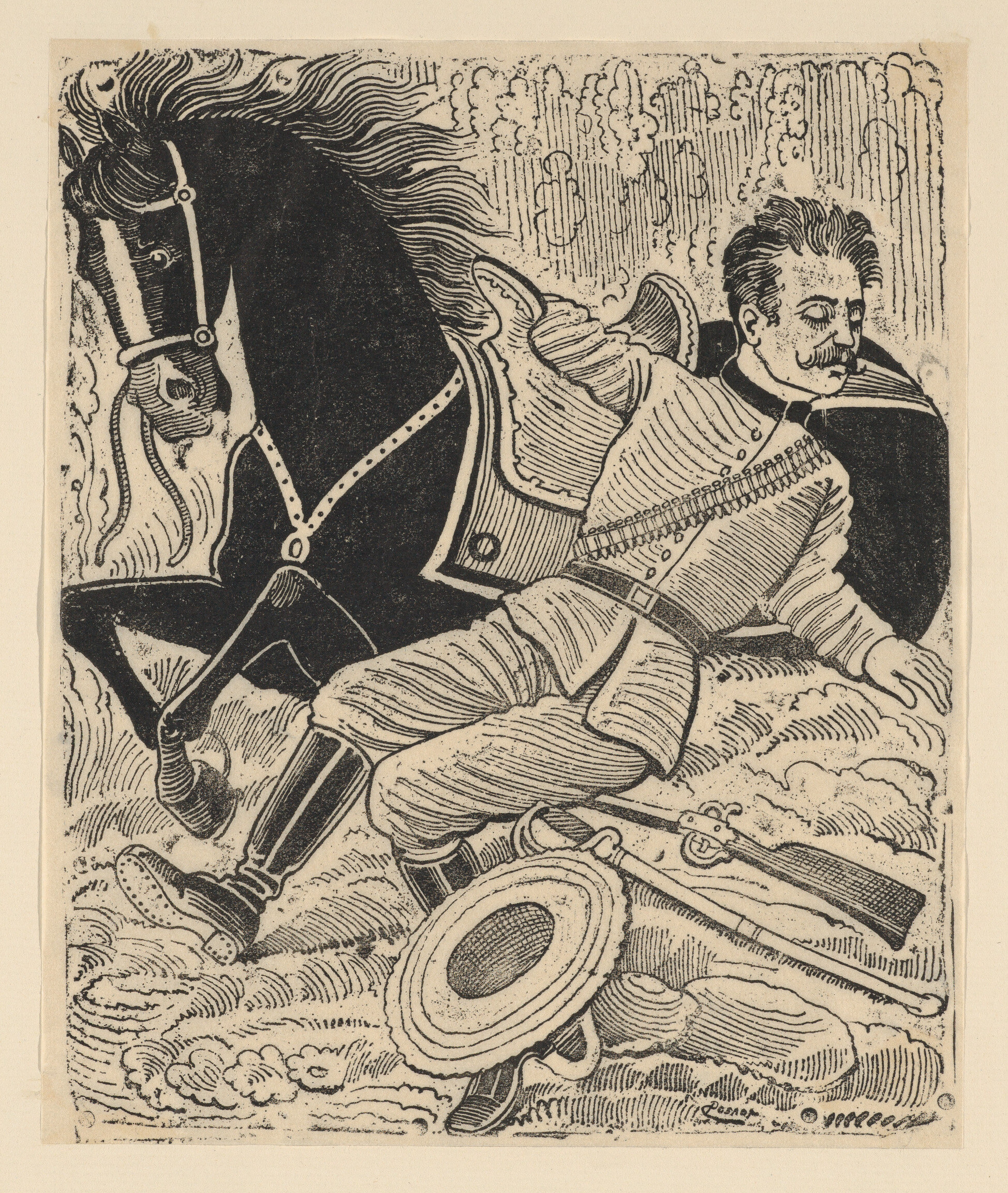
The Mexican Revolution began in 1910 when Francisco Madero, a wealthy landowner's son, challenged the aged dictator Porfirio Díaz in the presidential election, was jailed, and called the nation to arms for 20 November under the Plan de San Luis Potosí. Uprisings by farmers under Pascual Orozco in Chihuahua and Emiliano Zapata in Morelos toppled Díaz in May 1911. But Madero's revolution was political, while his followers wanted land: Zapata rose again under the Plan de Ayala demanding that the villages' stolen fields be returned, and in February 1913 Madero was overthrown and murdered in a coup by the general Victoriano Huerta, backed by the conservative establishment.
Huerta's dictatorship united Mexico against him. Venustiano Carranza, governor of Coahuila, raised the Constitutionalist Army; Alvaro Obregón, a farmer turned brilliant general, campaigned down the Pacific coast; Pancho Villa's Division of the North drove south from Chihuahua; and Zapata's agrarian rebels held the south. Huerta fell in July 1914, but the victors then turned on one another: at the Convention of Aguascalientes the alliances shattered, and in 1915 Obregón crushed Villa in the great battles of Celaya, reducing the revolution's war of movement to a grinding regional struggle.
Out of the bloodshed came a remarkable constitution. Carranza, needing to outbid the radicals, summoned a congress at Querétaro, and the Constitution of 1917 that emerged was the most radical charter of its age: Article 27 declared the nation's ownership of land and subsoil, opening the way to agrarian reform and control of oil; Article 123 gave workers the eight-hour day, the right to organize and strike; Article 3 established free, secular education; and the church was stripped of legal personality and property. Zapata was assassinated by treachery in 1919 and Villa retired in 1920 after Obregón and his allies overthrew Carranza.
By 1920 a decade of fighting, famine, and disease had devastated Mexico. Reconstruction began under Obregón, president from December 1920, who started land distribution, a vast rural school program under José Vasconcelos, and the muralist movement; his successor Plutarco Elías Calles took office on 1 December 1924. The revolution's settlement - land reform, labour rights, secular nationalism, and the constitutional state - defined Mexico for the twentieth century. The United States' own forays, the 1914 occupation of Veracruz and the 1916 Punitive Expedition chasing Villa into Chihuahua, showed how closely the revolution and its northern neighbour remained entangled.
 Britannica: Mexican Revolution
Britannica: Emiliano Zapata
 History.com: Mexican Revolution