 Go Back

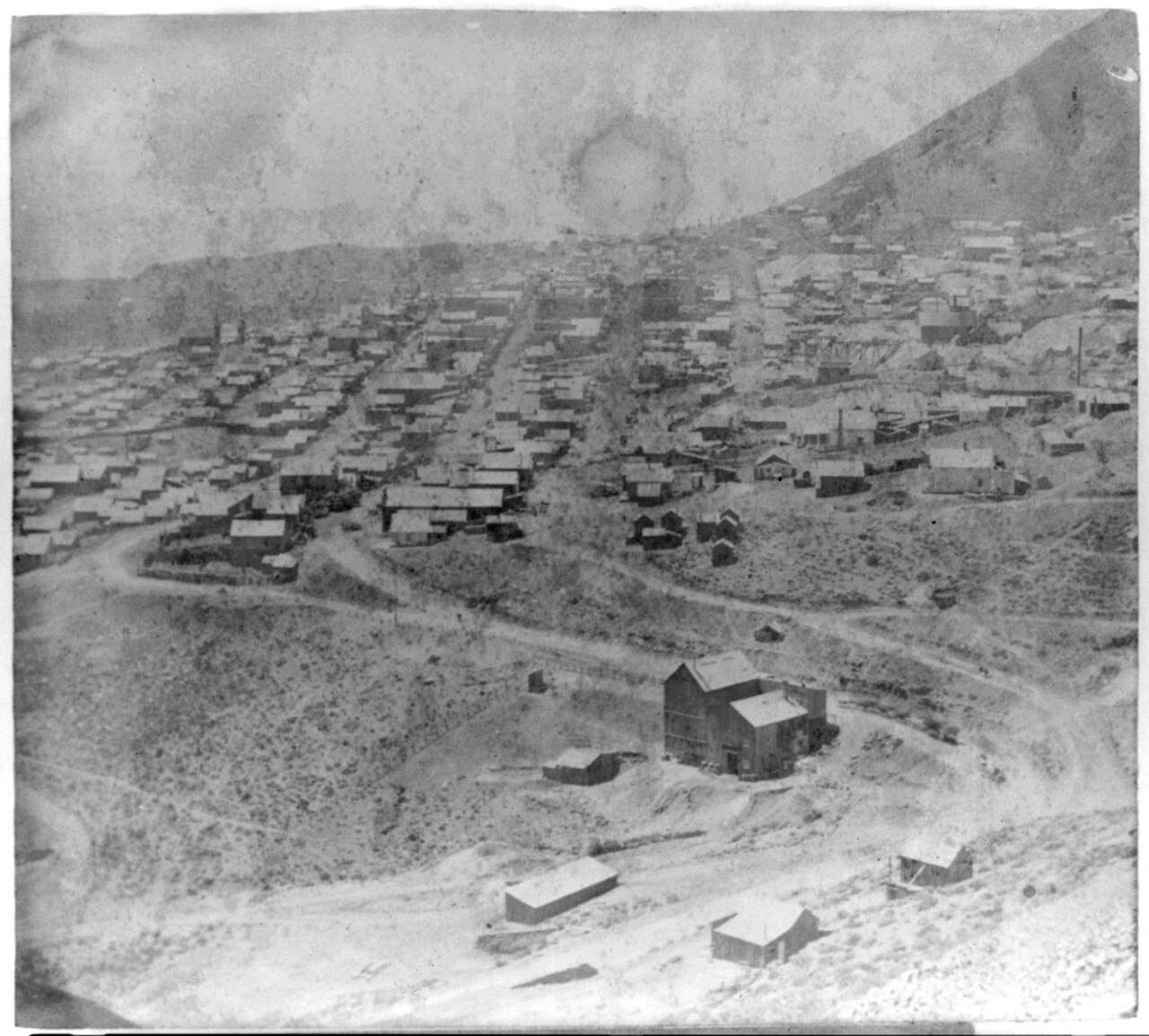
The Mining Frontier. After the California gold rush of '49, the mining frontier ran backward - eastward, into the mountains and deserts of the interior West, in a forty-year cycle of discovery, rush, boom and bust. Its capital of wonders was the Comstock Lode, found in 1859 in the wash of Nevada's Sun Mountain: the richest silver deposit in American history, where the sand that had plagued the gold-panners proved to be nearly solid silver ore. The Comstock made Virginia City - twenty-five thousand people under Mount Davidson, with theaters, newspapers (young Mark Twain among their reporters) and mines that honeycombed the mountain three thousand feet down - and its silver built the Bank of California, financed the Union war effort, and made Nevada a state in the middle of the Civil War.
The pattern repeated across the map: the Colorado rush of '59 to Pike's Peak; Butte, the richest hill on earth, copper queen of Montana; Tombstone's silver and its thirty-second gunfight at the O.K. Corral; Leadville's bonanzas and busts; and, last and most fateful, the Black Hills of Dakota - where Custer's 1874 expedition confirmed gold in land guaranteed to the Lakota by treaty, and the rush of '75 sent thousands of miners into the sacred hills, breaking the treaty and lighting the fuse of the Great Sioux War.
The mines made an industrial frontier in the wilderness: deep-shaft engineering, square-set timbering, Cornish and Irish and Cornish-Chinese labor gangs, the first great labor wars of the West, and wealth beyond counting - the bonanza kings, the silver senators, the palaces of San Francisco built from Nevada holes. And when the veins pinched, the boomtowns died where they stood, leaving the West's ten thousand ghost towns.
The mining frontier set the West's pattern: extraction, speculation, sudden cities and sudden abandonment; it drew the capital and the railroads that opened the interior; and it brought the nation face to face with the final occupants of the hills - the Black Hills gold rush costing the Lakota their sacred ground and, on the Little Bighorn, Custer his command.
 Britannica: Comstock Lode
Britannica: Virginia City
Britannica: Butte