 Go Back

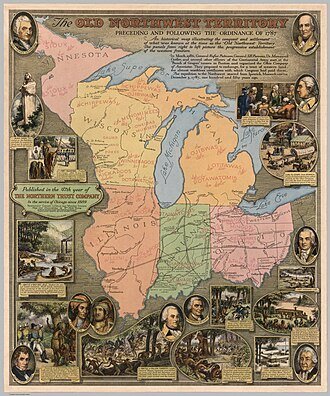
The Northwest Ordinance. In 1787, while the convention in Philadelphia wrote the Constitution, the old Confederation Congress in New York passed its one immortal law: an ordinance for the government of the territory northwest of the Ohio River, the vast public domain the states had ceded to the nation. How that land was governed would decide what kind of empire America became - and the ordinance's answer made it, after the Constitution itself, the founding document of the continental republic.
The law did three revolutionary things. It promised that the territories would not be colonies: they would pass through stages of government - appointed governor, then elected assembly, then statehood - and enter the Union 'on an equal footing with the original States in all respects whatever,' three to five new states created whole. It wrote a bill of rights for the frontier: religious freedom, trial by jury, due process, habeas corpus, and the encouragement of 'schools and the means of education.'
And its sixth article drew the great geographical line of American history: 'There shall be neither slavery nor involuntary servitude in the said territory.' The Ohio River became the boundary of bondage; five free states - Ohio, Indiana, Illinois, Michigan, Wisconsin - would one day rise from the ordinance's soil, and the armies of the Union in the Civil War would be filled with its sons.
The ordinance was not perfectly kept - indentures and evasions shadowed its slavery ban for years, and the Native nations whose land it governed were never consulted and were dispossessed by war and treaty. But it made the United States a nation that grew by making equals, not subjects: the thirty-one states created after the original thirteen all entered on its principle. When Americans say the West was won, the Northwest Ordinance is the law that decided what winning would mean.
 Britannica: Northwest Ordinances
Britannica: Ohio - History