 Go Back

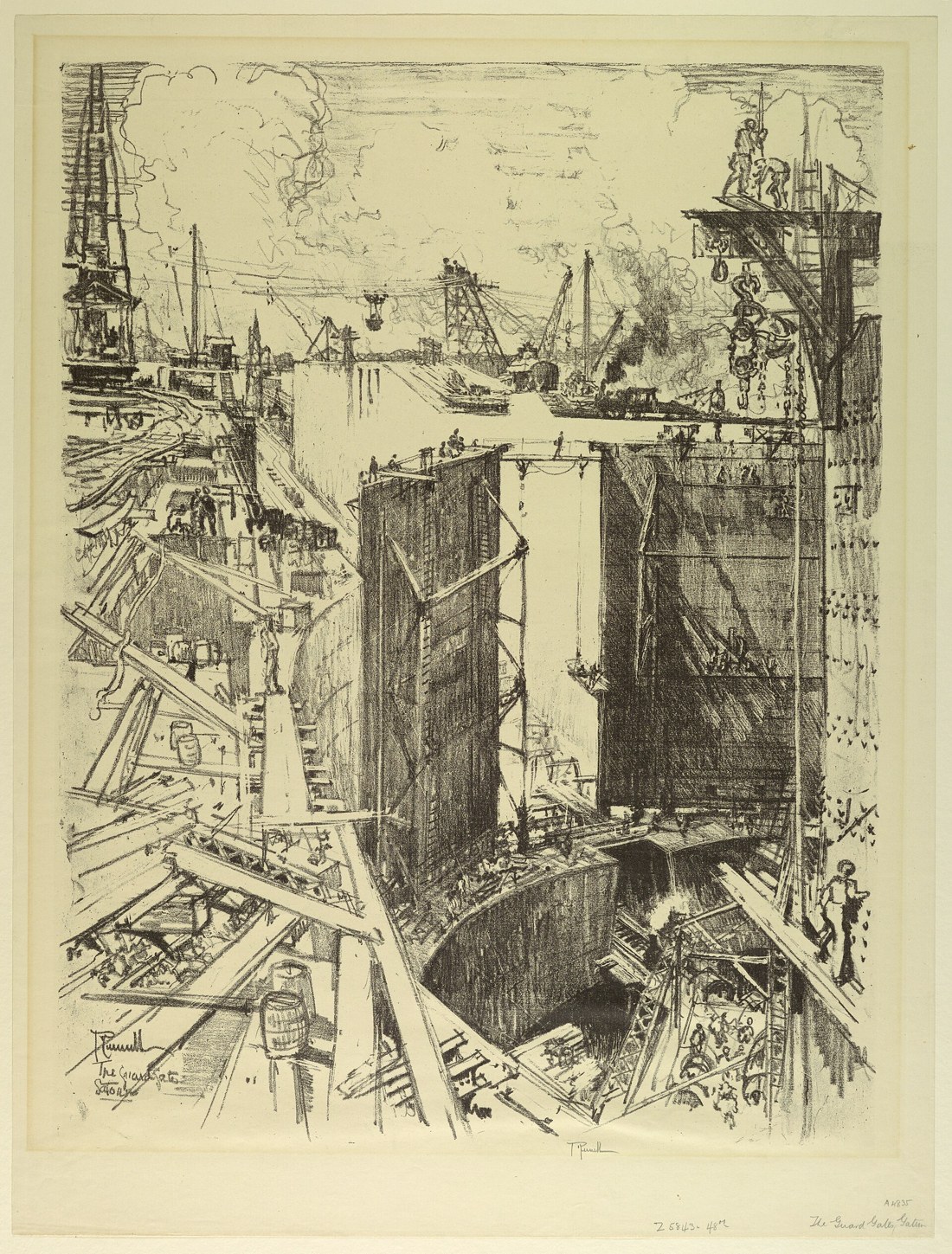
A canal across the narrow waist of the Americas had been dreamed of for centuries. The French tried first: Ferdinand de Lesseps, builder of the Suez Canal, began digging in Panama, then a province of Colombia, in the 1880s, but landslides, bankruptcy, and tropical disease destroyed the enterprise at a cost of tens of thousands of lives. The United States, freshly armed with overseas possessions after 1898, wanted a fast route between its Atlantic and Pacific fleets, and the Hay-Pauncefote Treaty of 1901 cleared the way with Britain.
Washington first negotiated the Hay-Herran Treaty with Colombia for a canal zone, but the Colombian senate held out for more money. Panamanian separatists then rose in November 1903, and American warships supported their independence, while Colombia could not move reinforcements across the difficult Darien region. The new Republic of Panama was recognized at once, and its envoy, the French engineer Philippe Bunau-Varilla, signed the Hay-Bunau-Varilla Treaty of 1903, granting the United States control in perpetuity of a ten-mile-wide Canal Zone.
The American build, begun in 1904, was a triumph of sanitation and engineering. Colonel William Gorgas's campaign against mosquitoes suppressed the yellow fever and malaria that had destroyed the French, while engineers under George Goethals dug through the mountains at the Culebra Cut and raised the great lock staircases that lift ships eighty-five feet to an artificial lake. The canal opened to traffic in August 1914, cutting the sea voyage from New York to San Francisco by some 8,000 miles.
The canal made the United States the dominant power in the Caribbean. The Canal Zone became an American enclave with bases, and the United States intervened repeatedly in the region to protect the route and its interests, a pattern that shaped, and embittered, relations with Latin America through 1924.
 Office of the Historian: Panama Canal, 1903-1914
 Britannica: Panama Canal