 Go Back

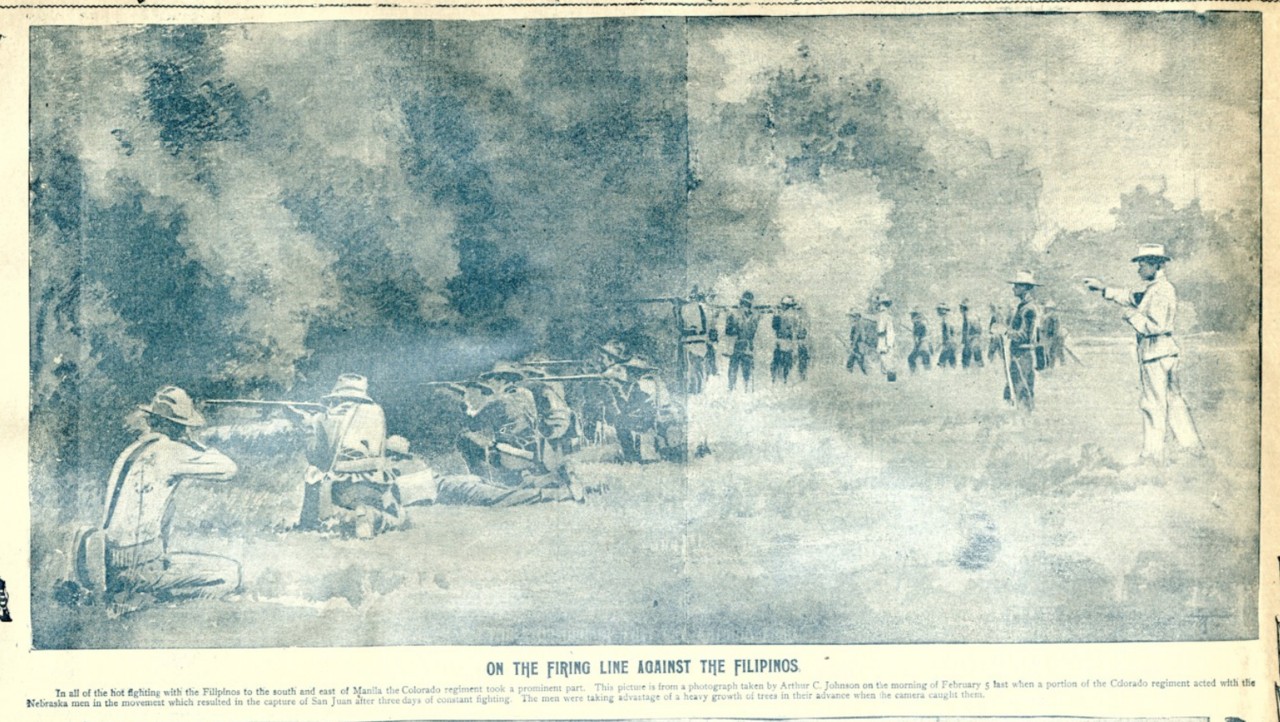
When Spain ceded the Philippines to the United States in the Treaty of Paris in December 1898, Filipino revolutionaries were not consulted. Forces under Emilio Aguinaldo had seized control of much of Luzon and proclaimed independence, seeking their own state rather than a new colonial ruler. The United States pursued annexation. On February 4, 1899, two days before the US Senate ratified the treaty, fighting broke out between American troops and Filipino forces outside Manila.
The first phase of the war pitted American regulars against the republic's conventional army, which was defeated in a series of campaigns in 1899. Aguinaldo then shifted to guerrilla warfare: ambushes by local fighters who blended into the population, supplied and sheltered by sympathetic villages. American commanders responded with garrisons in the towns, campaigns to cut guerrillas off from food and information, and, in the hardest-fought provinces, concentration of civilians and destruction of crops.
The war was brutal on both sides. More than 4,200 American soldiers and some 20,000 Filipino combatants were killed, and as many as 200,000 Filipino civilians died from fighting, famine, and disease, including cholera. Reports of torture and atrocities, above all the water cure, produced a Senate investigation and a bitter American debate over whether the republic had become the kind of empire it was founded against.
Aguinaldo's capture in 1901 broke organized resistance, and in July 1902 President Roosevelt declared the war over, though fighting continued in some areas for years. The United States then built a colonial state in the islands, promising eventual self-government. For Filipinos, the war was the bloody cost of an independence that had still not come by 1924; for Americans, it was a lesson in the price of overseas empire that still echoed in 1924.
 Britannica: Philippine-American War
 Office of the Historian: The Philippine-American War, 1899-1902