 Go Back

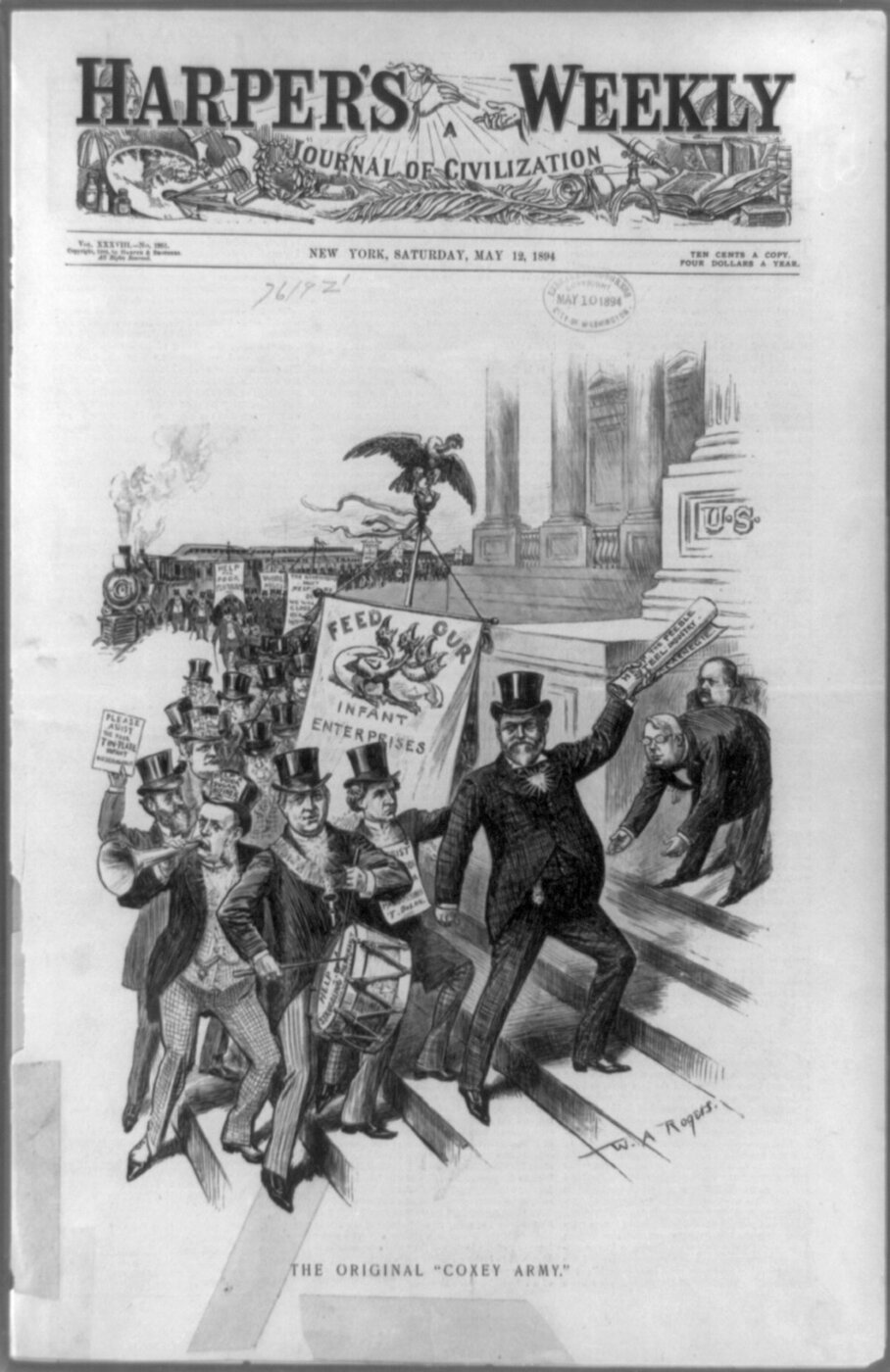
In the decades after the Civil War, American farmers fed the nation and starved on the proceeds. Grain and cotton prices fell for a generation while railroad freight rates, equipment costs, and interest stayed high. The money supply, tied to gold, shrank behind the growing economy, so every dollar of debt grew heavier each year. On the Great Plains homesteaders mortgaged their farms for seed and machines; in the South, sharecroppers and tenants, Black and white, sank into the crop-lien system, surrendering each year's crop to the furnishing merchant before it was grown. By the 1880s farmers believed, with reason, that railroads, banks, and middlemen owned their labor.
Farmers organized. The Grange, founded in 1867, spread cooperative stores and won state laws regulating railroad rates that the Supreme Court upheld in Munn v. Illinois in 1877. In the 1880s the Farmers' Alliances, the Northwestern and Southern Alliances and the Colored Farmers' Alliance, enrolled millions, ran cooperatives, and lectured members on finance. When the cooperatives failed against concentrated capital, the Southern Alliance proposed the subtreasury plan, a federal system to store crops and lend against them, and in 1890 the movement issued the Ocala Demands: the subtreasury, the free coinage of silver to expand the money supply, a graduated income tax, direct election of senators, and government ownership of railroads and telegraphs.
When both old parties refused the program, the Alliance men founded the People's Party, the Populists, in 1891. Their 1892 Omaha Platform declared that the fruits of the toil of millions are boldly stolen to build up colossal fortunes for a few, and their candidate, James B. Weaver, won over a million votes and four western states. After the Panic of 1893 threw millions out of work, the movement surged: Jacob Coxey led an army of the unemployed to Washington in 1894 demanding jobs on public works. In 1896 the Democrats adopted free silver and nominated William Jennings Bryan, who thundered against crucifying mankind on a cross of gold; the Populists fused behind him. Bryan lost to William McKinley, and fusion destroyed the People's Party as an independent force.
Populism died, but its platform marched on without it. Within two decades the nation adopted the graduated income tax and direct election of senators through the Sixteenth and Seventeenth Amendments in 1913, created the Federal Reserve to manage the currency, regulated railroads more strictly, and legalized much of the cooperative and credit machinery the Alliances had demanded. The farmers' revolt of the 1880s and 1890s was the last great challenge to industrial capitalism from rural America, and much of the Progressive Era state was built on foundations the Populists laid.
 Britannica: Populist Movement
Britannica: Granger Movement
Britannica: Farmers' Alliance