 Go Back

Porfirio Díaz, a Mixtec-descended general and hero of the war against the French, seized the Mexican presidency in 1876 and, except for one interlude from 1880 to 1884, ruled Mexico until 1911 - an era Mexicans call the Porfiriato. He promised 'order and progress', and delivered both on ruthless terms: bandits were hunted down by the rural police, rebellious generals were bought or shot, elections were staged, and regional bosses who accepted the system prospered while those who resisted disappeared. Under the slogan 'little politics and much administration', Díaz gave Mexico its first durable peace since independence, at the price of its liberty.
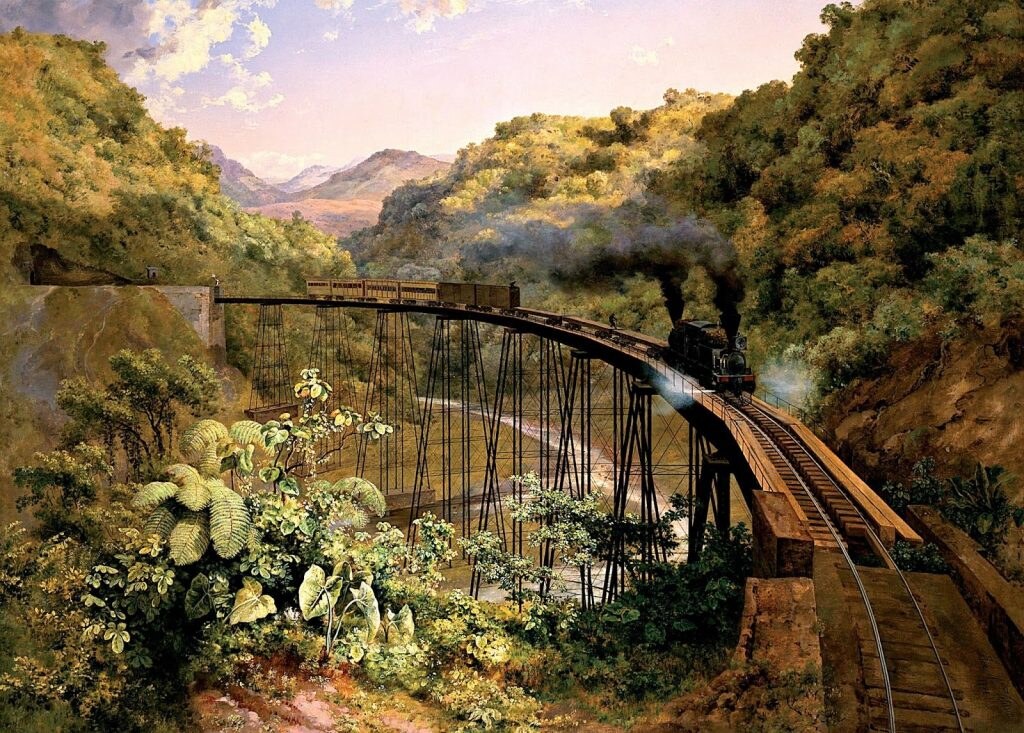
Peace, plus generous concessions, unleashed foreign capital. American and British investors built the railways that became the regime's emblem: the Mexican Central from the capital to El Paso in 1884, the Mexican National to Laredo, and the Veracruz line with its spectacular bridges over the barrancas, painted by José María Velasco. By 1910 Mexico had some 20,000 kilometres of track where it had had 700. Mines reopened with foreign technology, oil fields rose around Tampico, and exports soared; Díaz's finance minister José Yves Limantour balanced the budget and put Mexico on the gold standard.
The statistics hid a social catastrophe. Survey laws let land companies declare village commons 'vacant', and by 1910 some ninety percent of rural families in the central plateau had lost their land; huge haciendas swallowed indigenous communities, and on the henequen plantations of Yucatán and the tobacco fields of the Valle Nacional, Yaqui and Maya deportees worked in conditions close to slavery. Real wages fell through the era even as the price of corn rose, and workers who protested met bullets: the strikes at the Cananea copper mine in 1906 and the Río Blanco textile mill in 1907 were broken by gunfire.
Díaz's circle of technocrat advisers, the científicos, believed Mexico was being made modern by science and capital. Instead, the regime created the grievances that exploded in 1910: a dispossessed countryside, muzzled workers, excluded middle classes, and a dictator who had ruled for a generation. When Díaz told the American journalist James Creelman in 1908 that Mexico was ready for democracy, the opposition took him at his word, and the Porfiriato collapsed into the Mexican Revolution. Its railways and monuments remained; so did the question of who owned Mexico's land.
 Britannica: Porfirio Díaz
 Encyclopedia.com: Porfiriato